


Tungsten high speed steel is known for its ability to retain hardness, resist wear, and maintain cutting-edge performance at elevated temperatures. It has long been used to manufacture drills, milling cutters, taps, reamers, and other precision cutting tools.
Understanding its composition, properties, and available grades helps manufacturers select the right tool material for specific machining conditions. This guide explains what tungsten high speed steel is, how it differs from other HSS grades, and which characteristics matter most in practical applications.
What Is Tungsten High Speed Steel?
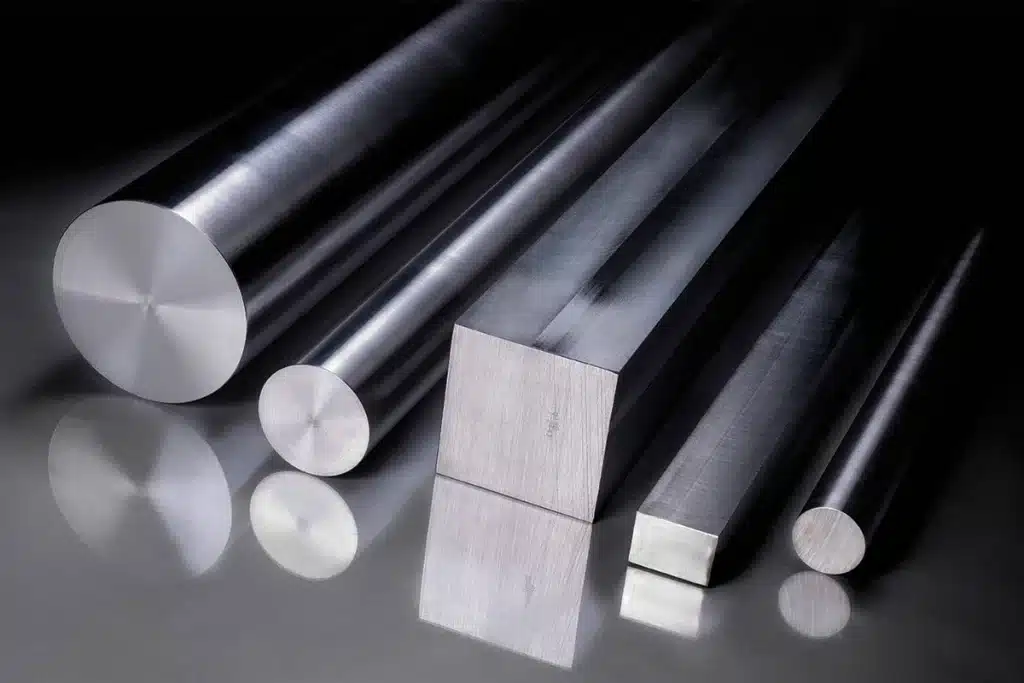
Tungsten high speed steel (tungsten HSS) is a high-alloy tool steel that uses tungsten as a major alloying element to improve hot hardness, wear resistance, and cutting performance. It also contains carbon, chromium, and vanadium, with some grades incorporating cobalt or molybdenum to achieve specific performance characteristics.
Unlike ordinary carbon tool steel, tungsten HSS can retain useful hardness at elevated cutting temperatures, allowing cutting tools to operate under conditions that would cause conventional tool steels to soften more quickly.
W18Cr4V is a classic example of tungsten high speed steel. Its high tungsten content contributes to hot hardness and wear resistance, making it suitable for a range of precision cutting tools. However, actual performance depends on the complete alloy composition, heat treatment, tool geometry, and machining conditions—not tungsten content alone.
Tungsten HSS vs Conventional HSS
High speed steel (HSS) is a broad category of tool steels designed to maintain hardness and cutting performance at elevated temperatures. Tungsten HSS is one traditional branch of this category, distinguished by tungsten as a major alloying element.
The key difference lies in the alloy system. Traditional tungsten HSS grades, such as W18Cr4V, rely heavily on tungsten to support hot hardness and wear resistance. Other HSS grades use different combinations of tungsten, molybdenum, vanadium, and cobalt to balance hardness, toughness, and manufacturing cost.
Tungsten plays several important roles in HSS:
- Red hardness: Helps the steel retain hardness as cutting temperatures rise, delaying softening at the cutting edge.
- Wear resistance: Contributes to the formation of hard carbides that resist abrasive wear.
- Cutting-edge retention: Helps tools maintain their geometry and sharpness during repeated cutting operations.
- High-temperature stability: Supports hardness and microstructural stability during exposure to elevated temperatures.
These benefits do not mean tungsten HSS is always superior to other HSS grades. Some molybdenum-based grades offer better toughness or a more favorable balance of properties for drills, milling cutters, and tools exposed to interrupted cutting. The right choice depends on the workpiece material, cutting conditions, tool design, and required service life.

Tungsten High Speed Steel Composition
The composition of tungsten high speed steel determines its hardness, wear resistance, red hardness, toughness, and grindability. While tungsten is the defining alloying element in traditional tungsten HSS, carbon, chromium, and vanadium are also essential. Some grades contain cobalt or molybdenum to further adjust their performance.
The exact percentages vary by grade. The following table explains the primary role of each element in the alloy.
| Alloying Element | Main Function | Effect on Performance |
|---|---|---|
| Carbon (C) | Forms carbides and supports hardening | Increases hardness and wear resistance, but excessive levels can reduce toughness |
| Tungsten (W) | Forms stable carbides and improves hot hardness | Helps retain hardness at elevated temperatures |
| Chromium (Cr) | Improves hardenability and contributes to carbide formation | Supports through-hardening and wear resistance |
| Vanadium (V) | Forms hard vanadium carbides | Improves wear resistance and cutting-edge retention |
| Cobalt (Co) | Improves hot-hardness performance | Helps maintain hardness during high-temperature cutting |
| Molybdenum (Mo) | Supports hardening and high-temperature performance | Can improve toughness and hot hardness, depending on the grade |
These elements work together rather than independently. Their proportions, carbide distribution, heat treatment, and manufacturing route all influence the final properties of the steel.
The Role of Tungsten
Tungsten is the principal alloying element in traditional tungsten HSS. During heat treatment, tungsten participates in carbide formation and contributes to secondary hardening and resistance to softening at elevated temperatures.
This is particularly important in cutting tools, where friction between the tool and workpiece generates heat. If the cutting edge softens too quickly, it loses hardness, wears faster, and may no longer maintain the required geometry.
Tungsten helps the steel retain useful hardness under these conditions, supporting red hardness, wear resistance, and cutting-edge stability. However, high tungsten content alone does not guarantee better performance. Carbide distribution and heat treatment also matter, and excessive or uneven carbide formation can reduce toughness and make the material more difficult to process.
The Role of Carbon and Vanadium
Carbon and vanadium are essential to the hardness and wear resistance of tungsten HSS.
Carbon combines with alloying elements to form carbides and enables the steel to develop high hardness through quenching and tempering. Increasing carbon content can improve hardness and wear resistance, but it may also increase brittleness and reduce impact toughness if the alloy and heat treatment are not properly balanced.
Vanadium forms particularly hard vanadium carbides that resist abrasive wear. This makes high-vanadium HSS grades useful for tools that need to retain a sharp cutting edge over extended production runs.
The trade-off is manufacturability. Higher vanadium content can make grinding more difficult, while high carbon and carbide content may reduce toughness. Grade selection therefore requires balancing wear resistance against edge chipping risk, tool geometry, and grinding requirements.
The Role of Chromium, Cobalt and Molybdenum
Chromium, cobalt, and molybdenum help tailor tungsten HSS for different machining demands.
- Chromium (Cr): Improves hardenability, helping the steel develop the required hardness through heat treatment. It also contributes to the overall carbide system and supports wear resistance.
- Cobalt (Co): Helps maintain hardness at elevated temperatures. Cobalt-containing grades are often selected for demanding cutting conditions involving heat-resistant alloys or other difficult-to-machine materials. However, cobalt does not automatically improve toughness, and these grades generally cost more.
- Molybdenum (Mo): Supports secondary hardening and hot-hardness performance. In tungsten-molybdenum HSS grades, it can provide a useful balance of hardness, toughness, and cost. These grades are widely used for drills, milling cutters, and other general-purpose cutting tools.
The proportions of these elements distinguish one grade family from another. High-carbon grades prioritize hardness, high-vanadium grades emphasize wear resistance, and cobalt-containing grades target better hardness retention at elevated temperatures. Understanding these differences makes it easier to compare specific tungsten HSS grades and select a material suited to the intended application.

Key Properties of Tungsten High Speed Steel
Tungsten high speed steel combines high hardness, wear resistance, and hot-hardness performance for cutting tools operating under demanding conditions. However, these properties vary by grade and heat treatment. Selecting the right material requires balancing hardness and wear resistance against toughness, grindability, and the risk of edge chipping.
Hardness
Tungsten HSS commonly reaches approximately 62–68 HRC after appropriate heat treatment, although some specialized grades can fall outside this range. For example, conventional W18Cr4V typically achieves around 63–66 HRC, while high-carbon and high-performance grades may reach 66–69 HRC or higher under specific conditions.
Hardness depends on carbon content, alloy composition, quenching temperature, and tempering conditions. Higher hardness can improve resistance to indentation and wear, but maximum hardness is not always the best choice. Tools exposed to impact or interrupted cutting may require a better balance between hardness and toughness.
Red Hardness
Red hardness is the ability of a tool steel to retain hardness and cutting performance as its temperature rises during machining. It is one of the defining properties of high speed steel.
Cutting generates heat at the tool–workpiece interface. If the cutting edge softens, it can wear rapidly and lose dimensional accuracy. Tungsten helps stabilize the carbide structure and resist softening at elevated temperatures, allowing the tool to maintain its cutting edge for longer.
Actual red-hardness performance varies by grade and heat treatment. Cobalt-containing and other high-performance HSS grades are often selected when greater hardness retention under high-temperature cutting conditions is required.
Wear Resistance
Wear resistance determines how well a cutting tool withstands material loss during repeated contact with the workpiece.
Carbon supports carbide formation, while vanadium produces very hard vanadium carbides that improve resistance to abrasive wear. Tungsten also contributes to the carbide system and high-temperature performance. Cobalt can improve hot-hardness retention, helping the cutting edge remain effective under demanding conditions.
High-carbon and high-vanadium grades are therefore useful where tool life and edge retention are priorities. However, higher carbide content can make grinding more difficult and may reduce toughness. The best grade depends on the workpiece material, cutting conditions, and required tool life.
Toughness and Impact Resistance
Toughness is the ability to resist cracking or fracture under mechanical loading, while impact resistance describes the ability to withstand sudden loads or shocks.
Tungsten HSS generally offers better impact tolerance than cemented carbide, making it useful for tools exposed to vibration or interrupted cutting. However, it is not immune to chipping or fracture.
Traditional high-tungsten grades can develop coarse or uneven carbide distributions, which may reduce toughness. Increasing hardness or wear resistance can also increase the risk of edge chipping if the tool geometry, heat treatment, or cutting conditions are unsuitable. For heavy-impact applications, a tougher HSS grade or a powder metallurgy grade may be a better choice.
Grindability
Grindability is an important advantage of high speed steel in tool manufacturing. HSS can generally be ground into complex cutting geometries and sharpened more readily than cemented carbide, although the difficulty depends on the grade and carbide content.
This makes HSS suitable for producing and reconditioning tools such as:
- Drills and taps: Require accurate cutting edges and controlled tool geometry.
- Reamers: Need precise edge geometry and dimensional accuracy for finishing holes.
- Milling cutters: Often feature complex flutes, profiles, and cutting edges.
- Gear cutters and hobs: Require carefully ground tooth profiles to produce accurate gear geometry.
High-vanadium and high-carbide grades can be more difficult to grind than conventional HSS. Suitable grinding wheels, process parameters, and thermal control are important to avoid grinding burns, microcracks, and edge damage.
Density of Tungsten High Speed Steel
The density of tungsten high speed steel varies with its alloy composition and grade. As representative values, some data sources report approximately 8.26 g/cm³ for 9W18Cr4V and 8.25 g/cm³ for 9W6Mo5Cr4V2.
These figures should be treated as grade-specific reference values rather than a universal density for all tungsten HSS. Actual values may vary with composition and manufacturing conditions. When density is important for component weight calculations or material specifications, use the relevant grade standard or supplier's technical data.

Tungsten High Speed Steel Grades
Tungsten high speed steel is available in several grade families, each designed to balance hardness, wear resistance, red hardness, and toughness differently. Rather than choosing a grade based on tungsten content alone, manufacturers should consider the tool's geometry, workpiece material, cutting conditions, and expected service life.
W18Cr4V — The Classic Tungsten HSS
W18Cr4V is a traditional tungsten high speed steel containing approximately 18% tungsten and 4% chromium, with vanadium and carbon contributing to its hardening and wear resistance.
Its main advantages are good red hardness, reliable cutting-edge retention, and suitability for precision cutting tools. Typical applications include reamers, taps, milling cutters, broaches, and gear-cutting tools used under appropriate cutting conditions.
However, its relatively high tungsten content can contribute to carbide segregation in conventionally produced material, potentially reducing toughness. It may therefore be less suitable for tools exposed to severe impact or demanding interrupted cutting.
W18Cr4V is commonly associated with international designations such as AISI T1, JIS SKH2, and DIN 1.3355. These cross-references should be confirmed against the applicable material standards and supplier documentation before specifying a grade for production.
High-Carbon Tungsten HSS
High-carbon grades increase carbon content to promote carbide formation and achieve greater hardness and wear resistance. The trade-off is reduced toughness and greater sensitivity to heat treatment.
Two representative grades are 9W18Cr4V and 9W6Mo5Cr4V2. The latter is a tungsten-molybdenum HSS variant rather than a purely tungsten-dominant grade.
| Grade | Main Characteristics | Typical Applications |
|---|---|---|
| 9W18Cr4V | High hardness and wear resistance, with relatively low impact toughness | Reamers, countersinks, taps, and wear-resistant cutting tools |
| 9W6Mo5Cr4V2 | High hardness with a more balanced toughness profile in suitable heat-treated conditions | Drills, taps, milling cutters, and selected tools for difficult-to-machine materials |
High-carbon HSS can be useful when wear resistance is a priority, but excessive hardness may increase edge-chipping risk. Proper quenching and repeated tempering are important for achieving the intended balance of properties.
High-Vanadium Tungsten HSS
High-vanadium HSS contains more vanadium than conventional grades. Vanadium forms extremely hard carbides that improve abrasive wear resistance and help cutting edges retain their geometry during extended use.
Representative grades include W6Mo5Cr4V3, W12Cr4V4Mo, W6Mo5Cr4V4, W9Cr4V5, and W12Cr4V5Co5 (often identified as T15 in relevant grade systems).
These grades are designed for demanding wear conditions, including the machining of selected high-strength steels and difficult-to-machine alloys. Their performance varies: cobalt-containing T15, for example, combines high vanadium content with cobalt to improve hot-hardness performance.
The main limitation is manufacturability. High vanadium carbide content can make grinding more difficult, while some high-wear grades have lower toughness than more balanced HSS grades. They are best selected when the expected wear benefit justifies the additional grinding and tooling requirements.
Cobalt-Containing Tungsten HSS
Cobalt-containing HSS grades are developed to retain hardness more effectively at elevated temperatures. Cobalt supports secondary hardening and improves hot-hardness performance, helping cutting edges withstand heat generated during demanding machining operations.
Representative grades include W18Cr4VCo5, W18Cr4V2Co8, W6Mo5Cr4V2Co5 (M35), W6Mo5Cr4V2Co8 (commonly identified as M42), and W7Mo4Cr4V2Co5.
These grades are used for cutting tools intended for challenging conditions, including machining selected stainless steels, titanium alloys, and nickel-based heat-resistant alloys. Depending on the grade, applications include drills, taps, milling cutters, hobs, and other complex cutting tools.
Cobalt content alone does not determine performance. Carbon, vanadium, tungsten, molybdenum, and heat treatment also matter. Cobalt-containing grades generally cost more, and their higher hardness may come with trade-offs in toughness and grindability. Exact international grade equivalences should be checked before ordering, as similar-looking designations are not always interchangeable.
Aluminum-Containing Tungsten HSS
Aluminum-containing HSS grades use aluminum as an alloying addition to improve hardening response and high-temperature performance. Representative grades include W6Mo5Cr4V2Al (501) and W10Mo4Cr4V3Al (5F-6).
These grades can offer a useful combination of hardness, wear resistance, and red hardness without relying on cobalt as the primary performance-enhancing addition. This can make them an alternative for selected applications where cobalt-containing HSS would otherwise be considered.
However, aluminum-containing grades can be sensitive to overheating, oxidation, and decarburization during heat treatment. Their grinding characteristics and final properties also depend on composition and processing.
Although these grades may offer cost advantages in some applications, they are not universal drop-in replacements for cobalt HSS. The appropriate choice depends on the required hot hardness, toughness, tool geometry, manufacturing process, and total tooling cost.

Tungsten HSS Tool Applications
Tungsten high speed steel is widely used in cutting tools that require sharp edges, complex geometries, and reliable wear resistance. Although cemented carbide is preferred for many high-speed machining operations, HSS remains a practical choice for tools that need precise grinding, frequent resharpening, or a balance of hardness and toughness.
Drills
Tungsten HSS is commonly used for twist drills and other hole-making tools, particularly for machining steels and general engineering materials. Its combination of hardness, toughness, and grindability supports accurate cutting edges and reliable performance. HSS drills are also economical to manufacture and regrind, making them suitable for general-purpose machining and smaller production runs.
Milling Cutters
End mills, form cutters, and other milling tools can be made from HSS when complex flute geometries or specialized cutting profiles are required. HSS is relatively easy to grind into intricate shapes and can tolerate some cutting interruptions better than more brittle tool materials. It is particularly useful at moderate cutting speeds, although carbide is generally preferred when higher productivity and longer tool life under demanding conditions are required.
Taps and Threading Tools
Taps, thread-cutting tools, and related threading tools need sharp cutting edges and precise profiles to produce accurate threads. Tungsten HSS offers a useful combination of hardness, wear resistance, and toughness for these applications. Cobalt-containing or other high-performance HSS grades may be selected for more demanding materials, depending on the threading process and operating conditions.
Reamers and Countersinks
Reamers and countersinks are finishing tools that depend on accurate geometry and a well-maintained cutting edge. Tungsten HSS can be ground to tight dimensional requirements and resharpened when necessary. Its wear resistance helps maintain cutting performance, while its toughness provides a useful margin against edge damage during properly controlled operations.
Gear Cutters and Hobs
Gear cutters and hobs have complex tooth profiles that must be manufactured accurately to achieve the required gear geometry. HSS is well suited to these tools because it supports detailed profile grinding, edge maintenance, and repeated resharpening. High-performance grades may be selected when greater wear resistance or hot hardness is needed for longer production runs.
Broaches and Form Tools
Broaches and form tools often incorporate multiple cutting edges or non-standard profiles that are difficult to manufacture and maintain. Tungsten HSS provides the grindability needed for these complex shapes, along with sufficient toughness for many cutting operations. It is particularly useful when tool geometry is specialized, production volumes do not justify a more expensive alternative, or tools need to be resharpened and reused.
Across these applications, the continued use of tungsten HSS comes down to a practical balance: complex geometry, sharp cutting edges, grindability, toughness, and tooling cost. It is not always the fastest tool material, but it remains valuable when these characteristics matter more than maximum cutting speed.

When Should You Choose Tungsten High Speed Steel?
Tungsten HSS is a practical choice when tool geometry, edge sharpness, grindability, and toughness matter as much as cutting performance. The right grade depends on the workpiece material, cutting speed, tool design, and expected tool life.
Tungsten HSS is worth considering when:
- Machining at moderate cutting speeds: It offers a useful balance of hardness, wear resistance, and cost without requiring the highest possible cutting speeds.
- Manufacturing complex cutting tools: Drills, taps, hobs, broaches, and form cutters often benefit from HSS's grindability and resharpening potential.
- Working with small or medium cross-section tools: Many conventional HSS grades perform well in precision tools, provided the tool geometry and cutting loads are appropriate.
- Handling interrupted cutting: HSS can offer better impact tolerance than cemented carbide in suitable applications, reducing the risk of sudden edge chipping.
- Machining conventional steels and cast irons: Appropriate grades can deliver reliable performance across a wide range of general-purpose cutting operations.
- Balancing tool life and tooling cost: HSS can be economical when tools are reused, resharpened, or produced in relatively small quantities.
Another tool material may be more suitable when:
- Very high cutting speeds and maximum production rates are required.
- Hardened steels or other highly abrasive materials demand greater hardness and wear resistance.
- The application involves machining ceramics or cemented carbide, which generally requires specialized superhard tooling.
- Continuous high-temperature cutting or extreme wear conditions exceed the capabilities of the selected HSS grade.
These are general guidelines rather than absolute rules. Specialized HSS grades can machine some difficult-to-cut alloys under controlled conditions, so the final decision should account for workpiece hardness, cutting parameters, machine rigidity, cooling, and tool geometry.
Ultimately, tungsten HSS is not automatically better or worse than carbide or other HSS families. Its value lies in the balance of properties it offers for a particular tool and machining operation.
Choosing the right grade is the next step. Different tungsten, molybdenum, high-carbon, high-vanadium, and cobalt-containing HSS grades can behave quite differently, even when they belong to the same broad material family. In the next guide, we will compare these grades and explain how to select the most suitable option for specific cutting requirements.
