


Precision machined parts are used when dimensional accuracy, repeatability, fit, and functional performance matter. From shafts and bushings to housings, connectors, gears, and custom mechanical components, precision machining supports parts that must work reliably within demanding assemblies.
This guide explains the common types of precision machined parts, where they are used, and why different industries rely on tight manufacturing control. If you have a custom part, drawing, or specific tolerance requirement, contact Dakings Rapid to discuss the most suitable machining solution for your project.
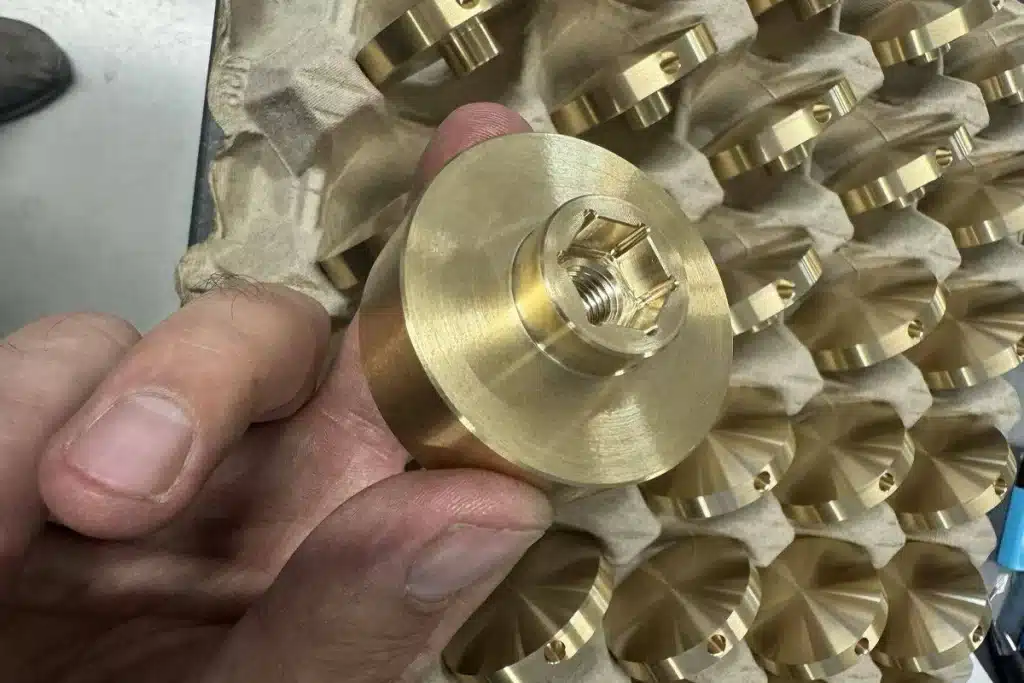
What Are Precision Machined Parts?
Precision machined parts are components manufactured to closely controlled dimensional and geometric requirements. CNC milling, turning, grinding, and other machining processes can produce parts with accurate features, consistent dimensions, and repeatable results across production batches.
The required level of precision depends on how the part functions. A shaft may require controlled diameter and concentricity, while a housing may require accurate hole locations and flat mounting surfaces. For connectors or mating components, even small dimensional variations can affect fit and assembly.
Functional Requirements of Precision Parts
Precision is not simply about making every dimension as small as possible. The important factor is whether the manufactured part meets the requirements of its application.
Common requirements include:
- Dimensional accuracy for critical features and mating surfaces
- Geometric accuracy for flatness, roundness, concentricity, and position
- Repeatability across multiple parts or production batches
- Surface finish where friction, sealing, contact, or appearance matters
- Consistent fit and alignment within mechanical or electronic assemblies
These requirements are typically defined through engineering drawings, tolerances, GD&T, material specifications, and surface finish requirements.
Why Standard Machining May Not Be Enough
Not every component requires precision machining. Standard machining may be sufficient for parts with relatively loose tolerances and non-critical dimensions.
Precision machining becomes more important when a part must mate with another component, maintain alignment, withstand repeated movement, or perform consistently in a demanding environment.
For example, a small dimensional variation in a bushing can affect shaft fit, while an inaccurate mounting hole can create alignment problems during assembly. In high-volume production, even a small variation repeated across thousands of parts can become a significant quality issue.
Precision machining therefore focuses not only on achieving the required dimensions once, but also on maintaining those requirements consistently throughout production.

Common Types of Precision Machined Parts
Precision machining is used to manufacture a wide range of components. The right machining approach depends on the part's geometry, material, tolerance requirements, production volume, and intended function.
Shafts, Pins and Bushings
Shafts, pins, and bushings are common precision components used in rotating, sliding, and alignment applications.
Shafts typically require controlled diameters, concentricity, straightness, and surface finish to work correctly with bearings, gears, couplings, or other mating parts. Pins are often used for positioning, alignment, or mechanical connections, where accurate diameter and length are important.
Bushings provide controlled interfaces between moving or mating components. Their inside diameter, outside diameter, wall thickness, and surface finish can directly affect fit and movement.
These components are commonly found in robotics, automotive systems, industrial equipment, automation, and other mechanical assemblies.
Housings and Structural Components
Housings and structural components provide mounting, protection, alignment, or support for other components.
Typical precision features include:
- Accurately positioned mounting holes
- Bearing bores
- Flat mounting surfaces
- Threaded holes
- Pocket and interface dimensions
- Controlled wall thickness
For assemblies containing multiple mechanical or electronic components, accurate housing features help maintain alignment, fit, and assembly consistency.
Materials such as aluminum, stainless steel, steel, and engineering plastics can be selected according to the required strength, weight, corrosion resistance, and operating environment.
Gears and Mechanical Components
Gears and other mechanical components require controlled dimensions and geometry to transmit motion and load correctly.
For gears, important characteristics can include tooth geometry, bore dimensions, concentricity, and positional accuracy. These factors influence how the gear interfaces with shafts and other transmission components.
Other precision mechanical components may include rollers, spacers, couplings, brackets, and custom interfaces designed for specific assemblies.
The required precision depends on the load, speed, operating environment, and relationship between mating components.
Connectors and Electrical Components
Connectors and electrical components often contain small features that require accurate dimensions and consistent positioning.
Precision machining can be used for:
- Connector bodies
- Contact housings
- Mounting components
- Electrical enclosures
- Precision conductive components
- Custom interface parts
For these parts, dimensional accuracy can affect contact alignment, insertion fit, mounting position, and assembly reliability. Materials such as aluminum, brass, copper, stainless steel, and engineering plastics may be selected according to electrical, mechanical, and environmental requirements.
Flanges and Fasteners
Flanges and precision fasteners are used to connect, secure, align, or seal components and assemblies.
Flanges may require accurate bolt-hole patterns, outer diameters, sealing surfaces, concentricity, and thickness to ensure proper assembly and alignment. In fluid or pneumatic systems, the accuracy of mating and sealing surfaces can also affect system performance.
Precision-machined fasteners and custom threaded components require controlled thread dimensions, diameters, lengths, and mating features to achieve reliable installation and repeatable assembly.
These components are widely used across industrial equipment, automotive systems, fluid handling, automation, robotics, and other applications where standard off-the-shelf hardware does not meet the required specifications.

Precision Machining for Aerospace
Aerospace components often combine tight tolerances, lightweight materials, complex geometries, and strict quality requirements. Precision machining helps produce components that must maintain dimensional stability and reliable performance under demanding operating conditions.
- Tight tolerances: Critical interfaces, mounting features, bores, and mating surfaces may require closely controlled dimensions and geometric accuracy.
- Lightweight materials: Aluminum, titanium, and other high-performance alloys are commonly selected where strength-to-weight ratio and material performance are important.
- Complex geometry: Multi-axis CNC machining can produce contoured surfaces, deep features, and complex structural geometries that are difficult to manufacture with conventional setups.
- Traceability: Material identification, machining records, and inspection documentation help maintain traceability throughout production.
- Inspection: Dimensional inspection and CMM measurement can be used to verify critical features against engineering drawings and specifications.
For aerospace projects, the machining process must therefore be supported by consistent production control, material traceability, and documented inspection rather than precision alone.
Precision Machining for Medical Devices
Medical device components require consistent dimensions and controlled manufacturing conditions because small variations can affect fit, movement, assembly, and overall device performance.
- Dimensional consistency: Critical diameters, holes, threads, mating surfaces, and interfaces need to remain consistent across production batches.
- Biocompatible and medical-grade materials: Material selection depends on the device, application, and applicable requirements. Common choices may include stainless steel, titanium, and selected engineering plastics such as PEEK.
- Surface requirements: Surface finish, burr control, edge condition, and cleanliness can be important for components that contact other parts or require controlled interfaces.
- Clean manufacturing considerations: Depending on the application, production may require controlled handling, cleaning, packaging, or other measures to reduce contamination risks.
- Quality documentation: Inspection records, material certificates, and production documentation provide evidence that parts meet the specified requirements.
For medical device manufacturing, the focus is not simply on producing high-precision parts, but on maintaining repeatable dimensions, appropriate materials, controlled surfaces, and reliable quality records throughout production.
Precision Machining for Automotive
Automotive components are often produced in high volumes, making repeatability and dimensional consistency just as important as the precision of individual parts. Components must also maintain reliable interfaces within larger mechanical and electronic assemblies.
- Repeatability: The same critical dimensions and features need to be maintained across production runs to ensure consistent assembly and performance.
- Production volume: Automotive projects may require prototypes, small batches, or high-volume production, so the manufacturing process must remain stable as volume increases.
- Dimensional consistency: Controlled dimensions, hole positions, threads, and mating surfaces help reduce assembly variation and quality issues.
- Functional interfaces: Shafts, housings, brackets, connectors, and other components must accurately interface with bearings, fasteners, sensors, and adjacent parts.
For automotive applications, precision machining is therefore closely connected to process stability, repeatable production, and reliable part-to-part consistency.

Precision CNC Machining for Robotics
Robotic systems rely on precisely manufactured components to maintain alignment, movement, and structural stability throughout repeated operation. Precision CNC machining is commonly used for custom structural and mechanical parts where standard components do not meet the required specifications.
- Joint and structural components: Machined components used around robot joints and structural assemblies require controlled interfaces for accurate movement and assembly.
- Housings: Motor, bearing, sensor, and other equipment housings may require accurately positioned bores, mounting holes, and mating surfaces.
- Precision interfaces: Interfaces between motors, bearings, gearboxes, sensors, and structural parts must be manufactured consistently to maintain alignment.
- Lightweight components: Aluminum and other lightweight materials can help reduce moving mass while maintaining the required structural performance.
- Repeatability: Consistent dimensions across multiple components are important when building multiple robot units or scaling from prototypes to production.
For robotics projects, the machining focus extends beyond individual part dimensions to alignment, interfaces, weight, and repeatable assembly across the complete system.
Precision Machining for Oil & Gas
Oil and gas components may operate under high pressure, temperature variation, corrosive fluids, and demanding mechanical conditions. Precision machining helps maintain reliable dimensions and interfaces throughout the component's service life.
- Harsh environments: Parts must be manufactured for the specific pressure, temperature, chemical, and mechanical conditions of the application.
- Corrosion-resistant materials: Stainless steel, nickel alloys, and other corrosion-resistant materials may be selected according to the operating environment.
- Threads and sealing interfaces: Thread profiles, bores, grooves, and sealing surfaces require controlled dimensions to ensure reliable connections and fluid containment.
- Dimensional reliability: Critical dimensions must remain consistent so components can assemble correctly and perform reliably under operating loads.
For these applications, precision machining is closely tied to material selection, reliable sealing interfaces, and consistent dimensional control.
Precision Machining for Electronics and Connectors
Electronic and connector components often contain small features, closely positioned interfaces, and functional surfaces that require careful dimensional control.
- Small features: Fine holes, slots, grooves, threads, and other small geometries may require precise machining and tool control.
- Tight positional requirements: Connector features must be positioned accurately to ensure proper alignment, insertion, and assembly.
- Conductive materials: Copper, brass, aluminum, and other conductive materials can be machined according to the electrical and mechanical requirements of the component.
- Surface requirements: Surface finish and edge quality can affect contact performance, fit, wear, and assembly reliability.
For precision electronic components, successful manufacturing depends on controlling feature size, position, material properties, and surface condition together rather than treating dimensional accuracy as the only requirement.

Precision Machining in Industry, Transportation and Agriculture
Precision machining is also used across industrial equipment, transportation, and agricultural machinery where component accuracy directly affects assembly, movement, or equipment reliability.
In industrial equipment, applications may include shafts, bushings, housings, mounting components, and custom mechanical interfaces that require reliable alignment and repeatable assembly.
For transportation equipment, precision-machined parts can support mechanical connections, rotating components, structural interfaces, and functional assemblies where consistent dimensions are important for long-term operation.
In agricultural machinery, components such as shafts, pins, bushings, fittings, and custom replacement parts may require controlled dimensions to maintain proper movement and fit in equipment exposed to repeated loads and outdoor conditions.
The level of precision should always be determined by the actual function and operating requirements of the part, rather than applying unnecessarily tight tolerances to every feature.
How to Match Precision Machining to an Application
The right precision machining solution starts with the part's functional requirements, not simply the tightest tolerance shown on a drawing. Several factors should be considered together:
- Part function: Identify which features affect movement, alignment, sealing, assembly, or overall performance.
- Material: Material properties such as hardness, strength, thermal behavior, and corrosion resistance can influence machining and dimensional stability.
- Tolerance: Apply tighter tolerances where they are functionally necessary, while avoiding unnecessary precision on non-critical features.
- Environment: Temperature, moisture, chemicals, pressure, wear, and other operating conditions can affect material and dimensional requirements.
- Production volume: Prototype, low-volume, and high-volume projects may require different process strategies and levels of production control.
- Inspection requirements: Critical dimensions and features should be matched with appropriate inspection methods and documentation requirements.
A well-matched precision machining solution balances part performance, manufacturability, production volume, and quality requirements rather than simply pursuing the smallest possible tolerance.
