Discover How Robots Work, Evolve, and Transform Modern Industries
Robotics has become one of the most influential fields of modern engineering, shaping industries ranging from manufacturing and healthcare to logistics, agriculture, and space exploration. Once considered a concept limited to science fiction, robots are now performing precision assembly, assisting surgeons, transporting goods through automated warehouses, and even collaborating safely alongside human workers.
At its core, robotics is an interdisciplinary field that combines mechanical engineering, electronics, computer science, artificial intelligence, and control systems to design machines capable of performing physical tasks autonomously or semi-autonomously. As technology continues to mature, robots are becoming more intelligent, more adaptable, and increasingly capable of handling complex operations that were once impossible to automate.
Understanding robotics involves much more than knowing what a robot looks like. A modern robotic system is the result of numerous engineering disciplines working together—from structural design and precision mechanical components to sensors, software, motion control, and advanced manufacturing technologies. Whether you are an engineering student, product designer, procurement specialist, or manufacturer, having a clear understanding of robotics provides valuable insight into how modern automation systems are designed and built.
This guide serves as a comprehensive introduction to robotics, covering both fundamental concepts and engineering principles. Rather than focusing on a single aspect, it explores the complete picture—from the origins of robotics and how robots function, to their internal components, industrial applications, manufacturing processes, and future development trends.
Throughout this guide, you’ll also discover how topics such as robot components, precision manufacturing, material selection, and advanced machining technologies contribute to the performance and reliability of today’s robotic systems, with dedicated guides available for readers who want to explore each subject in greater depth.

What Is Robotics?
Robotics is the branch of engineering and science dedicated to the design, construction, programming, operation, and maintenance of robots. It combines knowledge from multiple technical disciplines to create machines capable of interacting with the physical world, carrying out tasks with varying levels of autonomy, precision, and intelligence.
Unlike a single engineering discipline, robotics brings together several technologies into one integrated system. A typical robot may contain precision-machined structural components, electric motors, sensors, controllers, software algorithms, communication systems, and safety mechanisms, all working together to achieve a specific objective.
The ultimate purpose of robotics is not simply to replace human labor, but to improve productivity, consistency, safety, and efficiency. Robots are particularly valuable in environments where tasks are repetitive, physically demanding, highly precise, hazardous, or impossible for humans to perform directly.
Today, robotics influences nearly every major industry. Industrial robots weld automotive bodies with remarkable repeatability, collaborative robots assist operators on production lines, surgical robots enable minimally invasive procedures, and autonomous mobile robots optimize warehouse logistics. As artificial intelligence and sensor technologies continue to evolve, robots are also becoming increasingly capable of adapting to dynamic environments rather than simply repeating predefined movements.
Understanding robotics therefore requires understanding both the machines themselves and the engineering systems that enable them to function reliably.
What Is a Robot?
A robot is a programmable machine designed to sense its environment, process information, and perform physical actions to achieve specific tasks. Depending on its design, a robot may operate entirely autonomously, under human supervision, or through a combination of both.
Although robots vary greatly in appearance and capability, most share several defining characteristics:
- Mechanical structuresthat provide strength, movement, and support.
- Actuation systemsthat generate motion.
- Sensors that collect information from the surrounding environment.
- Control systemsthat interpret data and coordinate movement.
- Software that determines how the robot behaves under different conditions.
Unlike conventional machines that repeatedly perform fixed mechanical operations, robots are designed to be programmable and adaptable. A single robotic platform may perform multiple tasks simply by updating its software, replacing an end effector, or integrating additional sensors.
This flexibility is one of the defining characteristics that distinguishes robots from traditional automated equipment.

Robotics vs. Automation
Although the terms robotics and automation are often used interchangeably, they describe different concepts.
Automation refers broadly to any technology that reduces or eliminates manual human intervention during a process. Automation may involve simple mechanical systems, programmable logic controllers (PLCs), conveyor systems, or fully integrated production lines. Many automated systems contain no robots at all.
Robotics, on the other hand, focuses specifically on programmable machines capable of interacting with the physical environment through sensing, movement, and intelligent decision-making.
A simple conveyor transporting products from one station to another is an example of automation. When a robotic arm equipped with vision sensors identifies each product, adjusts its movement accordingly, and places it with high precision, robotics becomes part of the automation system.
In modern manufacturing, robotics and automation work together. Automation defines the production workflow, while robots execute many of the physical operations within that workflow.
Why Robotics Matters
The growing adoption of robotics is driven by practical engineering and business needs rather than technological novelty.
Manufacturers increasingly rely on robots to improve production consistency, maintain tight dimensional tolerances, reduce labor-intensive operations, and increase throughput. In industries such as aerospace, semiconductor manufacturing, medical devices, and precision electronics, robots routinely perform tasks that require levels of accuracy difficult to achieve through manual operation alone.
Robotics also improves workplace safety by taking over operations involving heavy loads, hazardous materials, extreme temperatures, or repetitive movements that may cause long-term injuries.
Beyond manufacturing, robots now support hospitals, laboratories, agricultural operations, warehouses, construction sites, and even planetary exploration. Their ability to operate continuously, collect data in real time, and execute programmed tasks with exceptional repeatability makes them valuable tools across an expanding range of industries.
As sensing technologies, artificial intelligence, and precision manufacturing continue to improve, robots are expected to become even more capable of working alongside people in increasingly complex environments.
Common Robotics Terminology
Understanding a few fundamental terms makes it much easier to learn how robotic systems operate.
Actuator – The device that converts electrical, hydraulic, or pneumatic energy into mechanical motion. Electric servo motors are among the most common actuators used in modern industrial robots.
Sensor – A component that gathers information about the robot or its surroundings, such as position, force, distance, temperature, or vision data.
Controller – The computational unit that processes sensor information, executes programmed instructions, and coordinates the robot’s movements.
End Effector – The tool attached to the end of a robotic arm that directly interacts with objects. Common examples include grippers, welding torches, vacuum suction cups, polishing tools, and dispensing systems.
Degrees of Freedom (DOF) – The number of independent movements a robot can perform. Higher degrees of freedom generally allow greater flexibility when positioning tools or manipulating objects.
Payload – The maximum weight a robot can safely carry while maintaining its specified performance and accuracy.
Repeatability – A measurement of how consistently a robot can return to the same position after performing repeated movements. High repeatability is often more important than absolute positioning accuracy in manufacturing applications.
Machine Vision – A technology that enables robots to interpret images from cameras and make decisions based on visual information, supporting inspection, identification, guidance, and quality control.
These concepts form the foundation for understanding how modern robotic systems are designed and operated. Many of them will be explored in greater detail throughout this guide and in dedicated articles covering robot components, control systems, and manufacturing technologies.

The History and Evolution of Robotics
The robots seen in factories, hospitals, and research laboratories today are the result of centuries of imagination, scientific discovery, and engineering innovation. While modern robotics is often associated with artificial intelligence and advanced automation, its origins can be traced back much further than the digital age.
The evolution of robotics is not a single invention or breakthrough. Instead, it represents the gradual convergence of mechanical engineering, electrical engineering, computer science, materials science, and manufacturing technology. Each generation of innovation expanded what robots could do—from simple mechanical automata to highly intelligent systems capable of perceiving their surroundings, making decisions, and collaborating safely with humans.
To understand where robotics is today—and where it is heading—it is helpful to look back at the milestones that shaped its development, the pioneers who transformed theory into practical machines, and the technological advances that enabled robots to become an essential part of modern industry.
Early Concepts of Robots
The idea of creating machines capable of performing human tasks is far older than modern engineering. Long before electricity, computers, or artificial intelligence existed, civilizations around the world imagined mechanical beings that could imitate human or animal behavior.
Ancient Greek myths described Talos, a giant bronze guardian said to protect the island of Crete, while Chinese and Arabic historical texts recorded stories of mechanical birds, automated musicians, and self-operating devices built to entertain royalty or demonstrate engineering ingenuity. Although these creations were not robots in the modern sense, they reflected humanity’s long-standing fascination with building machines that could move independently.
During the Middle Ages and the Renaissance, inventors began turning imagination into reality through increasingly sophisticated mechanical automata. Powered by springs, weights, gears, cams, and water pressure, these devices could perform predefined movements such as writing, drawing, playing musical instruments, or telling time.
One of the most influential figures of this period was Leonardo da Vinci, whose notebooks included detailed sketches of a mechanical knight capable of moving its arms, neck, and jaw using a system of pulleys and cables. Although historians debate whether the design was ever fully constructed during his lifetime, it demonstrated a remarkably advanced understanding of mechanical motion and articulated structures.
These early automata shared one important characteristic—they followed fixed mechanical sequences and lacked the ability to sense or respond to their environment. Nevertheless, they introduced many engineering principles that continue to influence robotics today, including joint mechanisms, transmission systems, structural linkages, and coordinated motion.
In many ways, these inventions laid the conceptual foundation for robotics long before programmable machines became possible.
The Birth of Modern Robotics
The transition from mechanical automata to modern robots began during the twentieth century as advances in electricity, electronics, and industrial manufacturing created new possibilities for automation.
An important milestone occurred in 1920, when Czech playwrightKarel Čapek introduced the word “robot” in his play R.U.R. (Rossum’s Universal Robots). The term was derived from the Czech word robota, meaning forced labor or compulsory work. Although the robots in the play were fictional artificial workers rather than mechanical machines, the word quickly entered popular vocabulary and became closely associated with intelligent automated systems.
For several decades, however, robots remained largely a concept found in literature and science fiction. Practical robotic systems required technologies that had not yet matured, including reliable electric motors, electronic control systems, programmable logic, and precision manufacturing techniques.
Following World War II, rapid advances in industrial engineering accelerated the development of automation equipment. Improvements in servo motors, hydraulic systems, control electronics, and machining accuracy made it increasingly feasible to design machines capable of performing complex and repeatable movements.
At the same time, researchers began studying how machines could imitate human motion through articulated joints and coordinated axes. These early investigations established many of the kinematic principles still used in robotic arms today, including rotational joints, link mechanisms, and multi-axis movement.
Although these machines were relatively simple compared with modern robots, they represented the first step toward programmable mechanical systems rather than purely mechanical automata.

The First Industrial Robot
Modern robotics truly began in 1961, when Unimate, widely recognized as the world’s first industrial robot, was installed on a production line at a General Motors manufacturing plant in the United States.
Developed by inventor George Devol and entrepreneur Joseph Engelberger, Unimate was designed to automate repetitive and hazardous manufacturing tasks. One of its primary responsibilities was transferring hot die-cast metal parts, an operation that exposed workers to high temperatures and significant safety risks.
Unlike earlier automated machinery, Unimate could be programmed to perform different sequences of movement, making it far more flexible than fixed mechanical equipment. Its success demonstrated that programmable robotic systems could improve productivity, reduce workplace hazards, and maintain consistent manufacturing quality.
Although bulky by today’s standards and powered primarily through hydraulic systems, Unimate introduced several concepts that remain fundamental to industrial robotics:
- Programmable motion sequences
- Multi-axis articulated movement
- Repeatable positioning
- Continuous operation in industrial environments
- Integration into automated production lines
The commercial success of Unimate marked the beginning of industrial robotics as a practical engineering discipline rather than a theoretical concept.
More importantly, it created demand for increasingly sophisticated robot designs, driving innovation in control systems, sensors, servo technology, and precision mechanical components over the decades that followed.
Industrial Robots Transform Manufacturing
During the 1970s and 1980s, industrial robots became an increasingly common feature of manufacturing facilities around the world. Automotive manufacturers were among the earliest adopters, using robotic systems for welding, painting, material handling, and assembly operations where consistency and repeatability were critical.
As computing technology advanced, robot controllers became more capable of managing complex motion paths while allowing engineers to program increasingly sophisticated tasks. Electric servo motors gradually replaced many hydraulic systems, improving positioning accuracy, energy efficiency, and maintenance requirements.
This period also saw significant improvements in the mechanical design of robots. Engineers optimized robot arms, joints, gearbox housings, structural frames, and transmission systems to achieve greater stiffness while reducing overall weight. Advances in materials such as high-strength aluminum alloys, alloy steels, engineering plastics, and later carbon fiber composites enabled robots to move faster without sacrificing structural integrity.
At the same time, manufacturing technology evolved alongside robotics. High-precision CNC machining, precision grinding, advanced casting techniques, and improved surface finishing processes made it possible to produce robotic components with tighter tolerances and greater consistency.
These developments were mutually reinforcing. Better manufacturing processes enabled more precise robot components, while more advanced robots further accelerated manufacturing automation across numerous industries.
By the end of the twentieth century, industrial robots had become indispensable tools for high-volume, high-precision production environments.
The Rise of Intelligent Robotics
The twenty-first century has seen robotics evolve far beyond repetitive industrial automation. Modern robots are increasingly capable of perceiving their environment, processing large amounts of data, and adapting their behavior in real time.
Several technological advances have driven this transformation:
- Artificial intelligence enables robots to recognize objects, optimize motion, and improve decision-making through data-driven algorithms.
- Machine vision systemsallow robots to inspect products, identify components, and navigate complex environments.
- Advanced sensorsprovide precise feedback on force, position, torque, temperature, and proximity.
- Cloud computing and edge computingsupport real-time communication and distributed processing.
- Collaborative robot technologiesmake it possible for robots to safely share workspaces with human operators.
These capabilities have expanded robotics into entirely new fields, including medical surgery, warehouse automation, semiconductor manufacturing, laboratory automation, agriculture, and autonomous mobile systems.
Rather than simply replacing repetitive labor, modern robots increasingly function as intelligent partners that enhance human productivity, improve product quality, and enable manufacturing processes that would otherwise be difficult or impossible to achieve.
The continued integration of artificial intelligence, advanced materials, precision manufacturing, and digital engineering suggests that robotics will remain one of the fastest-evolving engineering disciplines for decades to come.

How Robots Work
At first glance, a robot may appear to perform tasks effortlessly—moving an object, assembling a product, inspecting a component, or navigating through a warehouse with remarkable precision. Behind these seemingly simple actions, however, is a highly coordinated system that continuously gathers information, processes data, makes decisions, and executes controlled movements.
Regardless of whether a robot is an industrial robotic arm, a collaborative robot, an autonomous mobile robot (AMR), or a surgical robot, the fundamental operating principle remains remarkably similar. Every robotic system follows a continuous cycle of perception, processing, decision-making, and action.
Rather than functioning as a single machine, a robot operates as an integrated system in which mechanical structures, electronic hardware, sensors, software, and control systems work together. If any one of these systems performs poorly, the overall performance of the robot can be significantly affected.
Understanding this workflow provides an excellent foundation for learning how robot components interact, why precision manufacturing matters, and how different robot types are optimized for specific applications.
Robot Motion: Turning Commands into Movement
Every robot begins with movement. Whether picking up a small electronic component or welding an automotive chassis, the robot must accurately position its tool or end effector in three-dimensional space.
This movement is generated by a series of actuators, most commonly electric servo motors in modern industrial robots. Each actuator drives an individual joint, allowing different sections of the robot arm to rotate or translate with controlled speed and precision.
Working together, these joints create multiple degrees of freedom (DOF), enabling the robot to reach a wide range of positions and orientations. Industrial robotic arms typically provide six degrees of freedom, allowing them to perform complex tasks that closely resemble the movement of a human arm.
Motion is not determined solely by the motors. Precision mechanical components—including gearboxes, reducers, bearings, shafts, couplings, structural links, and housings—ensure that power is transmitted efficiently while maintaining rigidity and positioning accuracy.
Because these components experience continuous loading and repeated movement, their dimensional accuracy, material properties, and manufacturing quality directly influence the robot’s long-term performance and repeatability.
Robot Control Systems: The Robot's "Brain"
Movement alone does not make a robot intelligent. Every action must be coordinated by a control system, which serves as the robot’s central processing unit.
The controller receives programmed instructions, interprets sensor feedback, calculates motion paths, and continuously adjusts motor output to ensure accurate movement. Modern controllers perform these calculations thousands of times every second, allowing robots to react almost instantly to changing operating conditions.
A typical robot controller manages several functions simultaneously, including:
- Coordinating the movement of multiple robot axes.
- Monitoring motor speed, position, and torque.
- Communicating with sensors and external equipment.
- Executing programmed manufacturing sequences.
- Detecting faults and initiating safety responses.
Rather than simply following fixed commands, today’s controllers can also optimize motion paths, reduce cycle times, and synchronize robot operations with other automated equipment throughout an entire production line.

Sensors: Giving Robots the Ability to Perceive
Just as humans rely on sight, touch, and hearing to understand their surroundings, robots depend on a variety of sensors to collect information about both themselves and the environment around them.
Different sensors serve different purposes. Position sensors monitor joint movement, force and torque sensors detect contact during assembly operations, vision systems identify objects and guide robotic movement, while proximity sensors help robots avoid collisions and safely interact with nearby equipment or personnel.
The controller continuously analyzes this sensor data to determine whether the robot is performing as expected. If a component is slightly out of position, for example, a vision-guided robot may automatically adjust its movement before completing the operation.
This ability to respond to real-world conditions distinguishes modern robots from traditional automated machinery, which often relies on fixed mechanical positioning and limited feedback.
As sensor technology continues to improve, robots are becoming increasingly capable of handling complex, variable environments where objects may differ in size, orientation, or location.
Robot Programming and Decision-Making
Every robot follows a set of programmed instructions that define how it should perform specific tasks. These instructions may be created through traditional teach-pendant programming, offline simulation software, graphical programming environments, or increasingly through artificial intelligence-assisted tools.
Programming determines far more than simple movement. It defines the sequence of operations, movement speed, acceleration, safety limits, tool selection, communication with surrounding equipment, and responses to unexpected events.
In recent years, artificial intelligence and machine learning have expanded the capabilities of robotic programming even further. Rather than relying solely on predefined routines, some advanced robotic systems can recognize patterns, optimize repetitive operations, and adapt to changing production environments using data collected during operation.
Although fully autonomous decision-making remains limited in many industrial applications, intelligent programming is allowing robots to become increasingly flexible while maintaining the precision and reliability required for manufacturing.
Safety Systems and Human–Robot Collaboration
As robots have become faster, stronger, and more capable, safety has become an essential aspect of robotic system design.
Traditional industrial robots typically operate inside protective safety fences, separating them from human workers during high-speed operation. Multiple safety devices—including emergency stop systems, safety interlocks, light curtains, and area scanners—prevent accidental access to hazardous workspaces.
In contrast, collaborative robots, often referred to as cobots, are specifically designed to work alongside people. These systems incorporate advanced force sensors, speed monitoring, collision detection, and intelligent control algorithms that enable them to stop or reduce force when contact is detected.
This shift toward safe human-robot collaboration has significantly expanded the use of robotics in industries where flexibility and manual interaction remain important.
Regardless of the application, safety is no longer considered an additional feature—it is an integral part of modern robot design, influencing both hardware architecture and software development from the earliest stages of engineering.
As these individual systems work together, a robot becomes far more than a programmable machine. It transforms into a coordinated engineering platform capable of sensing, analyzing, and acting with exceptional speed and precision. Understanding this interaction between mechanical structures, control systems, sensors, and software provides the foundation for exploring the next chapter: the components that make up a robot and the role each one plays in overall system performance.

Main Components of a Robot
Although robots vary greatly in size, appearance, and application, nearly every robotic system is built from a common set of core components that work together to perform specific tasks. Whether it is a six-axis industrial robot assembling automotive parts, a collaborative robot assisting workers on an electronics production line, or a surgical robot performing minimally invasive procedures, the underlying architecture follows many of the same engineering principles.
Each component has a distinct role. Some provide structural support, others generate motion, while others process information, sense the surrounding environment, or interact directly with workpieces. The performance of a robot is determined not by a single component, but by how effectively these systems work together as an integrated whole.
Understanding these core building blocks makes it easier to understand how robots function, why different robot designs exist, and how engineering decisions influence performance, reliability, and manufacturing efficiency.
Mechanical Components
Mechanical components form the physical structure of a robot and provide the framework that supports movement, load capacity, and overall rigidity. These components determine how the robot is built, how far it can reach, and how accurately it can position its end effector during operation.
Depending on the robot’s design, mechanical structures may include the base, arm, shoulder, elbow, wrist, links, structural frames, brackets, covers, and protective housings. Together, these elements create the robot’s kinematic structure and establish its available range of motion.
Because these structural parts are subjected to continuous movement, vibration, and dynamic loading, they must provide an effective balance between strength, stiffness, weight, and dimensional accuracy. Lightweight structures can improve speed and energy efficiency, while rigid designs help maintain positioning accuracy under heavy loads.
Material selection also plays an important role. Aluminum alloys are widely used for lightweight industrial robots, while alloy steels, stainless steels, titanium alloys, carbon fiber composites, and engineering plastics may be selected depending on application requirements such as strength, corrosion resistance, wear resistance, or weight reduction.
Behind every high-performance robotic structure is a combination of thoughtful engineering design and precision manufacturing. Tight machining tolerances, accurate assembly interfaces, and consistent dimensional control all contribute to reliable robot performance throughout its service life.
Drive Components
If the mechanical structure forms the body of a robot, the drive system provides its movement.
Drive components convert electrical or hydraulic energy into controlled mechanical motion, allowing the robot to accelerate, decelerate, rotate, and position itself with remarkable precision. A typical drive system consists of servo motors, gearboxes, harmonic reducers, planetary reducers, bearings, shafts, couplings, and transmission mechanisms working together.
Among these components, servo motors generate rotational power, while precision reducers increase torque and improve positioning accuracy by reducing output speed. Bearings and shafts support smooth motion, minimize friction, and maintain alignment between moving assemblies.
The performance of the drive system has a direct influence on several key characteristics of a robot, including:
- Positioning accuracy
- Repeatability
- Payload capacity
- Motion smoothness
- Operational efficiency
- Long-term reliability
Because drive components experience continuous cyclic loading, they require extremely high manufacturing accuracy and careful quality control. Even minor dimensional deviations can introduce backlash, vibration, or positioning errors that reduce the robot’s overall performance.

Electrical and Control Components
Modern robots rely on far more than mechanical movement. Every motion must be coordinated by a sophisticated electronic system capable of processing information, controlling multiple axes, and communicating with surrounding equipment.
This system typically includes the robot controller, servo drives, power distribution modules, communication interfaces, encoders, safety circuits, and various electronic control boards.
The controller functions as the robot’s central processing unit. It interprets programmed instructions, calculates motion trajectories, monitors sensor feedback, and continuously adjusts motor output to maintain precise movement.
Electronic components also enable communication between the robot and external devices such as programmable logic controllers (PLCs), machine vision systems, conveyors, automated inspection equipment, and factory management systems.
As manufacturing environments become increasingly connected through Industry 4.0 technologies, the role of electrical and control systems continues to expand beyond simple motion control toward intelligent data exchange and real-time production optimization.
Sensors and Vision Systems
Robots must understand both their own condition and the environment around them in order to operate safely and accurately. This capability is made possible through a wide range of sensing technologies.
Position sensors continuously monitor joint locations, while force and torque sensors provide feedback during assembly, polishing, or collaborative operations. Vision systems equipped with industrial cameras enable robots to identify objects, inspect product quality, recognize part orientation, and guide movement with high precision.
Additional sensing technologies—including laser scanners, proximity sensors, ultrasonic sensors, and inertial measurement units (IMUs)—allow robots to navigate complex environments, avoid collisions, and interact more intelligently with people and equipment.
Rather than functioning independently, these sensors work together to create a continuous feedback loop. Information collected during operation is transmitted to the controller, which immediately adjusts the robot’s movements whenever necessary.
This ability to perceive and respond to changing conditions is one of the defining characteristics that separates modern robotic systems from traditional fixed automation.
End Effectors
The end effector is the component that allows a robot to interact directly with the outside world. Mounted at the end of the robot arm, it performs the actual task assigned to the robot.
Unlike many other robot components, end effectors vary significantly depending on the intended application. A welding robot requires a welding torch, while a warehouse robot may use a vacuum gripper to handle cartons. Medical robots employ highly specialized surgical instruments, whereas semiconductor manufacturing often requires ultra-clean vacuum-compatible handling tools.
Common examples include:
- Mechanical grippers
- Vacuum grippers
- Magnetic grippers
- Welding torches
- Dispensing nozzles
- Screwdriving tools
- Cutting tools
- Polishing heads
- Inspection probes
Because the end effector directly contacts the workpiece, its design often determines the robot’s overall functionality. Many robotic systems can perform entirely different tasks simply by changing the end effector while keeping the rest of the robot unchanged.
How These Components Work Together
Although each component performs a unique function, a robot only achieves its full capabilities when every subsystem operates in harmony.
A typical robotic operation begins when the controller receives a programmed instruction. Sensors collect information about the robot and its surroundings, enabling the controller to calculate the required motion. The drive system then powers the mechanical joints, positioning the robot accurately while structural components maintain rigidity throughout the movement. Finally, the end effector performs the assigned task, whether that involves gripping, welding, assembling, inspecting, or processing a workpiece.
This entire sequence often takes place within fractions of a second and is repeated thousands—or even millions—of times over the robot’s operational lifetime.
The reliability of this process depends not only on advanced software but also on the engineering quality of every physical component. Precision-machined interfaces, carefully selected materials, accurate assembly, and rigorous quality inspection all contribute to maintaining consistent robot performance under demanding operating conditions.
For this reason, understanding robot components is not only essential for robotics engineers but also for manufacturers involved in producing the precision parts that enable modern robotic systems to function effectively.
Continue Reading: We will delve into the various components mentioned above—including mechanical structures, drive systems, sensors, controllers, and end-effectors—in our special guide, “A Detailed Look at Robot Components.“

Types of Robots
Robots are designed to perform an incredibly diverse range of tasks, from assembling automobiles and assisting surgeons to delivering packages and exploring distant planets. Because no single robot can efficiently perform every type of work, engineers have developed numerous robotic systems optimized for different environments, payloads, motion requirements, and levels of autonomy.
There is no universally accepted classification method for robots. In practice, robots are commonly categorized according to their mechanical structure, application, mobility, operating environment, or level of human interaction. Understanding these classifications helps engineers select the right robotic solution while also providing insight into why different robots use different components, materials, and manufacturing methods.
Although each category serves unique purposes, they all share the same engineering objective: to perform specific tasks safely, accurately, and efficiently.
Industrial Robots
Industrial robots are the most widely recognized type of robot and have become a cornerstone of modern manufacturing. Designed for speed, precision, and continuous operation, these robots are commonly found in automotive factories, electronics assembly plants, metal fabrication workshops, semiconductor facilities, and countless other production environments.
Most industrial robots feature articulated multi-axis arms capable of performing repetitive operations with exceptional repeatability. Typical applications include welding, machining, assembly, material handling, palletizing, painting, inspection, and packaging.
To withstand demanding production schedules, industrial robots rely on rigid structural components, precision drive systems, and durable materials capable of maintaining accuracy over millions of operating cycles. High-strength aluminum alloys, alloy steels, precision bearings, harmonic reducers, and accurately machined housings are commonly used to achieve the stiffness and reliability required for industrial automation.
As manufacturing continues to adopt smarter production systems, industrial robots remain one of the most important technologies supporting productivity and product quality.
Collaborative Robots (Cobots)
Unlike traditional industrial robots that typically operate inside safety enclosures, collaborative robots—commonly known as cobots—are designed to work directly alongside human operators.
Cobots are equipped with advanced sensing technologies, force monitoring systems, and intelligent control algorithms that allow them to detect contact, limit operating force, and respond safely when people enter their workspace.
Their relatively compact size, simplified programming, and flexible deployment make them particularly attractive for small-batch manufacturing, laboratory automation, electronics assembly, machine tending, and quality inspection.
Although cobots generally carry lighter payloads and operate at lower speeds than conventional industrial robots, they offer significant advantages in environments where flexibility and human collaboration are essential.
The growing popularity of cobots has also increased demand for lightweight structural components, compact drive systems, and high-precision machined parts that support safe, responsive operation.

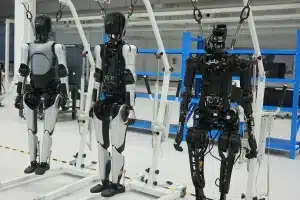
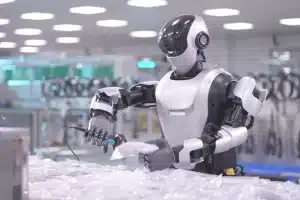
Humanoid Robots
Humanoid robots are designed to resemble the structure and movement of the human body. Instead of optimizing performance for a single industrial task, these robots aim to operate within environments originally designed for people.
A typical humanoid robot includes a head, torso, arms, hands, legs, and multiple articulated joints that closely imitate human motion. Advanced humanoid systems integrate machine vision, force sensing, artificial intelligence, and sophisticated balance control to navigate complex environments and interact naturally with humans.
Because they require many more moving joints than conventional industrial robots, humanoid robots present unique engineering challenges. Designers must carefully balance strength, weight, energy efficiency, and precision while ensuring smooth, coordinated movement across dozens of independent axes.
This has accelerated the development of lightweight materials, compact actuators, precision transmission systems, and highly integrated structural components. As a result, humanoid robotics has become one of the fastest-growing areas of precision engineering and advanced manufacturing.
Mobile Robots
Unlike stationary robotic arms, mobile robots are designed to move freely through their environment while performing assigned tasks.
Some mobile robots follow predefined routes, while others navigate dynamically using cameras, LiDAR, GPS, or simultaneous localization and mapping (SLAM) technologies. These robots are widely used in warehouses, hospitals, manufacturing facilities, airports, and agricultural operations.
Two common categories include:
- Automated Guided Vehicles (AGVs),which travel along fixed paths using magnetic strips, markers, or predefined guidance systems.
- Autonomous Mobile Robots (AMRs),which independently plan routes, avoid obstacles, and adapt to changing environments in real time.
As logistics and warehouse automation continue to expand, mobile robots are becoming increasingly important for improving operational efficiency and reducing manual material handling.

Medical Robots
Medical robotics has transformed many areas of modern healthcare by enabling greater precision, consistency, and control during complex medical procedures.
Surgical robots assist physicians during minimally invasive operations, rehabilitation robots support patient recovery, laboratory automation systems process large volumes of diagnostic samples, and pharmacy robots improve medication management.
Compared with many industrial applications, medical robots often operate under far stricter requirements for cleanliness, biocompatibility, precision, and reliability. Components may be manufactured from corrosion-resistant stainless steels, titanium alloys, or engineering plastics capable of withstanding repeated sterilization without compromising performance.
The increasing demand for precision medical equipment continues to drive innovation in both robotic engineering and high-precision component manufacturing.
Service and Specialized Robots
Beyond factories and hospitals, robots are now performing tasks across an increasingly diverse range of industries.
Service robots assist customers in hotels, restaurants, retail stores, and public facilities. Agricultural robots monitor crop conditions and automate harvesting. Inspection robots operate inside pipelines, offshore platforms, and hazardous industrial environments where human access is difficult or unsafe.
Other specialized robotic systems include underwater robots for marine exploration, space robots for extraterrestrial missions, educational robots for STEM learning, and defense robots designed for hazardous operations.
Each application introduces unique engineering challenges, requiring customized combinations of mechanical design, sensing technology, mobility systems, and environmental protection.
Rather than relying on a single universal design, robotics continues to evolve through highly specialized solutions tailored to specific operational requirements.
Continue Reading: This chapter provides only a general overview of robot classification. For an in-depth look at the various types of robots, please refer to our dedicated guide, *A Detailed Guide to Robot Types*, which offers a comprehensive comparison of their structures, performance characteristics, application scenarios, and engineering design considerations.

Applications of Robotics
Robots have evolved far beyond their original role in factory automation. Today, they are used across a wide range of industries where precision, consistency, efficiency, and safety are critical. From manufacturing automobiles and semiconductor equipment to assisting surgeons and transporting goods through intelligent warehouses, robotic systems have become essential tools for solving complex engineering and operational challenges.
Although every industry has unique requirements, the reasons for adopting robotics are remarkably similar. Robots help improve product quality, reduce repetitive manual work, increase production capacity, enhance workplace safety, and perform tasks that would otherwise be difficult, hazardous, or impossible for humans to complete consistently.
As robotic technology continues to advance, applications are expanding rapidly. Improvements in artificial intelligence, machine vision, sensing technologies, and precision manufacturing have enabled robots to move beyond repetitive production tasks into environments that require greater flexibility, adaptability, and intelligent decision-making.
The following industries represent some of the most significant applications of modern robotics.
Manufacturing and Industrial Automation
Manufacturing remains the largest and most mature application of robotics. For decades, industrial robots have helped manufacturers improve productivity while maintaining the high levels of consistency required for large-scale production.
Robots are commonly used for operations such as welding, machining, assembly, material handling, palletizing, painting, packaging, dispensing, and quality inspection. These tasks often involve repetitive movements performed thousands of times each day, making them well suited for automation.
One of the greatest advantages of robotic manufacturing is repeatability. A properly programmed robot can perform the same operation with consistent precision throughout long production cycles, helping reduce product variation and improve overall quality.
Modern manufacturing robots also play an important role in flexible production environments. By changing software programs, tooling, or end effectors, a single robotic system can often support multiple products or production processes without significant mechanical modifications.
As industries continue to adopt smart manufacturing and Industry 4.0 technologies, robotics is becoming increasingly integrated with digital production systems, enabling real-time monitoring, predictive maintenance, and automated process optimization.
Healthcare and Medical Robotics
Healthcare has become one of the fastest-growing areas of robotics, driven by increasing demand for precision, consistency, and minimally invasive medical procedures.
Surgical robots enable physicians to perform highly complex operations with enhanced dexterity, improved visualization, and greater control than conventional techniques. Rehabilitation robots assist patients recovering from injuries or neurological conditions, while laboratory automation systems improve the speed and accuracy of diagnostic testing.
Robotics also supports pharmaceutical manufacturing, hospital logistics, and medical imaging by reducing repetitive manual tasks and improving operational efficiency.
Because medical applications often involve direct interaction with patients, medical robots must satisfy exceptionally strict requirements for precision, cleanliness, reliability, and biocompatibility. These demands have accelerated innovation in compact mechanical systems, lightweight structural components, and high-precision manufacturing technologies.
Semiconductor and Electronics Manufacturing
Few industries demand higher levels of precision than semiconductor and electronics manufacturing. Components are often measured in microns, and even minor contamination or positioning errors can affect product quality.
Robotic systems play a vital role in wafer handling, chip packaging, automated optical inspection, cleanroom material transfer, and precision assembly. Their ability to perform highly repetitive movements with exceptional accuracy makes them indispensable in modern semiconductor production.
Electronics manufacturing also relies heavily on robotics for operations such as printed circuit board (PCB) assembly, component placement, soldering, dispensing, and product inspection.
Many robotic systems used in these environments incorporate lightweight structural components, precision guide mechanisms, vacuum-compatible parts, and advanced motion control systems to meet the stringent requirements of cleanroom manufacturing.
Warehousing and Logistics
The rapid growth of e-commerce and global supply chains has transformed warehouses into highly automated distribution centers where robotics plays an increasingly important role.
Autonomous Mobile Robots (AMRs) and Automated Guided Vehicles (AGVs) transport materials throughout warehouses, while robotic arms perform picking, sorting, palletizing, and packaging operations.
Machine vision enables robots to identify products with varying shapes and orientations, while intelligent navigation systems allow mobile robots to optimize travel routes and avoid obstacles without human intervention.
Warehouse robotics helps improve order fulfillment speed, reduce manual handling, increase storage efficiency, and support around-the-clock operations in facilities processing thousands of products every day.

Automotive and Transportation
The automotive industry has been at the forefront of industrial robotics for more than half a century and continues to be one of the largest users of robotic automation.
Vehicle manufacturing involves thousands of highly repetitive processes, many of which require exceptional precision and consistency. Robots are widely used for body welding, painting, adhesive dispensing, assembly, material handling, machine tending, and final quality inspection.
As electric vehicles continue to gain market share, robotics has also become increasingly important in battery manufacturing, precision module assembly, and automated testing processes.
The demanding production environment of the automotive industry has driven continuous improvements in robot durability, payload capacity, positioning accuracy, and manufacturing efficiency.
Aerospace and High-Precision Engineering
Aerospace manufacturing presents unique challenges due to the size, complexity, and performance requirements of aircraft and spacecraft components.
Robots assist with drilling, fastening, composite material processing, inspection, surface finishing, and precision assembly of large structural components where accuracy is critical.
Because aerospace components are frequently manufactured from lightweight aluminum alloys, titanium alloys, nickel-based superalloys, and advanced composite materials, robotic systems often work alongside highly specialized machining and inspection technologies.
The combination of robotics and precision manufacturing helps improve consistency while reducing production time for complex aerospace assemblies.
Food, Agriculture, and Consumer Industries
Robotics has expanded rapidly into industries that traditionally relied on manual labor.
Food manufacturers use robotic systems for packaging, sorting, palletizing, and quality inspection while maintaining strict hygiene standards. Agricultural robots assist with planting, harvesting, crop monitoring, and precision spraying, helping improve efficiency while reducing resource consumption.
Consumer goods manufacturers increasingly rely on robotics to automate assembly, packaging, labeling, and logistics operations, allowing production systems to respond more quickly to changing market demand.
The ability to combine speed, precision, and consistent quality has made robotics an essential technology across these high-volume industries.

Research, Education, and Emerging Applications
Beyond commercial manufacturing, robotics continues to drive innovation across research institutions, universities, and emerging technology sectors.
Educational robots provide practical platforms for teaching programming, electronics, and mechanical engineering. Research robots support the development of artificial intelligence, autonomous navigation, human-robot interaction, and advanced sensing technologies.
Specialized robotic systems are also being developed for deep-sea exploration, disaster response, infrastructure inspection, renewable energy maintenance, and planetary exploration, where human access is difficult, expensive, or dangerous.
Many of the technologies pioneered in these research environments eventually find their way into industrial robotics, accelerating innovation across the broader automation industry.
Robotics Continues to Expand Across Industries
The applications of robotics continue to grow as new technologies improve robot capabilities and reduce implementation costs. Tasks that once required dedicated automation systems can increasingly be performed by flexible robotic platforms capable of adapting to changing production requirements.
Regardless of the industry, successful robotic systems depend on the same engineering foundation: well-designed mechanical structures, reliable drive systems, intelligent control technologies, precision-manufactured components, and rigorous quality standards. While the end application may differ, the underlying engineering principles remain remarkably consistent.
As robotics becomes more intelligent, connected, and accessible, its role will continue to expand into new industries and applications that are only beginning to emerge today.
Continue Reading: Each industry presents unique engineering challenges and manufacturing requirements. Explore our dedicated Robotics Applications guide to learn how robotics is transforming sectors such as manufacturing, medical devices, semiconductor equipment, warehouse automation, aerospace, automotive, and many others, along with the precision components and manufacturing technologies that support them.

How Robots Are Designed and Manufactured
Every robot begins as an engineering concept before becoming a fully functional machine. While the finished product may appear to be a single integrated system, its development is the result of a carefully planned process involving mechanical design, electronics, software development, material selection, precision manufacturing, assembly, testing, and quality validation.
Whether developing a simple collaborative robot or a highly sophisticated humanoid platform, engineers must balance numerous factors throughout the design and manufacturing process. Structural strength, weight, accuracy, reliability, manufacturability, cost, and long-term serviceability all influence how a robot is designed and ultimately built.
Unlike many consumer products, robots consist of hundreds—or even thousands—of individual components that must function together with exceptional precision. Even small dimensional deviations or assembly errors can affect motion accuracy, repeatability, vibration characteristics, and long-term reliability.
For this reason, robot manufacturing is not simply about producing parts. It is a multidisciplinary engineering process that combines product development with advanced manufacturing technologies to ensure every component performs as intended.
Robot Design and Engineering
The development of a robot typically begins with defining its intended application. Engineers first determine what tasks the robot will perform, the environment in which it will operate, the required payload, reach, speed, positioning accuracy, and expected service life.
These requirements influence every aspect of the robot’s architecture, from the overall structural layout to the selection of actuators, transmission systems, sensors, controllers, and end effectors.
Computer-aided design (CAD) software is then used to create detailed three-dimensional models of individual components and complete assemblies. Engineers evaluate structural strength, joint movement, accessibility, and component integration before physical prototypes are produced.
Simulation tools also play an increasingly important role during this stage. Digital models allow engineers to verify motion paths, identify potential interference between moving parts, estimate structural loads, and optimize robot performance before manufacturing begins.
By resolving design issues early in development, engineering teams can reduce redesign cycles, shorten product development time, and improve manufacturing efficiency.
Material Selection
Selecting the right materials is one of the most important engineering decisions in robot development. Every component experiences different mechanical loads and operating conditions, making material selection a balance between strength, weight, wear resistance, corrosion resistance, thermal stability, and manufacturing cost.
Structural components such as robot arms, frames, and housings often prioritize lightweight construction without sacrificing rigidity. Aluminum alloys are commonly used because they offer an excellent balance of strength, machinability, and weight reduction. High-load components may require alloy steels or stainless steels to improve durability and fatigue resistance, while titanium alloys are increasingly used in high-performance robotic systems where both strength and low weight are critical.
Engineering plastics also play an important role in modern robotics. Materials such as POM, PEEK, PTFE, and nylon are frequently used for bushings, sliding components, cable management systems, and lightweight functional parts because they provide low friction, good wear resistance, and electrical insulation.
Material selection is closely connected to manufacturing methods. The geometry of a component, required tolerances, production volume, and surface finish all influence which materials are practical for a particular application and how they should be processed.
As robotic systems continue to become lighter, faster, and more energy efficient, material engineering remains a key driver of performance and long-term reliability.

Prototype Development
Before entering mass production, most robotic systems undergo multiple rounds of prototyping to validate both the design and manufacturing process.
Prototype development allows engineers to verify component fit, assembly accuracy, motion performance, structural strength, thermal behavior, and system integration under real operating conditions. It also provides valuable opportunities to identify manufacturing challenges before production tooling and supply chains are finalized.
Depending on the design stage, prototype components may be produced using CNC machining, additive manufacturing, sheet metal fabrication, or other rapid manufacturing technologies. These methods allow engineering teams to evaluate different design options, optimize assembly procedures, and implement improvements quickly without committing to large production volumes.
For complex robotic systems, several prototype iterations are often required before achieving the desired balance between performance, manufacturability, and cost.
This iterative approach significantly reduces development risk while helping ensure that the final production design meets both engineering and commercial requirements.
Manufacturing Capabilities for Prototyping
To support rapid and reliable prototype development, we provide integrated manufacturing capabilities including CNC machining, sheet metal fabrication, and 3D printing services. These processes allow fast iteration, accurate validation, and efficient transition from prototype to production.
Learn more about our manufacturing solutions:
CNC Machining Services →
Sheet Metal Fabrication Services →
3D Printing Services →
Precision Manufacturing Technologies
Once the design has been validated, production shifts toward manufacturing the individual components that will eventually form the complete robotic system.
Because robots rely on precise motion and accurate positioning, many structural and transmission components require extremely tight dimensional tolerances and consistent manufacturing quality. The selected manufacturing process depends on factors such as component geometry, material properties, functional requirements, and production volume.
Common manufacturing technologies used for robotic components include:
- CNC machiningfor high-precision structural parts, housings, brackets, joints, shafts, and custom mechanical components.
- CNC turningfor rotational parts such as shafts, bushings, spacers, and bearing seats.
- Precision grindingfor achieving tight tolerances and superior surface finishes on critical functional surfaces.
- Electrical discharge machining (EDM)for producing intricate internal features and hard-to-machine geometries.
- Sheet metal fabricationfor covers, enclosures, mounting panels, and lightweight structural assemblies.
- Metal and polymer 3D printingfor rapid prototyping, lightweight designs, and low-volume production.
- Assembly and secondary operationsto integrate individual components into complete mechanical subassemblies.
Each process contributes to different aspects of robot performance. High machining accuracy improves positioning precision, carefully controlled surface finishes reduce friction and wear, while consistent dimensional quality helps ensure smooth assembly and reliable operation throughout the robot’s service life.

Assembly and System Integration
Manufacturing individual components is only one stage of robot production. The next step is assembling these components into a fully functional robotic system.
Mechanical assemblies are integrated with actuators, gearboxes, controllers, sensors, electrical wiring, communication systems, and end effectors according to detailed engineering specifications.
During assembly, engineers verify critical alignment points, preload settings, cable routing, fastening torque, and component interfaces to ensure the robot operates as designed. Even small assembly deviations can influence motion smoothness, positioning accuracy, and long-term durability.
As robotic systems become increasingly complex, assembly has evolved from a purely mechanical process into a multidisciplinary integration activity involving mechanical engineering, electrical engineering, software configuration, and system calibration.
Successful integration ensures that every subsystem communicates effectively and performs reliably as a unified machine.
Testing and Quality Assurance
Before a robot is delivered for commercial use, it must undergo comprehensive testing to verify that it meets its design specifications and performance objectives.
Mechanical inspections confirm that critical dimensions and assembly interfaces comply with engineering drawings, while functional testing evaluates movement accuracy, repeatability, payload performance, cycle time, and system stability.
Electrical systems, safety functions, communication interfaces, and software behavior are also validated under various operating conditions. Depending on the application, robots may undergo endurance testing, environmental testing, vibration analysis, or application-specific performance verification.
Quality assurance extends beyond the finished robot itself. Individual components often require dimensional inspection, material verification, and process control throughout manufacturing to ensure consistent product quality from prototype through full-scale production.
Comprehensive testing not only identifies potential issues before deployment but also provides confidence that the robotic system can operate safely and reliably throughout its intended service life.

From Engineering Concept to Intelligent Machine
Designing and manufacturing a robot is a highly collaborative engineering process that brings together expertise from multiple disciplines. Mechanical designers, electronics engineers, software developers, manufacturing specialists, and quality engineers all contribute to transforming an initial concept into a reliable robotic system.
Every stage—from early design and material selection to precision machining, assembly, and final validation—plays an important role in determining the robot’s overall performance. Success depends not only on innovative engineering but also on the ability to manufacture complex components with exceptional accuracy and consistency.
As robots become more intelligent and mechanically sophisticated, the relationship between engineering design and precision manufacturing continues to grow stronger. Advances in materials, machining technologies, additive manufacturing, and quality control are enabling the next generation of robotic systems to become lighter, more accurate, and more capable than ever before.
Continue Reading: This chapter provides an overview of the robot development process. For a deeper look at design for manufacturability (DFM), prototyping, CNC machining, precision grinding, 3D printing, sheet metal fabrication, surface finishing, quality inspection, and the transition from prototype to production, explore our dedicated Robot Manufacturing Guide, where each stage is explained in greater engineering detail.

Future of Robotics
Robotics has progressed from simple programmable machines to intelligent systems capable of perceiving their surroundings, learning from data, and working alongside people. As advances in artificial intelligence, sensing technologies, materials science, and precision manufacturing continue to accelerate, robots are becoming more capable, more adaptable, and increasingly integrated into everyday life.
The future of robotics is not defined by a single breakthrough. Instead, it will be shaped by the continued convergence of multiple engineering disciplines that enable robots to operate with greater intelligence, efficiency, and autonomy. While industrial automation will remain a major driver of innovation, future robots are expected to expand into many new environments where flexibility, collaboration, and real-time decision-making are essential.
Understanding these emerging trends helps engineers, manufacturers, and technology developers anticipate the challenges and opportunities that will influence the next generation of robotic systems.
Artificial Intelligence and Smarter Decision-Making
Artificial intelligence (AI) is transforming robotics from machines that simply execute programmed instructions into systems capable of making informed decisions based on real-world data.
Traditional industrial robots perform predefined sequences with exceptional consistency, but they generally rely on structured environments where every movement has been planned in advance. Modern AI technologies allow robots to recognize objects, interpret visual information, optimize movement paths, detect abnormalities, and adapt to changing operating conditions with minimal human intervention.
Machine learning algorithms also enable robots to improve performance by analyzing operational data collected over time. Rather than repeating identical actions indefinitely, future robotic systems will increasingly adjust their behavior based on previous experience, production conditions, and environmental feedback.
Although fully autonomous robots remain an active area of research, artificial intelligence is already enhancing productivity across manufacturing, logistics, healthcare, and service robotics.
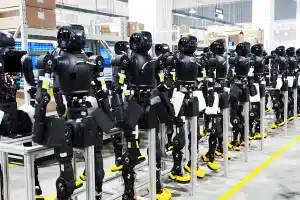
The Growth of Humanoid Robotics
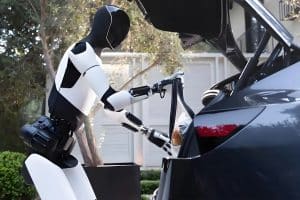
Humanoid robots have become one of the fastest-developing areas of modern robotics because they are designed to operate within environments originally created for people.
Unlike conventional industrial robots that are optimized for specific repetitive tasks, humanoid robots aim to perform a wide variety of activities using human-like movement and interaction. This requires the integration of dozens of coordinated joints, advanced balance control, machine vision, force sensing, and sophisticated artificial intelligence.
Designing humanoid robots presents significant engineering challenges. Components must be lightweight yet structurally strong, joints must deliver smooth and precise motion, and actuators must provide high torque while remaining compact and energy efficient.
These requirements are accelerating innovation in precision mechanical components, transmission systems, lightweight materials, and advanced manufacturing processes. As technology matures, humanoid robots are expected to play an increasingly important role in manufacturing, logistics, healthcare, inspection, and other labor-intensive industries.
Human–Robot Collaboration
The future of robotics is not solely about replacing human labor. Increasingly, robots are being developed to work with people rather than instead of them.
Collaborative robots have already demonstrated that safe human-robot interaction can improve productivity while maintaining flexibility in manufacturing environments. Future collaborative systems are expected to become even more intelligent through improved sensing, predictive motion planning, and natural communication technologies.
Advances in force control, computer vision, voice recognition, and gesture interpretation will allow robots to better understand human intentions and respond safely during shared tasks.
This collaborative approach is particularly valuable in industries where manual expertise remains essential but repetitive or physically demanding tasks can be delegated to robotic assistants.

Advanced Materials and Lightweight Design
As robots become faster, more mobile, and more energy efficient, material engineering will continue to play a critical role in future robot development.
Reducing overall weight without sacrificing structural stiffness allows robots to move more quickly, consume less energy, and carry larger payloads relative to their own mass. Engineers are increasingly exploring advanced aluminum alloys, titanium alloys, magnesium alloys, carbon fiber composites, and high-performance engineering plastics to achieve these objectives.
At the same time, improvements in surface engineering, wear-resistant coatings, and composite material technologies are helping extend component life while reducing maintenance requirements.
Future material innovations will not only improve robot performance but also influence how robotic components are manufactured, assembled, and maintained throughout their lifecycle.
Next-Generation Manufacturing Technologies
The future of robotics depends not only on better designs but also on the ability to manufacture increasingly sophisticated components with exceptional precision.
Advanced CNC machining, additive manufacturing, precision grinding, automated inspection, digital quality management, and intelligent production systems are enabling manufacturers to produce complex robotic components more efficiently than ever before.
Digital engineering tools—including simulation, digital twins, and model-based development—are also shortening product development cycles by allowing engineers to validate designs before physical prototypes are produced.
As manufacturing technologies continue to evolve, future robots will benefit from improved dimensional accuracy, lighter structures, more integrated components, and shorter development timelines.
The relationship between robotics and manufacturing will therefore become increasingly interconnected, with advances in one field driving innovation in the other.
Robotics Beyond Traditional Manufacturing
While manufacturing remains the largest application for robotics, future growth is expected to come from a much broader range of industries.
Healthcare will continue to expand the use of robotic-assisted surgery, rehabilitation devices, and laboratory automation. Agriculture is adopting robots for precision planting, crop monitoring, and autonomous harvesting. Logistics providers are investing heavily in autonomous warehouses and intelligent distribution systems.
Robotics is also expected to play an important role in renewable energy, infrastructure inspection, environmental monitoring, disaster response, deep-sea exploration, and space missions—applications where robots can operate in environments that are dangerous, remote, or inaccessible to humans.
As robotic systems become more intelligent and adaptable, entirely new applications are likely to emerge, creating opportunities that extend well beyond today’s industrial automation.

The Next Era of Robotics
The future of robotics will be defined by the integration of intelligent software, advanced mechanical engineering, innovative materials, and precision manufacturing. Rather than evolving in isolation, these technologies will continue to reinforce one another, enabling robots to become more capable, more efficient, and more widely adopted across every sector of society.
Despite rapid technological progress, the fundamental engineering principles discussed throughout this guide remain unchanged. Every successful robot still depends on carefully designed mechanical structures, reliable motion systems, accurate sensing, intelligent control, and high-quality manufactured components.
As new technologies continue to emerge, engineers who understand these fundamentals will be best positioned to develop the next generation of robotic systems. Whether designing industrial automation equipment, medical devices, autonomous vehicles, or humanoid robots, the future of robotics will continue to be built on the same combination of innovation, precision, and engineering excellence that has driven its evolution for decades.
Continue Reading: This chapter introduces the major trends shaping the next generation of robotics. Explore our dedicated Future of Robotics guide to learn more about AI-powered robots, humanoid robotics, Industry 5.0, digital twins, intelligent manufacturing, next-generation materials, and the technologies expected to redefine robotics in the years ahead.
Frequently Asked Questions
What is the difference between robotics and automation?
Although the terms are often used interchangeably, they are not the same. Automation refers to any technology that reduces or eliminates manual human intervention in a process, including conveyors, PLC-controlled systems, and automated production lines. Robotics is a branch of automation focused on programmable machines capable of sensing, processing information, and performing physical tasks. In many modern factories, robotics serves as one part of a larger automated manufacturing system.
What are the main components of a robot?
Most robots consist of several core systems, including mechanical structures, drive systems, controllers, sensors, electrical components, and end effectors. These systems work together to generate movement, process information, interact with the environment, and perform specific tasks. While the exact design varies depending on the application, these components form the foundation of nearly all modern robotic systems.
How do robots know what to do?
Robots operate by following programmed instructions processed by their control systems. During operation, sensors continuously collect information about the robot and its surroundings, allowing the controller to adjust movement in real time. More advanced robots may also use machine vision and artificial intelligence to recognize objects, optimize motion, and adapt to changing environments.
What materials are commonly used to manufacture robots?
Robot manufacturers select materials based on the function of each component. Aluminum alloys are widely used for lightweight structural parts, while alloy steels and stainless steels provide high strength and durability for heavily loaded components. Titanium alloys are often used in high-performance or medical robotics, and engineering plastics such as PEEK, POM, and nylon are commonly chosen for lightweight, wear-resistant, or electrically insulating parts.
How are robotic components manufactured?
Robot components are produced using a variety of precision manufacturing processes depending on their geometry, material, and functional requirements. Common manufacturing methods include CNC machining, CNC turning, precision grinding, EDM, sheet metal fabrication, additive manufacturing (3D printing), and precision assembly. High dimensional accuracy and consistent quality are essential because even minor variations can affect robot performance and repeatability.
What industries use robotics the most?
Manufacturing remains the largest user of robotics, particularly in automotive, electronics, and metal fabrication. However, robots are also widely used in medical devices, semiconductor manufacturing, warehouse automation, aerospace, agriculture, food processing, logistics, research laboratories, and many other industries. As robotic technologies continue to evolve, their applications are expanding across virtually every sector of the global economy.
Why is precision manufacturing important in robotics?
Robotic systems depend on highly accurate mechanical components to achieve smooth movement, reliable positioning, and long-term durability. Precision manufacturing helps ensure that critical features such as bearing seats, gearbox housings, shafts, joints, and structural interfaces meet tight dimensional tolerances. This contributes directly to robot accuracy, repeatability, stability, and operational reliability, making manufacturing quality a fundamental part of robot performance.