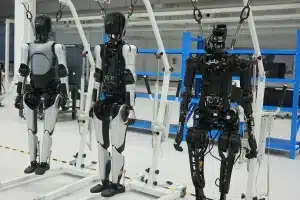
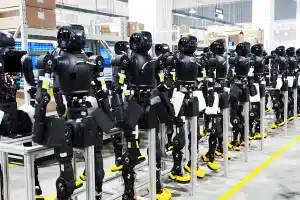
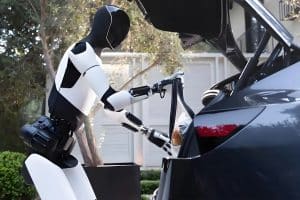
Whether it’s an industrial robot assembling vehicles, a humanoid robot interacting with people, or a surgical robot performing delicate procedures, every robotic system relies on a combination of precision-engineered components working together.
Rather than functioning as a single machine, a robot is built from multiple interconnected systems. Each system performs a specific role—providing structural support, generating motion, transmitting power, processing information, sensing the environment, or interacting with objects. The performance, accuracy, reliability, and lifespan of a robot are directly influenced by the quality and integration of these individual components.
Modern robots also place increasingly demanding requirements on component design. Lightweight structures improve speed and energy efficiency, rigid frames enhance positioning accuracy, while high-precision drive systems enable smooth and repeatable motion. As robotics continues to evolve toward collaborative robots, autonomous mobile robots, and humanoid platforms, component engineering has become one of the most important factors in overall robot performance.
In this guide, we’ll explore the major components found in modern robotic systems, explain how they function together, discuss the materials commonly used to manufacture them, and introduce the precision manufacturing processes that make today’s advanced robots possible.

Robot Structure Overview
A robot is best understood as an integrated system rather than a collection of individual parts. Every component has a specific function, but none operates independently. Mechanical structures provide strength and movement, drive systems generate and transmit motion, electrical systems process information and control operation, while end effectors allow the robot to interact with its working environment.
Although robot designs vary depending on their application, most industrial, collaborative, medical, and service robots share a similar high-level architecture consisting of four major systems:
- Mechanical Components – Form the robot’s structural framework, support moving assemblies, and determine its range of motion.
- Drive Components – Convert motor power into controlled movement and deliver the torque required for robotic operations.
- Electrical Components – Process commands, collect sensor data, monitor operating conditions, and coordinate every movement.
- End Effectors – Perform the robot’s actual task, such as gripping, welding, cutting, dispensing, assembling, or inspection.
These systems must work together with extremely high precision. For example, a servo motor may generate rotational motion, but without a precision gearbox, rigid robot arm, accurate encoder, and properly calibrated controller, the robot cannot achieve the positioning accuracy required in modern manufacturing.
For this reason, robot design is no longer viewed simply as mechanical engineering or electrical engineering alone. It is the integration of structural design, motion control, materials engineering, precision manufacturing, and system-level optimization that ultimately determines a robot’s performance.
Typical Robot System Architecture
A modern industrial robot can generally be divided into the following functional layers:
- Robot Arm
- Joint
- Frame
- Base
- Housing
- Servo Motor
- Gearbox
- Reducer
- Shaft
- Bearings
- Controller
- Sensors
- Encoder
- Vision System
- Power System
- Gripper
- Vacuum Gripper
- Welding Tool
- Screwdriver
- Custom Tooling
This modular architecture allows engineers to optimize each subsystem independently while ensuring all components operate together as a unified robotic platform. As robot applications become more specialized, the complexity and precision requirements of every subsystem continue to increase, making component selection, manufacturing accuracy, and system integration more important than ever.

Mechanical Components
Mechanical components form the physical foundation of every robot. They provide structural support, define the robot’s range of motion, withstand external loads, and maintain positioning accuracy throughout operation. Regardless of whether a robot is designed for industrial automation, medical procedures, logistics, or humanoid applications, its mechanical system must balance strength, stiffness, weight, durability, and manufacturability.
A typical mechanical system consists of structural members, moving joints, supporting frames, protective housings, and mounting elements. Together, these components create a rigid yet flexible platform capable of performing precise and repeatable movements under varying operating conditions.
Robot Arms
The robot arm is the primary structural member responsible for positioning the end effector within the robot’s working envelope. It transfers forces generated by the drive system while supporting the weight of downstream components.
Robot arms are typically designed to maximize rigidity while minimizing weight. Excessive mass increases motor load, reduces acceleration, and decreases energy efficiency, making lightweight structural optimization an important part of robot design.
Common materials include aluminum alloys, high-strength steel, titanium alloys, and increasingly carbon fiber composites for high-performance robotic systems.
Robot Joints
Robot joints connect adjacent arm segments and allow controlled movement between them. Each joint represents one degree of freedom (DOF), enabling the robot to rotate or translate into different positions.
A modern robot joint usually integrates multiple precision components, including:
- Servo motor
- Precision reducer or gearbox
- Bearings
- Encoder
- Housing
- Shafts and couplings
Because every movement passes through the joints, they have a direct impact on accuracy, repeatability, payload capacity, and service life. Joint housings and mating surfaces often require high-precision machining to ensure proper alignment during assembly.
Robot Frames
The robot frame serves as the main load-bearing structure, supporting the entire robotic system and maintaining dimensional stability during operation.
A well-designed frame minimizes structural deformation caused by vibration, dynamic loading, and thermal expansion. This is especially important for robots used in semiconductor manufacturing, electronics assembly, and precision inspection, where even small structural deflections can reduce positioning accuracy.
Frame designs commonly incorporate lightweight ribs, reinforced sections, and optimized wall thicknesses to improve stiffness without significantly increasing weight.

Robot Bases
The robot base anchors the robot to the floor, production equipment, or mobile platform. It provides a stable reference point for all robot movements.
The base must withstand static loads, dynamic forces, and vibration while maintaining precise alignment. Larger industrial robots often use heavy cast or welded bases, whereas collaborative robots and mobile robots typically employ lightweight machined or fabricated structures.
Proper base design helps improve overall stability, repeatability, and long-term operational reliability.
Robot Links
Robot links are the structural members connecting one joint to the next. They determine the robot’s reach, workspace, and load distribution.
Although links may appear to be simple connecting parts, their geometry directly affects bending stiffness, torsional rigidity, and inertia. Engineers often optimize internal structures using lightweight design principles to reduce moving mass without sacrificing mechanical strength.
High-speed robots frequently use hollow links to accommodate internal cable routing while reducing overall weight.
Brackets and Mounting Components
Brackets and mounting components secure motors, sensors, controllers, cable systems, and auxiliary equipment throughout the robot.
Although relatively small, these parts play an important role in maintaining assembly accuracy and system stability. Poor bracket rigidity or inaccurate mounting surfaces can introduce vibration, misalignment, or positioning errors.
Many brackets are manufactured using precision CNC machining or sheet metal fabrication, depending on structural requirements and production volume.
Housings and Protective Covers
Housings and covers protect internal components from dust, moisture, coolant, impact, and accidental contact while also improving cable management and overall appearance.
Beyond protection, many housings serve as functional structural components by supporting bearings, reducers, motors, or electronic assemblies. These parts often require tight dimensional tolerances, accurately machined mounting interfaces, and high-quality surface finishes to ensure reliable assembly and long-term performance.
Depending on the application, housings may be manufactured from aluminum, stainless steel, engineering plastics, or composite materials, balancing structural strength, corrosion resistance, weight, and production cost.
Although each mechanical component performs a different function, they are designed to operate as a single integrated structure. The geometry, material selection, machining accuracy, and assembly quality of every component collectively determine the robot’s rigidity, motion stability, and positioning precision. For this reason, mechanical components remain one of the most critical engineering foundations of modern robotic systems.

Drive Components
While the mechanical structure provides the robot’s physical framework, drive components are responsible for generating, transmitting, and controlling motion. They convert electrical energy into precise mechanical movement, allowing the robot to accelerate, decelerate, stop, and repeat complex motions with high accuracy.
A modern robotic drive system is more than just a motor. It is an integrated assembly of motors, transmission mechanisms, bearings, shafts, and couplings that work together to deliver the required speed, torque, positioning accuracy, and repeatability. The performance of the entire robot largely depends on how efficiently these components interact.
Servo Motors
The servo motor is the primary power source of most industrial and collaborative robots. Unlike conventional motors, servo motors operate within a closed-loop control system, continuously adjusting their position, speed, and torque based on feedback from encoders.
Servo motors provide several advantages that make them ideal for robotic applications:
- High positioning accuracy
- Fast dynamic response
- Precise speed control
- Stable torque output
- Excellent repeatability
Each robot axis is typically driven by an independent servo motor, allowing multiple joints to move simultaneously while maintaining coordinated motion.
Gearboxes
Although servo motors can rotate at high speeds, many robotic applications require lower speeds with significantly higher torque. A gearbox reduces motor speed while increasing output torque, enabling the robot to move heavy loads smoothly and efficiently.
Robot gearboxes are designed to minimize backlash, reduce transmission losses, and maintain precise positioning under continuous operation. Their performance directly influences motion smoothness, payload capacity, and long-term reliability.
High-precision gearboxes are commonly found in industrial robots, collaborative robots, and heavy-duty automation systems where stable motion control is essential.

Precision Reducers
A precision reducer is one of the most critical transmission components in modern robotics. Compared with standard gearboxes, precision reducers are specifically engineered to achieve extremely low backlash, high torsional stiffness, and exceptional positioning accuracy.
Industrial robots commonly use technologies such as harmonic drives and cycloidal reducers because they offer:
- High reduction ratios
- Compact size
- High torque density
- Minimal backlash
- Long service life
Since every movement passes through the reducer, its manufacturing accuracy has a direct impact on robot precision and repeatability.
Bearings
Bearings support rotating shafts and moving joints while minimizing friction between mechanical components. They ensure smooth motion, reduce wear, and help maintain precise alignment under both radial and axial loads.
In robotic systems, bearings are expected to operate continuously under changing speeds and loads while maintaining consistent performance. Selecting the appropriate bearing type is essential for improving motion stability, service life, and positioning accuracy.
Depending on the application, robots may use deep groove ball bearings, angular contact bearings, crossed roller bearings, or thin-section bearings.
Bushings
While bearings support rolling motion, bushings provide low-friction sliding support where rotational speeds are lower or space is limited.
Bushings are widely used in lightweight robots, service robots, and compact mechanisms because they offer:
- Simple construction
- Quiet operation
- Low maintenance
- Good wear resistance
Many bushings are manufactured from engineering plastics or self-lubricating composite materials to reduce friction without requiring additional lubrication.

Shafts
Shafts transmit rotational power between motors, reducers, gears, and other drive components. Although their appearance is relatively simple, shafts are precision-engineered parts that must maintain dimensional accuracy under continuous torsional and bending loads.
Robot shafts often require:
- High concentricity
- Excellent straightness
- Tight dimensional tolerances
- Superior surface finish
These characteristics help minimize vibration, reduce mechanical losses, and ensure smooth power transmission throughout the drive system.
Couplings
Couplings connect rotating components such as motors, gearboxes, and shafts while transmitting torque between them. Besides transferring power, couplings compensate for small installation errors, reduce vibration, and absorb shock loads generated during operation.
Selecting the appropriate coupling improves drivetrain stability and protects precision components from excessive stress. Flexible couplings are commonly used in robotics because they help accommodate minor shaft misalignment without sacrificing positioning accuracy.
The drive system serves as the power transmission network of a robot, transforming electrical energy into controlled mechanical motion. Servo motors generate movement, gearboxes and reducers optimize torque, bearings and bushings support smooth rotation, shafts transmit power, and couplings ensure reliable mechanical connections. Together, these components enable robots to perform complex movements with the precision, efficiency, and repeatability required in modern automation and advanced manufacturing.

Electrical Components
While mechanical components provide the robot’s structure and drive components generate movement, electrical components act as the robot’s control and communication system. They receive commands, process information, monitor operating conditions, and coordinate every motion with high precision.
Modern robots rely on a continuous flow of data between controllers, sensors, motors, and feedback devices. Every movement is calculated, monitored, and corrected in real time, allowing the robot to maintain accuracy, repeatability, safety, and operational efficiency even in complex environments.
A typical electrical system consists of controllers, sensors, encoders, vision systems, power distribution, and communication cables that work together as an integrated control network.
Controllers
The controller is the central processing unit of a robotic system. It receives instructions from the robot program, analyzes sensor feedback, calculates motion trajectories, and sends commands to each servo motor.
A modern robot controller is responsible for:
- Motion planning
- Multi-axis coordination
- Speed and acceleration control
- Safety monitoring
- Communication with external equipment
As robots become increasingly intelligent, controllers also support advanced functions such as collision detection, force control, adaptive motion, and AI-assisted decision-making.
Sensors
Sensors enable robots to perceive their surroundings and monitor their own operating conditions. Without sensors, a robot could execute programmed movements but would be unable to respond to changes in its environment.
Depending on the application, robots may use a wide range of sensors, including:
- Position sensors
- Force and torque sensors
- Proximity sensors
- Temperature sensors
- Pressure sensors
- Laser and distance sensors
Sensor data allows the controller to continuously adjust robot motion, improving positioning accuracy, operational safety, and process stability.

Encoders
An encoder measures the rotational or linear position of a motor or moving axis and provides continuous feedback to the controller.
Servo systems rely on encoder signals to determine:
- Current position
- Rotation speed
- Movement direction
- Position error
This closed-loop feedback enables robots to maintain extremely accurate positioning, even during rapid acceleration or continuous repetitive motion.
High-resolution encoders are essential for applications such as semiconductor manufacturing, precision assembly, and medical robotics, where positioning errors must be kept to an absolute minimum.
Communication Cables
Although often overlooked, communication cables form the data and power network connecting every electrical subsystem within the robot.
These cables transmit:
- Control signals
- Feedback data
- Power to motors and sensors
- Industrial communication protocols
Because robot joints move continuously, robotic cables are specifically designed to withstand repeated bending, twisting, and dynamic motion without signal degradation or premature failure.
Proper cable routing also reduces mechanical interference, simplifies maintenance, and improves long-term system reliability.
Vision Systems
A robot vision system allows the robot to identify objects, measure dimensions, recognize patterns, and inspect product quality using cameras and image-processing software.
Machine vision significantly expands robotic capabilities by enabling robots to operate in environments where object positions or orientations cannot be precisely predetermined.
Common applications include:
- Part identification
- Pick-and-place guidance
- Dimensional inspection
- Defect detection
- Barcode and QR code recognition
When combined with artificial intelligence, vision systems enable robots to perform increasingly complex inspection and decision-making tasks.
Power Systems
Every robotic system requires a stable and reliable power system to operate its controllers, motors, sensors, and auxiliary equipment.
A typical power system includes power supplies, converters, protection devices, and distribution modules that ensure each subsystem receives the correct voltage and current.
Modern robots also incorporate protective functions such as overload protection, voltage monitoring, emergency shutdown, and energy management to improve operational safety and equipment reliability.
For autonomous mobile robots and service robots, battery management systems play an equally important role by monitoring battery health, charging status, and overall energy efficiency.
Unlike mechanical components that directly generate movement, electrical components continuously monitor, calculate, and coordinate every stage of robot operation. Controllers process commands, sensors collect environmental data, encoders provide precise position feedback, communication systems synchronize information, vision systems expand perception, and power systems ensure stable operation. Together, these components transform a mechanical machine into an intelligent robotic system capable of precise, adaptive, and reliable performance.

End Effectors
While the robot’s mechanical, drive, and electrical systems enable movement and control, the end effector is the component that performs the robot’s actual task. Mounted at the end of the robot arm, it serves as the interface between the robotic system and the workpiece, allowing the robot to interact with its environment.
The design of an end effector depends entirely on the intended application. Some are built to grip and move objects, while others weld, assemble, inspect, polish, dispense adhesives, or perform highly specialized manufacturing operations. Selecting the appropriate end effector is therefore one of the most important decisions in robot system design, as it directly influences productivity, precision, flexibility, and process reliability.
Grippers
Grippers are the most widely used end effectors in robotics. Their primary function is to securely grasp, hold, and release workpieces during automated operations.
Different gripper designs are optimized for different object shapes, materials, and handling requirements. Common examples include:
- Parallel grippers
- Angular grippers
- Three-finger grippers
- Soft robotic grippers
Grippers are extensively used in assembly, packaging, machine tending, and material handling, where stable and repeatable object manipulation is essential.
Vacuum Grippers
Vacuum grippers use negative air pressure to lift and transport objects without applying mechanical clamping force. They are particularly suitable for handling flat, lightweight, or fragile materials that could be damaged by conventional grippers.
Typical applications include:
- Glass handling
- Sheet metal transfer
- Electronic components
- Packaging materials
- Solar panels
The effectiveness of a vacuum gripper depends on factors such as suction cup design, surface condition, object weight, and vacuum pressure.

Welding and Process Tools
In many manufacturing environments, robots perform specialized production processes rather than simply moving parts. In these applications, the end effector functions as a working tool instead of a gripping device.
Common process tools include:
- Welding torches
- Soldering tools
- Cutting heads
- Grinding and polishing tools
- Dispensing nozzles
- Spray painting equipment
These tools allow robots to perform repetitive manufacturing operations with consistent speed, quality, and precision.
Assembly Tools
Automated assembly often requires dedicated end effectors designed for specific production tasks.
Examples include:
- Screwdriving systems
- Press-fit tools
- Riveting equipment
- Insertion tools
- Fastening devices
Many assembly tools incorporate force sensors or torque monitoring systems to ensure every operation meets predefined quality requirements while preventing damage to sensitive components.
Inspection and Measurement Tools
Not all robots are used for manufacturing. Many are designed for inspection, measurement, and quality control, where specialized end effectors carry cameras, laser scanners, or precision measurement instruments.
These systems are commonly used for:
- Dimensional measurement
- Surface inspection
- 3D scanning
- Defect detection
- Barcode and QR code verification
Combined with machine vision and advanced software, inspection robots can evaluate product quality with high speed and repeatable accuracy.
Custom End Effectors
Many robotic applications require custom-designed end effectors tailored to unique products, manufacturing processes, or operating environments.
Custom designs often integrate multiple functions into a single assembly, such as gripping, sensing, rotating, or measuring, allowing the robot to complete complex tasks in a single operation.
The development of custom end effectors typically involves close collaboration between mechanical design, electrical integration, and precision manufacturing teams to ensure compatibility with the robot’s payload, workspace, accuracy, and cycle time requirements.
While the robot itself provides movement and control, it is the end effector that transforms those capabilities into practical industrial, medical, logistics, and service applications.

How Robot Components Work Together
Every robot is built from a combination of mechanical, drive, electrical, and end-effector systems, but its performance depends on how these systems work together rather than on any individual component. A high-precision robot can only achieve accurate, repeatable motion when every component functions as part of a coordinated system.
A typical robotic operation begins when the controller receives a programmed command. Based on this instruction, it calculates the required motion path and sends control signals to the servo motors. The servo motors generate rotational power, which is transmitted through precision gearboxes or reducers to the robot joints. These joints drive the robot arms and links, positioning the end effector at the required location to perform its assigned task.
Throughout this process, sensors and encoders continuously provide real-time feedback to the controller, allowing it to monitor position, speed, and operating conditions. If any deviation is detected, the controller immediately adjusts the motor output to maintain the required motion accuracy and repeatability.
This closed-loop process allows robots to perform complex operations with a level of consistency that would be difficult to achieve through manual operation alone.
A Simplified Robot Motion Process
Robot Program
Controller
Servo Motor
Gearbox /
Precision Reducer
Joint & Robot Arm
End Effector
Workpiece
Integration Determines Performance
Although every component has its own function, the performance of a robot is ultimately determined by the integration of all its subsystems. A high-precision gearbox cannot compensate for a flexible robot arm, just as a powerful servo motor cannot deliver accurate positioning if the encoder or controller lacks sufficient precision.
Successful robot design requires every subsystem to meet the same engineering objectives, including:
- Structural rigidity
- Motion accuracy
- Transmission efficiency
- Reliable sensing and feedback
- Stable control
- Consistent manufacturing quality
Engineers must also consider how changes to one component affect the rest of the system. For example, reducing the weight of a robot arm lowers inertia and improves acceleration, but it may also reduce structural stiffness if the material or geometry is not properly optimized. Likewise, increasing motor power without upgrading the transmission system may create unnecessary stress on gearboxes, bearings, and joints.
Precision Manufacturing Connects Every Component
No matter how advanced a robot’s design may be, its performance ultimately depends on the precision with which every component is manufactured and assembled.
Mechanical structures require accurate machining to maintain alignment, drive components depend on tight tolerances to achieve smooth and efficient power transmission, and electrical systems rely on precise integration to ensure stable communication and motion control. During final assembly, these independently manufactured components are brought together into a single robotic system, where even small dimensional variations can affect accuracy, vibration, and long-term reliability.
For this reason, robot manufacturers place significant emphasis on precision manufacturing, comprehensive inspection, and controlled assembly processes. These practices ensure that every component works together as intended, enabling the robot to deliver the accuracy, repeatability, and durability required across industrial automation, medical technology, logistics, semiconductor manufacturing, and other demanding applications.
Understanding robot components individually is essential, but understanding how they interact provides a more complete view of robotic engineering. Every movement, from a simple pick-and-place operation to a complex multi-axis manufacturing process, relies on the seamless integration of structural components, motion systems, electronic controls, precision manufacturing, and quality assurance. Together, these elements transform individual parts into a reliable, intelligent, and highly capable robotic system.

From Components to Manufacturing
Understanding individual robot components is only one part of robotic engineering. Transforming these designs into high-performance, production-ready parts requires equally advanced manufacturing technologies.
Every robot component has unique engineering requirements. Structural parts must achieve the right balance between strength and weight, transmission components demand micron-level precision, while housings and mounting structures require excellent dimensional consistency for accurate assembly. Selecting suitable manufacturing processes, materials, inspection methods, and production strategies is therefore just as important as the component design itself.
In the next guide, we’ll explore how robot components are manufactured, covering topics such as CNC machining, precision turning, grinding, sheet metal fabrication, additive manufacturing, surface finishing, quality control, and prototype-to-production workflows.
Precision Manufacturing for Robot Components
High-performance robots depend on precision-engineered components manufactured to consistently tight tolerances. From lightweight structural parts and gearbox housings to precision shafts, brackets, and custom end effectors, manufacturing quality directly influences robot accuracy, repeatability, and long-term reliability.
At DakingsRapid, we provide precision manufacturing services for robotic components, supporting customers from prototype development through low-volume and production manufacturing. Our capabilities include CNC machining, CNC turning, sheet metal fabrication, 3D printing, assembly, and comprehensive quality inspection, enabling engineers to manufacture complex robotic parts with confidence.
Whether you’re developing industrial robots, collaborative robots, humanoid robots, medical robotic systems, or automation equipment, our engineering team can help manufacture precision components that meet demanding performance and quality requirements.