Robot Systems, Motion, Control, and Decision-Making
Imagine asking a robot to pick up a fragile electronic component from a conveyor belt, inspect it with a camera, and place it into a packaging tray. To us, the task seems simple. For the robot, however, completing that single action requires multiple systems to work together seamlessly—from receiving instructions and sensing the environment to calculating movement, controlling motors, and continuously correcting its position.
Unlike conventional machines that repeat fixed mechanical motions, modern robots are designed to perceive, process information, make decisions, and interact with the physical world. Every movement is the result of close coordination between mechanical structures, electronic hardware, software algorithms, sensors, and precision components.
Whether the robot is assembling automobiles, assisting surgeons, sorting warehouse packages, or inspecting semiconductor equipment, the underlying workflow follows the same fundamental principles. Each task begins with an instruction, continues through perception and decision-making, and ends with controlled motion supported by continuous feedback.
In this guide, we’ll follow that complete workflow step by step. Rather than introducing individual robot parts in isolation, you’ll see how every subsystem contributes to completing a real-world task, making it easier to understand not only how robots work, but also why precision engineering plays such an important role in modern robotics.
Understanding the Robot System
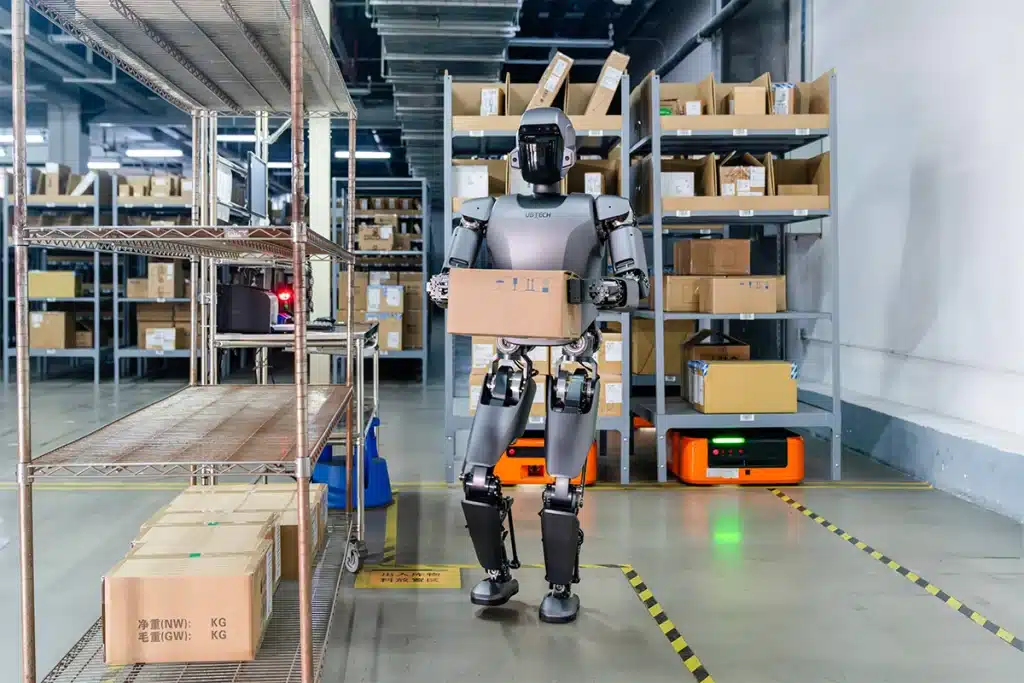
Before examining how a robot performs a task, it’s important to understand one fundamental concept: a robot is not a single machine, but an integrated system made up of multiple specialized subsystems.
Many people imagine a robot as little more than motors and metal arms. In reality, every movement depends on the cooperation of mechanical structures, electronic hardware, software, sensors, controllers, communication networks, and feedback systems. If any one of these elements fails or performs inaccurately, the entire robot can lose precision, efficiency, or even the ability to operate safely.
An easy way to understand this is to compare a robot with the human body. Humans rely on the brain to make decisions, eyes and ears to perceive the environment, muscles and joints to generate movement, and the nervous system to coordinate everything together. Robots achieve similar capabilities through engineering systems rather than biological ones.
Instead of muscles, robots use servo motors and drive systems. Instead of eyes, they rely on cameras, laser scanners, or other sensors. Instead of a brain, they use industrial controllers and software algorithms to process information and generate movement commands. Every component contributes to a continuous flow of information that allows the robot to perform its assigned task.
Rather than operating independently, these subsystems constantly exchange data with one another. Information collected by sensors is analyzed by the controller, converted into motion commands, executed by the drive system, and then verified through feedback sensors before the next movement begins. This continuous loop allows robots to operate with remarkable speed and accuracy.
The Four Core Functions of Every Robot
Although robots come in countless shapes and sizes, from collaborative robots and industrial manipulators to autonomous mobile robots and humanoid robots, they all perform the same four fundamental functions.
Sense
Every task begins with collecting information. A robot must first understand its surroundings before it can interact with them. Cameras identify objects, encoders measure joint positions, force sensors detect contact, and proximity sensors monitor nearby obstacles. Without reliable sensing, the robot has no accurate understanding of the physical world.
Think
Once data has been collected, the robot’s controller processes the information and determines what should happen next. It identifies targets, calculates positions, plans movement paths, checks safety conditions, and continuously evaluates whether adjustments are necessary during operation.
Move
After planning is complete, motion commands are transmitted to servo motors and drive systems. These systems convert digital instructions into precise mechanical movement, coordinating multiple joints simultaneously to produce smooth and accurate motion.
Act
The robot performs the intended task. It may pick up a workpiece, weld a component, assemble a medical device, inspect a semiconductor wafer, or transport materials inside a warehouse. During the entire process, sensors continue providing feedback so the robot can immediately correct any deviations from its planned motion.
Although these four functions appear straightforward, they are continuously repeated hundreds or even thousands of times every second while a robot is operating.

How Robot Systems Work Together
To better understand the overall workflow, imagine an industrial robot assembling an aluminum housing for an automation system.
The process begins when the production controller sends a command instructing the robot to pick up a specific component. Before moving, cameras and sensors verify the component’s location and orientation. The robot controller then calculates the optimal motion path, ensuring the arm can reach the target safely while avoiding surrounding equipment.
Once the motion plan has been generated, servo motors rotate each joint according to precisely coordinated commands. As the robot moves, encoders continuously measure the exact position of every axis, while force sensors monitor contact pressure to prevent excessive loading or accidental collisions.
When the robot finally grasps the component, the process doesn’t end. Feedback data immediately returns to the controller, confirming whether the movement was completed accurately. If even a slight positioning error is detected, the controller automatically adjusts the robot’s next motion, often within milliseconds.
This closed-loop workflow is what enables modern robots to achieve the high levels of repeatability required in industries such as electronics manufacturing, medical devices, semiconductor equipment, and precision automation.
Key Robot Subsystems
Although robots are often discussed as complete machines, engineers usually view them as a collection of interconnected subsystems, each responsible for a specific function.
The mechanical system forms the robot’s physical structure, including the arms, joints, frames, bases, and end effectors that generate movement and interact with the outside world.
The electrical system supplies power and connects sensors, motors, controllers, communication modules, and safety devices. Reliable electrical architecture ensures that information and energy flow efficiently throughout the robot.
The control system acts as the robot’s decision-making center. It interprets commands, analyzes sensor data, calculates motion trajectories, synchronizes multiple axes, and continuously monitors operating conditions.
The software system provides the intelligence that defines how the robot behaves. Motion planning, collision avoidance, path optimization, machine vision, artificial intelligence, and communication protocols all rely on software.
The feedback system continuously compares the robot’s actual movement with its planned movement. This allows the controller to compensate for errors caused by mechanical wear, temperature changes, vibration, or external forces, ensuring stable long-term performance.
Although each subsystem has its own responsibilities, none of them operates independently. Modern robotics depends on continuous cooperation between mechanical engineering, electronics, software, and precision manufacturing, creating an integrated system capable of performing highly complex tasks with remarkable consistency.

How Robots Receive Instructions
Unlike humans, robots do not decide to perform tasks on their own. Every action begins with an instruction, whether it comes from a pre-programmed production sequence, a human operator, another machine, or increasingly, an artificial intelligence system.
Consider a robotic arm working on an electronics assembly line. Before it picks up a component or tightens a screw, it must first receive information about what task to perform, where the target is located, and what conditions must be satisfied before movement can begin.
Pre-Programmed Commands
The most common way robots receive instructions is through pre-programmed commands. This approach is widely used in industrial automation, where the production process is highly repeatable and every product follows the same manufacturing sequence.
Imagine a robotic arm assembling hundreds of identical aluminum housings throughout the day. The position of each housing, the required assembly sequence, the gripping force, and the movement path have already been programmed into the robot’s controller. Once production begins, the robot simply follows these instructions with exceptional consistency.
Rather than “thinking” about every movement, the controller executes a predefined series of commands such as:
- Move to the pickup position.
- Verify the part is present.
- Close the gripper.
- Lift the component.
- Travel along a planned path.
- Place the part in the assembly fixture.
- Return to the starting position.
Although this sequence appears simple, every command contains detailed parameters, including joint positions, movement speed, acceleration, orientation, gripping force, and safety limits. Modern industrial robots can execute thousands of these commands every minute while maintaining extremely high repeatability.
This method is ideal for applications such as automotive manufacturing, electronics assembly, CNC machine tending, packaging, and semiconductor production, where product designs change infrequently and production efficiency is a priority.
However, modern manufacturing rarely remains completely unchanged. Different product variants, customized orders, and flexible production lines require robots to receive instructions in more dynamic ways.
Human Operator Commands
Not every robotic system operates in a fully automated production line. Many robots still work closely with human operators, receiving instructions directly from technicians, engineers, or machine operators.
This is especially common in collaborative robots (cobots), laboratory automation, medical robotics, prototype manufacturing, and low-volume production environments, where tasks frequently change.
Operators can communicate with robots through various interfaces, including:
- Teach pendants
- Industrial control panels
- Computer software
- Touchscreen HMIs
- Hand-guiding systems
- Voice or gesture interfaces in advanced applications
One of the most intuitive programming methods is lead-through teaching, where an operator physically guides the robot arm through the desired motion. The controller records each position, orientation, and movement speed, allowing the robot to repeat the same operation automatically in future cycles.
This approach significantly reduces programming complexity for repetitive tasks while making robots more accessible to manufacturers without extensive robotics programming experience.
As collaborative robots continue to become more common, direct human interaction is playing an increasingly important role in flexible manufacturing, allowing production lines to switch between different products with minimal downtime.
Machine-to-Machine Communication
In modern smart factories, robots rarely work alone. Instead, they operate as part of a larger automated production system where multiple machines continuously exchange information.
Before a robot performs a task, it often waits for instructions from another machine or an industrial control system rather than from a human operator.
For example, in a CNC machining cell, the workflow may look like this:
- A CNC machine finishes machining a precision component.
- The CNC controller sends a completion signal.
- The robot receives the signal automatically.
- The robot opens the machine door.
- The finished part is removed.
- A new workpiece is loaded.
- The machining cycle starts again.
Throughout this process, every action is synchronized through industrial communication networks, ensuring that each machine performs its task at exactly the right moment.
The same concept applies to automated warehouses, semiconductor production lines, electronics assembly systems, and robotic inspection cells, where dozens or even hundreds of machines operate together as a single coordinated manufacturing system.
Without reliable machine-to-machine communication, production efficiency would decrease significantly, and the risk of collisions, delays, or manufacturing errors would increase.

Vision Systems and External Inputs
Many modern robots must work in environments where the position of objects changes constantly. Parts may arrive randomly on a conveyor belt, containers may be placed slightly differently each time, or products may vary in size and orientation.
In these situations, robots depend on external inputs to determine what action to perform.
Machine vision systems are among the most widely used sources of real-time information. High-resolution cameras capture images of the work area, while image-processing software identifies the location, orientation, dimensions, and sometimes even the quality of each object.
Instead of moving to a fixed position programmed in advance, the robot first analyzes the visual data before calculating a new target position.
For example, imagine a robot sorting randomly arranged metal brackets after laser cutting.
Rather than assuming every bracket is in the same location, the vision system first identifies each part individually. The controller then calculates the exact gripping position and generates a unique movement path for every pick-and-place operation.
In addition to cameras, robots can also receive information from barcode scanners, RFID systems, laser scanners, force sensors, weight sensors, production databases, and cloud-connected manufacturing systems.
This ability to combine multiple information sources makes robots far more adaptable than traditional automated equipment.
AI-Based Decision Making
The newest generation of robots is beginning to move beyond fixed programming toward AI-assisted decision-making.
Traditional industrial robots perform exactly the instructions they are given. If a workpiece is missing or positioned incorrectly, production often stops until the problem is corrected.
AI-enabled robots, however, can analyze large amounts of sensor data, recognize patterns, and make limited decisions based on changing conditions.
For example, instead of receiving a fixed instruction to pick up a specific object, an AI-powered robot may first identify all available objects within its field of view, determine which one matches the production requirements, calculate the safest gripping strategy, and adjust its movement if the environment changes unexpectedly.
In warehouse automation, AI systems can optimize picking routes to reduce travel time. In quality inspection, machine learning algorithms can distinguish acceptable products from defective ones with increasing accuracy. In humanoid robotics, AI enables robots to interpret voice commands, recognize people, and interact more naturally with their surroundings.
Despite these advances, it is important to understand that AI does not replace the robot’s core control system. Instead, it works alongside traditional controllers, providing higher-level decision-making while the controller continues to manage precise motion, safety, and real-time execution.
As artificial intelligence continues to evolve, robots are becoming increasingly capable of adapting to dynamic environments, making them suitable for applications that were once considered too complex for traditional automation.

How Robots Sense Their Environment
Imagine the robot has just been told to pick up an aluminum housing from a conveyor belt. Although it knows what task to perform, it still doesn’t know where the part is, how it is positioned, whether anything is blocking its path, or even if the correct component has arrived.
Unlike humans, robots cannot naturally see, hear, or feel the world around them. Every piece of information about their surroundings must be collected through sensors and converted into digital data that the controller can understand.
This ability to gather information from the physical world is known as robot perception. It forms the foundation of every robotic task, because a robot cannot make accurate decisions or execute precise movements without first understanding its environment.
Whether assembling electronic devices, welding automotive components, handling semiconductor equipment, or assisting in medical procedures, modern robots rely on multiple sensing technologies working together simultaneously. Some sensors determine position, others measure force, while others identify objects, detect obstacles, or monitor environmental conditions.
Rather than depending on a single “robot eye,” industrial robots typically combine information from many different sensors. This process—often called sensor fusion—allows the robot to build a much more reliable understanding of its surroundings than any individual sensor could provide on its own.
Robot Vision Systems
The first challenge for our robot is finding the component it has been instructed to pick up.
If every workpiece were placed in exactly the same position every time, this task would be relatively simple. However, real manufacturing environments are rarely that predictable. Components may arrive at slightly different angles, shift during transportation, or vary in orientation from one production cycle to the next.
This is where machine vision systems become essential.
A robot vision system combines industrial cameras, lighting equipment, image-processing software, and powerful computing algorithms to capture and analyze visual information. Instead of simply taking a picture, the system identifies important details such as the object’s location, orientation, dimensions, edges, surface features, and sometimes even defects.
For example, in an electronics assembly line, a vision system can determine whether a connector is facing the correct direction before the robot attempts to install it. In semiconductor manufacturing, cameras inspect wafer positions with extremely high precision before handling begins. In warehouse automation, vision systems identify randomly stacked packages and calculate the best gripping position for each one.
Modern vision technology has also advanced beyond traditional 2D imaging. Many robots now use 3D vision systems that generate depth information, allowing them to understand the height, shape, and spatial relationship of surrounding objects. This capability makes robotic bin picking, palletizing, and complex assembly operations significantly more reliable.
Force and Torque Sensors
Now our robot has located the aluminum housing and begins moving toward it.
As the gripper makes contact with the part, another question immediately arises: How hard should the robot grip it?
If the gripping force is too low, the component may slip and fall. If the force is too high, delicate parts such as medical components, electronic assemblies, or thin-walled housings could become permanently damaged.
Humans solve this problem naturally through the sense of touch. We instinctively adjust our grip when holding a fragile glass or lifting a heavy toolbox. Robots achieve a similar capability through force and torque sensors.
These sensors measure the forces and rotational moments acting on the robot during operation. Instead of relying solely on programmed positions, the controller continuously monitors the sensor data and adjusts movement whenever unexpected contact occurs.
This capability is especially important in precision assembly operations.
For example, when inserting a precision shaft into a bearing, even a slight misalignment can cause excessive force. Rather than forcing the components together, the robot immediately detects the resistance, pauses the insertion process, and makes small positional corrections until the parts align correctly.
Force sensing also plays a critical role in collaborative robots. Since cobots often work alongside human operators, they continuously monitor external forces to detect accidental contact. If the measured force exceeds a predefined safety threshold, the robot immediately slows down or stops to prevent injury.
Without force feedback, robots would perform every movement blindly, increasing the risk of damaged products, worn tooling, or unsafe operating conditions.

Position Sensors and Encoders
Knowing where an object is located is only part of the challenge.
The robot must also know exactly where its own body is at every moment.
Imagine closing your eyes and trying to touch the tip of your nose. Even without seeing your hand, your brain knows the position of every joint in your arm. This natural awareness is called proprioception.
Robots achieve a similar capability using position sensors and encoders.
Every joint of an industrial robot is equipped with an encoder that continuously measures its rotational angle or linear position. As servo motors rotate, the encoders instantly report the exact position of each axis back to the controller.
This constant feedback allows the controller to determine the precise location of the robot’s end effector in three-dimensional space.
For high-precision applications such as semiconductor manufacturing, optical equipment assembly, or medical device production, positioning errors measured in only a few micrometers can affect the quality of the final product. As a result, encoder accuracy becomes one of the most important factors influencing overall robot performance.
The encoder is therefore not simply a measuring device—it is one of the key components that enables robots to achieve exceptional repeatability over millions of operating cycles.
Proximity and Environmental Sensors
Before our robot reaches the target component, it must also ensure that the surrounding workspace is safe.
Factories are dynamic environments where people, machines, pallets, and other robots may all be moving simultaneously. Even a perfectly programmed motion can become dangerous if unexpected obstacles appear.
To reduce these risks, robots rely on proximity sensors and various environmental sensing technologies.
Proximity sensors detect nearby objects without requiring physical contact. Depending on the application, they may use inductive, capacitive, ultrasonic, infrared, or laser-based technologies to determine whether an object has entered a predefined detection zone.
These sensors are commonly used to confirm that a workpiece has arrived at a pickup station, verify that fixtures are properly positioned, or prevent collisions between robotic equipment.
More advanced robotic systems may also include laser scanners, LiDAR, depth cameras, temperature sensors, humidity sensors, and vibration sensors. Together, these devices allow robots to monitor not only nearby objects but also the operating conditions of the surrounding environment.
For example, autonomous mobile robots navigating warehouses continuously scan their surroundings to identify shelves, workers, forklifts, and other vehicles. Instead of following a fixed route, they update their paths in real time as the environment changes.
This continuous awareness enables robots to operate safely and efficiently in increasingly complex workplaces.
Sensor Fusion: Combining Multiple Sources of Information
Although we’ve discussed vision systems, force sensors, encoders, and proximity sensors separately, modern robots rarely rely on just one type of sensor.
Instead, they combine information from multiple sensing devices to create a more complete understanding of the environment.
Returning to our robot assembling an aluminum housing, the workflow now becomes much clearer.
The vision system identifies the location and orientation of the housing.
The encoders report the exact position of every robot joint as the arm moves toward the target.
Force sensors monitor the gripping pressure once contact is made.
Meanwhile, proximity sensors continue checking the surrounding workspace to ensure the planned motion remains safe.
Only after all of this information has been collected and verified does the robot have enough confidence to continue with the task.
This process of integrating multiple sensor inputs is known as sensor fusion, and it is one of the defining characteristics of modern robotics. By combining different types of data, robots can compensate for the limitations of individual sensors, improve accuracy, reduce uncertainty, and make more reliable decisions in dynamic environments.

How Robots Process Information
Every second, modern robots receive enormous amounts of data. Images from cameras, joint positions, motor status, force measurements, temperature readings, safety signals, and production commands all arrive simultaneously. Without a system capable of interpreting this information, the robot would simply be overwhelmed by raw data with no understanding of what it actually means.
The role of information processing is to transform this constant flow of data into decisions that guide every movement the robot makes. This is where the robot begins to transition from simply sensing the world to actively responding to it.
The Robot Controller: The Brain of the System
At the center of every robotic system is the robot controller.
Although it is often compared to the human brain, the controller performs a far more specialized role. Rather than thinking creatively or making independent judgments, its responsibility is to continuously analyze incoming information, execute programmed logic, coordinate every subsystem, and generate precise motion commands.
Whenever new sensor data arrives, the controller immediately asks a series of practical questions:
- Is the correct workpiece present?
- Has the previous task been completed successfully?
- Are all robot joints operating within safe limits?
- Is the planned movement still free from collisions?
- Should the robot continue, adjust its motion, or stop immediately?
These decisions occur in fractions of a second. A robot assembling precision components may perform thousands of calculations before completing what appears to be a single smooth movement.
The controller also acts as the communication hub of the entire robot. It continuously exchanges information with servo drives, sensors, safety systems, machine vision equipment, programmable logic controllers (PLCs), and other manufacturing equipment. Every subsystem depends on the controller to synchronize its actions with the rest of the production process.
Without a reliable controller, even the most advanced mechanical system would simply become a collection of disconnected components.
From Raw Data to Useful Information
One of the biggest challenges in robotics is that sensors rarely provide perfect information.
A camera captures millions of pixels, but the robot is not interested in every detail of the image. Instead, it needs to determine whether the correct component is present, where it is located, and how it is oriented.
Similarly, a force sensor continuously measures changes in pressure, but the robot only needs to know whether the applied force remains within acceptable limits.
The controller therefore performs several stages of data processing before making any decisions.
First, it collects information from multiple sensors operating simultaneously. Next, irrelevant or noisy data is filtered out to improve reliability. The remaining information is then combined into a consistent representation of the robot’s environment.
Only after this process is complete can the controller determine the current state of the robot, identify the target object, and evaluate whether the task should continue as planned.
This ability to extract meaningful information from large amounts of sensor data is one of the reasons modern robots are significantly more capable than earlier generations of industrial automation equipment.

Control Algorithms: Turning Decisions into Actions
Once the controller understands the current situation, it must decide how the robot should respond.
This decision-making process is governed by control algorithms—mathematical methods that determine how every joint, motor, and actuator should behave during operation.
Rather than issuing simple commands such as “move forward,” control algorithms continuously calculate the precise position, velocity, acceleration, and timing required for every axis of the robot.
For example, when moving an articulated robotic arm toward a workpiece, all joints must rotate in perfect coordination. If one motor accelerates too quickly or another responds too slowly, the end effector may miss its target or produce unnecessary vibration.
To prevent these problems, the controller constantly compares the robot’s desired motion with its actual movement, making tiny corrections throughout the entire operation.
These adjustments happen so quickly that the movement appears perfectly smooth to the human eye, even though the controller may be updating motor commands hundreds or even thousands of times every second.
Real-Time Processing
Imagine a robot placing fragile glass components onto a moving conveyor belt. Even if the robot knows exactly where the object is located, a delay of only a few milliseconds could cause it to miss the correct pickup position.
Unlike ordinary computers that may temporarily pause background tasks or prioritize different applications, robotic controllers are designed to respond within highly predictable time intervals. Every calculation, sensor update, and motion command must occur exactly when expected.
This deterministic behavior is essential in applications involving high-speed assembly, precision machining, semiconductor manufacturing, medical devices, and collaborative robotics.
As robots become faster and more complex, maintaining reliable real-time performance becomes increasingly important for ensuring both productivity and operational safety.
Artificial Intelligence in Information Processing
Although traditional industrial robots follow predefined programming, many modern robotic systems now incorporate artificial intelligence (AI) to improve their ability to interpret complex information.
Instead of relying solely on fixed rules, AI algorithms can recognize patterns, classify objects, estimate uncertain situations, and improve performance based on previous experience.
Consider a quality inspection robot examining hundreds of precision-machined components every hour.
A conventional inspection system might simply compare each part against predefined dimensional limits. An AI-assisted system, however, can identify subtle surface defects, recognize unusual machining marks, distinguish between acceptable variations and genuine defects, and continuously improve its detection accuracy as more inspection data becomes available.
Similarly, warehouse robots use AI to recognize different package shapes, estimate optimal gripping positions, and navigate around changing obstacles without requiring every possible situation to be programmed in advance.
It is important to note that AI does not replace the robot controller.
Instead, AI enhances the controller’s ability to interpret information and make higher-level decisions, while the controller remains responsible for executing safe, accurate, and repeatable motion.
Communication Between Robot Systems
Information processing is not limited to what happens inside a single robot.
In modern manufacturing environments, robots are connected to a much larger network of machines, controllers, sensors, databases, and production management systems.
A robot assembling mechanical components may receive production schedules from a manufacturing execution system (MES), exchange status information with programmable logic controllers, retrieve inspection results from quality control equipment, and report operational data to factory monitoring software.
This continuous exchange of information allows the entire production line to function as a coordinated system rather than a collection of independent machines.
As industrial automation continues to evolve, robots are becoming increasingly connected—not only to nearby equipment but also to cloud platforms, digital twins, and enterprise management systems. Information no longer flows in a single direction; it moves continuously between machines, software, and people, enabling more adaptive and intelligent manufacturing environments.

Motion Planning: How Robots Decide Where and How to Move
By now, our robot understands its task, recognizes the surrounding environment, and has processed all the information collected from its sensors.
However, knowing what needs to be done is still very different from knowing how to do it.
Imagine you’re asked to pick up a coffee mug from your desk.
You don’t simply stretch out your arm in a straight line. Almost instantly, your brain considers the mug’s location, the position of your body, nearby objects, the movement of your shoulder, elbow, and wrist, and even how tightly your fingers should close around the handle.
Although this entire process feels effortless, your brain has already planned the movement before your hand begins to move.
Robots face the same challenge.
Before a servo motor rotates or a robotic joint changes position, the controller must first determine the safest, most efficient, and most accurate way to reach the target. This process is known as motion planning.
Rather than executing movement immediately, the robot first builds a mathematical model of the task, evaluates possible movement options, checks for collisions, and calculates how every joint should move throughout the operation.
For simple applications, this planning process may take only a fraction of a second. For highly complex robotic systems involving multiple arms, dynamic obstacles, or autonomous navigation, thousands of calculations may be performed before the first movement even begins.
Defining the Target Position
Every movement begins with a destination.
The robot already knows where the workpiece is located from its vision system, but the position of the workpiece alone is not enough.
The controller must determine exactly where the robot’s end effector should arrive, how it should be oriented, and what its final approach should look like.
Consider a robotic arm picking up a cylindrical shaft.
Approaching the shaft vertically may provide the strongest grip, while approaching it from the side could result in interference with nearby fixtures. Even if both movements reach the same destination, one may be safer, faster, or more reliable than the other.
For assembly operations, the required position becomes even more demanding.
When inserting a precision-machined shaft into a bearing, the robot must not only reach the correct location but also maintain the proper alignment throughout the insertion process. A positional error of only a few tenths of a millimeter—or even less in high-precision industries—may prevent successful assembly.
For this reason, motion planning focuses not only on where the robot should move, but also how it should arrive at that position.
Planning the Best Path
Once the destination has been established, the robot must determine the path it will follow.
At first glance, the shortest route might appear to be a straight line. In reality, robotic motion is rarely that simple.
Production equipment, safety fences, fixtures, conveyor systems, cables, and even other robots may all occupy the same workspace. Moving directly toward the target could create unnecessary risks or make the movement mechanically impossible.
Instead, the controller evaluates multiple possible paths before selecting the one that best satisfies the application’s requirements.
In some cases, the highest priority is speed. In others, the focus may be minimizing energy consumption, avoiding vibration, protecting fragile products, or maintaining maximum positioning accuracy.
Collaborative robots introduce additional considerations. Since they operate alongside people, their planned movements must remain predictable, smooth, and compliant with strict safety requirements.
Modern motion planning algorithms continuously evaluate these factors, allowing robots to adapt to changing production environments while maintaining consistent performance.
Understanding Coordinate Systems
For a robot to move accurately, it must understand where everything exists in space.
Humans naturally describe locations using references such as “on the table” or “next to the machine.” Robots, however, rely entirely on coordinate systems.
Every position is represented mathematically using numerical values that define location and orientation within a three-dimensional workspace.
Several coordinate systems may exist simultaneously inside a robotic system.
The world coordinate system defines the overall workspace.
The robot base coordinate system establishes the robot’s own reference frame.
The tool coordinate system describes the position of the end effector, allowing the robot to understand how its gripper or tool is oriented.
Additional coordinate systems may also be attached to workpieces, fixtures, conveyor belts, or machine tools.
As the robot moves, the controller continuously converts positions between these different reference frames. Although these calculations happen invisibly, they are essential for ensuring that the robot interacts accurately with objects throughout the production process.
Without coordinate transformations, even a perfectly functioning robot would struggle to position tools consistently or repeat complex manufacturing operations.

Degrees of Freedom and Motion Coordination
One of the defining characteristics of modern robots is their ability to move in multiple directions simultaneously.
This flexibility is described using degrees of freedom (DOF), which represent the number of independent movements a robot can perform.
A simple linear robot may move along only one axis, while a six-axis industrial robot can rotate multiple joints simultaneously, allowing it to position its end effector with remarkable flexibility.
However, greater freedom also creates greater complexity.
When the robot moves toward a target, each joint cannot simply rotate independently. Every axis must remain perfectly synchronized with all the others.
Imagine reaching for a screwdriver on a crowded workbench.
Your shoulder, elbow, wrist, and fingers all move together as one coordinated system. If one joint were delayed or moved too quickly, the entire motion would become awkward and inaccurate.
Industrial robots solve this challenge mathematically.
The controller calculates how every joint should accelerate, decelerate, and rotate throughout the movement so that the end effector follows the intended path smoothly and accurately.
This coordination becomes increasingly important in high-speed manufacturing, where multiple axes may be moving continuously while maintaining positioning accuracy measured in fractions of a millimeter.
Collision Avoidance and Safety Planning
Reaching the target is only one part of successful motion planning.
The robot must also ensure that every movement can be completed safely.
Modern manufacturing cells often contain multiple robots, CNC machines, automated guided vehicles, conveyors, tooling fixtures, and human operators working within the same production area.
Before executing a planned motion, the controller evaluates the surrounding environment to identify potential collisions.
If another robot enters the shared workspace, the controller may temporarily delay the movement. If a fixture is detected in an unexpected position, the planned path can be modified automatically. In collaborative applications, the robot may reduce its speed or stop entirely when a person approaches.
Advanced robotic systems perform these checks continuously rather than only at the beginning of a task.
As new sensor information becomes available, the planned trajectory can be recalculated in real time, allowing the robot to respond safely to changing conditions without interrupting the overall production process.
This dynamic approach to motion planning has become increasingly important as manufacturing systems grow more flexible and interconnected.
Balancing Speed, Precision, and Efficiency
An ideal movement is not necessarily the fastest one.
In robotics, every motion involves trade-offs between speed, precision, stability, energy consumption, and mechanical wear.
For example, a robot loading heavy metal components into a CNC machine may prioritize efficiency by following the shortest possible cycle time. In contrast, a robot assembling miniature medical devices may intentionally move more slowly to maintain extremely precise positioning and prevent damage to delicate components.
The controller continuously balances these competing objectives according to the requirements of the application.
Acceleration may be limited to reduce vibration. Travel speed may be adjusted to improve positioning accuracy. The approach angle may be optimized to protect the end effector or simplify the assembly process.
These decisions may appear insignificant when viewed individually, but over thousands of production cycles they have a substantial impact on productivity, product quality, equipment life, and overall manufacturing reliability.
For this reason, motion planning is far more than simply calculating a route from one point to another. It is the process of transforming engineering objectives into practical movement strategies that allow robots to operate efficiently, accurately, and safely across an enormous range of industrial applications.

How Robots Move
After the controller has calculated the optimal movement, the robot is finally ready to act.
At this point, every destination has been determined, every joint trajectory has been calculated, and every safety check has been completed. What remains is transforming thousands of digital calculations into smooth, controlled physical motion.
Although the movement may appear effortless from the outside, an industrial robot performs an extraordinary amount of work in the background. Every joint must rotate at precisely the right speed, every motor must respond within milliseconds, and every component must remain synchronized throughout the entire operation.
Unlike a simple electric motor that rotates continuously after receiving power, a robot must execute highly coordinated motion. Multiple joints accelerate and decelerate simultaneously while constantly adjusting their positions based on real-time feedback. Even a slight delay in one axis can affect the movement of the entire robotic arm.
This level of coordination is what allows modern robots to weld automotive frames, assemble miniature electronic devices, handle fragile medical instruments, and position semiconductor components with exceptional consistency.
Servo Motors: Converting Commands into Motion
Every robotic movement begins with a servo motor.
Once the controller generates a motion command, it sends precise instructions to the servo drive, which regulates the amount of electrical power delivered to each motor. The servo motor then converts this electrical energy into controlled mechanical rotation.
Unlike conventional motors that simply spin at a fixed speed, servo motors operate within a continuous feedback loop. The controller constantly adjusts motor speed, torque, and position according to changing operating conditions, allowing every movement to remain smooth and accurate.
For example, when a robot begins lifting a heavy gearbox housing, the required torque increases immediately. The controller detects the changing load and commands the servo motor to produce additional torque while maintaining the planned trajectory.
If the robot later switches to handling a lightweight plastic component, the controller automatically reduces motor output, preventing unnecessary acceleration and minimizing mechanical stress.
Because of this continuous adjustment, servo motors allow robots to perform both delicate precision assembly and heavy-duty material handling using the same fundamental control principles.
Transmission Systems: Delivering Power with Precision
Generating motion is only the first step.
The rotational output of a servo motor must be transferred to the robot’s joints in a way that provides the required torque, positioning accuracy, and long-term reliability.
This is the role of the transmission system.
Depending on the robot’s design, power may pass through gearboxes, harmonic reducers, planetary gear systems, belts, couplings, or other precision transmission components before reaching the moving joints.
These mechanisms perform several important functions.
They reduce motor speed while increasing output torque, improve positioning accuracy, minimize backlash, and help the robot maintain stable motion under changing loads.
The transmission system also determines many of the robot’s performance characteristics. A transmission designed for high-speed pick-and-place operations may prioritize rapid acceleration, while one used in a surgical robot focuses on smooth motion and exceptional positioning precision.
Although these components often remain hidden inside the robot, they have a direct influence on repeatability, efficiency, and service life.
Robot Joints: Coordinating Every Axis
Unlike traditional machines that move along only one or two directions, industrial robots achieve remarkable flexibility because they are built around multiple robot joints.
Each joint provides an independent degree of movement, allowing the robot to position its end effector almost anywhere within its working envelope.
However, joints never operate independently.
Imagine a robot reaching into a CNC machining center to remove a finished component. As the end effector moves toward the workpiece, the base rotates, the shoulder raises the arm, the elbow extends forward, and the wrist adjusts the tool orientation simultaneously.
From the outside, the movement appears continuous.
Internally, however, every joint is following its own precisely calculated motion profile while remaining synchronized with all the others.
This coordination is one of the defining characteristics of robotic motion. Rather than treating each axis separately, the controller manages the robot as a complete kinematic system, ensuring that every joint contributes to a single smooth and accurate movement.

End Effectors: Where Motion Becomes Action
All of the robot’s movement ultimately serves one purpose—to allow the end effector to interact with the outside world.
The end effector is the final working tool attached to the robot arm. Depending on the application, it may be a gripper, welding torch, vacuum suction cup, dispensing nozzle, screwdriver, polishing head, cutting tool, inspection probe, or many other specialized devices.
Although different end effectors perform different tasks, they all rely on the same underlying principle.
The robot itself does not manufacture products, assemble components, or inspect parts.
Instead, it positions the end effector with sufficient accuracy that the required operation can be carried out successfully.
For example, a welding robot must maintain the correct torch angle throughout the entire weld seam. A pick-and-place robot must position its gripper accurately enough to avoid damaging delicate components. An inspection robot must guide its measurement probe to precisely the correct inspection location.
The quality of the final task therefore depends not only on the end effector itself, but also on the robot’s ability to position that tool consistently every time.
Smooth Motion Through Continuous Coordination
One of the reasons robotic motion appears so natural is that movement is continuous, not a sequence of isolated commands.
During operation, the controller constantly updates every motor, joint, and drive system based on the latest sensor information.
If the robot encounters a slightly heavier component than expected, motor torque is adjusted immediately.
If a joint begins moving faster than planned, the controller corrects its velocity before the deviation becomes significant.
If a nearby obstacle changes position, the robot may slow down or modify its trajectory while continuing the task safely.
These adjustments occur continuously throughout every movement.
Instead of treating motion as a fixed command that cannot be changed, modern robots treat every movement as an ongoing process that is refined in real time.
This continuous coordination is one of the reasons industrial robots achieve such high levels of repeatability across millions of operating cycles.
Precision Begins with Mechanical Design
When people observe a robot performing highly accurate tasks, it is easy to assume that precision comes entirely from sophisticated software or advanced programming.
In reality, software can only control the mechanical system that physically exists.
Every movement ultimately depends on the quality of the robot’s structural components, transmission mechanisms, bearings, shafts, housings, and assembled joints.
Even the most advanced controller cannot compensate indefinitely for excessive backlash, structural deformation, poor alignment, or components manufactured outside their intended tolerances.
For this reason, robotics engineers place enormous emphasis on mechanical precision from the very beginning of the manufacturing process. Lightweight yet rigid structures improve dynamic performance. High-precision transmission components reduce positioning errors. Carefully machined housings and accurately assembled joints ensure that every axis moves exactly as intended.
The robot’s intelligence may determine how it moves, but its mechanical foundation determines how accurately it can execute those movements. This close relationship between control systems and precision engineering is one of the defining characteristics of modern robotics, particularly in applications where consistency, repeatability, and long-term reliability are essential.

Feedback, Accuracy, and Motion Control
Imagine writing your signature with your eyes closed.
Even if you have written your name thousands of times, the result would almost certainly look different. Without seeing the pen or feeling its movement, you lose the ability to make small corrections while writing.
Robots face the same challenge.
If a robot simply executed every command exactly once without checking the result, even the smallest mechanical error would accumulate over time. Tiny variations in motor response, joint wear, temperature changes, external forces, or unexpected contact could gradually move the robot away from its intended position.
For this reason, robotic motion is not a one-way process.
Modern robots continuously compare what should happen with what is actually happening, allowing them to detect deviations and make corrections almost instantly.
This continuous process is known as feedback control, and it is one of the most important technologies behind modern robotic precision.
Closed-Loop Control
Most industrial robots operate using a closed-loop control system.
Unlike an open-loop system, where commands are executed without verification, a closed-loop system continuously measures the robot’s actual motion and compares it with the desired motion.
Consider a robot moving its arm toward a precision-machined component.
The controller sends movement commands to the servo motors, expecting each joint to reach a specific position at a specific time.
As the robot moves, encoders immediately report the actual position of every joint back to the controller.
If one joint moves slightly slower than expected because of an increased load, the controller detects the difference almost immediately and adjusts the motor output before the error becomes noticeable.
This entire process repeats continuously throughout every movement.
Rather than waiting until the robot finishes its task, corrections are made while the motion is still taking place. This enables industrial robots to maintain stable, smooth, and highly repeatable performance even during long production runs.
Without closed-loop control, robots would behave more like conventional automated machines, unable to compensate for changing operating conditions or maintain consistent precision over time.
Accuracy and Repeatability
When discussing robotic performance, two terms appear repeatedly:
Accuracy and repeatability.
Although they are closely related, they describe two very different characteristics.
Accuracy refers to how closely a robot reaches its intended target.
If the controller commands the end effector to move to a specific point in space, accuracy measures the difference between the commanded position and the actual position reached.
A highly accurate robot consistently reaches the intended location with very little deviation.
Repeatability, on the other hand, measures consistency.
If the same movement is repeated hundreds or thousands of times, repeatability describes how closely each movement matches the previous one.
This distinction is especially important in manufacturing.
Many industrial applications value repeatability even more than absolute accuracy. A robot assembling electronic connectors, for example, performs the same operation thousands of times each day. As long as every movement is consistent, production quality remains stable because fixtures, tooling, and production equipment are all designed around that repeated motion.
Achieving both high accuracy and excellent repeatability requires far more than sophisticated software. Mechanical stiffness, joint design, transmission quality, precision machining, assembly accuracy, calibration, and control algorithms all contribute to the robot’s overall performance.

Calibration and Error Compensation
No mechanical system is perfect.
Even when components are manufactured with extremely tight tolerances, small variations inevitably occur during machining, assembly, transportation, and long-term operation.
Over time, temperature fluctuations may cause structural expansion, bearings may experience gradual wear, and repeated loading can introduce tiny changes in joint alignment.
If these changes are ignored, positioning errors slowly accumulate and reduce the robot’s overall performance.
To minimize these effects, robots undergo calibration.
Calibration establishes the precise relationship between the robot’s mathematical model and its actual physical structure. Engineers measure the robot’s true dimensions, joint positions, and reference points, allowing the controller to compensate for small mechanical differences.
In addition to periodic calibration, many robotic systems perform continuous error compensation during operation.
By analyzing encoder feedback, force measurements, temperature data, and other sensor information, the controller can detect subtle deviations and automatically adjust future movements.
Rather than attempting to eliminate every mechanical imperfection, modern robotics combines precision engineering with intelligent compensation, allowing robots to maintain consistent performance throughout millions of operating cycles.
Maintaining Stable Motion in Dynamic Environments
Industrial robots rarely operate under perfectly controlled laboratory conditions.
Production loads change throughout the day. Components vary slightly from batch to batch. Ambient temperatures rise as equipment operates. Tools gradually wear, and external vibrations may be introduced by nearby machinery.
Despite these constantly changing conditions, the robot is still expected to perform every task with the same level of precision.
Feedback control makes this possible.
As environmental conditions change, sensors continuously provide updated information to the controller. Motor outputs are adjusted, joint positions are refined, and motion parameters are modified to maintain stable operation.
For example, a robot loading heavy steel components may require different motor torque than when handling lightweight aluminum parts. During high-speed assembly, even small vibrations can influence positioning accuracy, requiring continuous correction throughout the movement.
Instead of relying on fixed assumptions, the robot adapts its behavior based on real-time operating conditions.
This ability to respond dynamically is one of the defining differences between modern robotic systems and traditional automated machinery.
Why Precision Components Matter
Feedback control can correct many types of errors, but it cannot overcome fundamental mechanical limitations.
Imagine attempting to draw a perfectly straight line using a loose ruler. No matter how carefully you adjust your hand, the ruler itself introduces movement that cannot be eliminated completely.
Robots face the same reality.
If a gearbox contains excessive backlash, if a shaft is manufactured outside specification, or if a housing lacks sufficient rigidity, the controller can compensate only within certain limits.
This is why mechanical engineering remains inseparable from robotic performance.
High-quality bearings reduce unwanted movement. Precision-machined housings maintain accurate alignment between rotating components. Rigid structural links minimize deflection under load. Carefully manufactured shafts and transmission components improve motion stability while reducing long-term wear.
The more accurate the mechanical system, the less corrective work the controller must perform during operation.
In advanced applications such as semiconductor manufacturing, surgical robotics, optical equipment, and precision automation, this relationship becomes even more important. Software, sensors, and control algorithms provide the intelligence that guides the robot, but precision components provide the physical foundation that allows that intelligence to be translated into reliable, repeatable motion.

Factors That Affect Robot Performance
By this point, we’ve followed a robot through its complete operational workflow—from receiving instructions and sensing its surroundings to processing information, planning motion, executing movement, and continuously correcting errors through feedback control.
On paper, every industrial robot follows the same sequence.
Yet in the real world, two robots performing the same task can deliver very different results. One may achieve exceptional speed and positioning accuracy for years with minimal maintenance, while another experiences vibration, positioning errors, premature wear, or inconsistent product quality.
The difference rarely comes from a single component.
Instead, robot performance is the result of mechanical engineering, manufacturing quality, control systems, software, materials, and maintenance working together as a complete system. Improving one area while neglecting the others often produces only limited gains.
Understanding these engineering factors is essential for designing robots that remain accurate, reliable, and productive throughout their service life.
Mechanical Design and Structural Rigidity
Every robot relies on its mechanical structure to support motion.
Regardless of how advanced the controller or software may be, movement ultimately depends on the physical frame, links, joints, and supporting components that make up the robot itself.
A well-designed structure must achieve two objectives that often compete with one another.
It should be light enough to allow rapid acceleration and efficient energy consumption, while remaining rigid enough to resist bending, twisting, and vibration under load.
If structural rigidity is insufficient, even perfectly calculated movements can produce positioning errors as components deform during operation.
For example, a robotic arm carrying a heavy payload experiences significantly greater mechanical stress than one handling lightweight electronic parts. If the arm flexes excessively under load, the end effector may no longer reach its intended position with the required precision.
This is why modern robotic structures frequently combine optimized geometries with lightweight materials and carefully engineered support mechanisms to maximize stiffness without adding unnecessary weight.
Material Selection
Every robotic application places different demands on its components.
Some robots prioritize lightweight construction to improve speed and reduce energy consumption. Others operate in harsh industrial environments where corrosion resistance, wear resistance, or thermal stability become more important.
Selecting appropriate materials therefore has a direct influence on robot performance.
Aluminum alloys are widely used for structural components because they offer an excellent balance between strength and weight.
Stainless steel provides superior corrosion resistance and is commonly used in food processing, pharmaceutical, and medical robotics.
Titanium combines high strength with low weight, making it attractive for aerospace systems, surgical robots, and advanced humanoid robotics where every gram matters.
Engineering plastics such as PEEK, PTFE, and nylon reduce friction, improve wear resistance, and lower overall system weight in many moving assemblies.
Material selection is rarely based on a single property.
Engineers must balance strength, weight, machinability, thermal expansion, corrosion resistance, fatigue life, manufacturing cost, and application requirements to achieve the desired performance.
For this reason, the same robot may incorporate multiple materials, each selected for the specific function it performs within the overall system.

Manufacturing Precision
Even the best mechanical design depends on how accurately each component is manufactured.
Every housing, shaft, bracket, mounting surface, and transmission component contributes to the robot’s overall dimensional accuracy.
Small machining deviations that appear insignificant on an individual part can accumulate during assembly, affecting joint alignment, transmission accuracy, and long-term repeatability.
For high-performance robotic systems, manufacturers often produce critical components using precision CNC machining, grinding, electrical discharge machining (EDM), and other high-accuracy manufacturing processes capable of maintaining extremely tight dimensional tolerances.
Surface quality also plays an important role.
Poorly machined contact surfaces may increase friction, accelerate wear, or reduce assembly accuracy, while precisely finished surfaces improve bearing performance, transmission efficiency, and long-term reliability.
Precision manufacturing is therefore not simply about producing parts that meet dimensional specifications. It provides the foundation that allows every mechanical subsystem to function as intended throughout the robot’s operating life.
Assembly Quality
A robot is only as good as the way its components are assembled.
Even when every individual part meets specification, incorrect assembly can introduce alignment errors, uneven preload, excessive friction, or unwanted mechanical stress.
During assembly, engineers must ensure that bearings are correctly installed, transmission systems remain properly aligned, fasteners are tightened according to specification, and critical reference surfaces maintain their designed relationships.
Cable routing, lubrication, sealing, and calibration are equally important.
Poor cable management may interfere with joint movement. Inadequate lubrication accelerates wear. Improper sealing allows dust or moisture to enter sensitive components. Small assembly errors can gradually develop into significant performance issues after thousands of operating cycles.
For high-precision robots, assembly is therefore treated as a controlled engineering process rather than simply putting components together.
Software Optimization
Mechanical systems provide the robot’s physical capabilities, but software determines how efficiently those capabilities are used.
Motion planning algorithms influence acceleration profiles and trajectory smoothness. Control parameters affect system stability and positioning accuracy. Vision software improves object recognition, while artificial intelligence enhances decision-making in complex environments.
Even two robots built from identical hardware can perform differently if their software is optimized for different applications.
A high-speed packaging robot may prioritize rapid cycle times and aggressive acceleration.
A surgical robot, however, emphasizes smooth motion, precise force control, and extremely stable positioning.
Modern robotic software also supports predictive diagnostics, adaptive motion control, energy optimization, and remote monitoring, allowing performance to improve continuously throughout the robot’s operational life.
As robotics becomes increasingly intelligent, software plays an ever-growing role in maximizing the capabilities of mechanical systems.

Maintenance and Long-Term Reliability
Robot performance is not determined solely when the machine leaves the factory.
Every robot experiences gradual changes throughout its service life.
Bearings wear, lubricants degrade, transmission components loosen slightly, calibration drifts over time, and environmental conditions influence mechanical performance.
Without regular inspection and maintenance, these small changes accumulate and eventually reduce positioning accuracy, increase vibration, or shorten component life.
Preventive maintenance helps identify potential issues before they develop into production failures.
Routine lubrication, inspection of transmission systems, recalibration of critical axes, replacement of worn components, and verification of safety systems all contribute to maintaining consistent performance.
Many modern robots also incorporate condition monitoring technologies that continuously analyze vibration, temperature, motor current, and other operational data. By detecting abnormal trends early, maintenance can be scheduled before unexpected failures interrupt production.
Long-term performance is therefore not the result of a single design decision, but of continuous attention to both engineering quality and operational care.
Performance Is the Result of the Entire System
One of the most common misconceptions in robotics is that performance depends primarily on a robot’s controller, servo motors, or software.
In reality, no single component determines how well a robot performs.
Outstanding robotic performance emerges when mechanical design, material selection, precision manufacturing, assembly quality, intelligent control, and ongoing maintenance are all optimized together.
A powerful controller cannot compensate indefinitely for poorly manufactured components. Likewise, perfectly machined parts cannot achieve their full potential without accurate control algorithms and well-designed motion planning.
Modern robotics is therefore best understood as a multidisciplinary engineering system. Every subsystem contributes to the final result, and the highest levels of precision, repeatability, and reliability are achieved only when the entire system is designed, manufactured, assembled, and maintained as an integrated whole.
Precision Manufacturing Supports Better Robot Performance
At DakingsRapid, we support robotics companies from prototype development through production manufacturing, providing precision parts for industrial robots, collaborative robots, automation equipment, semiconductor systems, and other advanced robotic applications.
Our manufacturing capabilities include:
- CNC Machining for high-precision metal and engineering plastic components with tight tolerances and complex geometries.
- Sheet Metal Fabrication for robot frames, enclosures, brackets, covers, and structural assemblies.
- Industrial 3D Printing for rapid prototyping, functional testing, lightweight structures, and low-volume production parts.
Whether you’re developing a new robotic platform or scaling an existing design into production, precision manufacturing plays a critical role in achieving the accuracy, reliability, and consistency modern robotic systems require.

Common Challenges in Robotic Systems
Modern robots are capable of performing tasks with remarkable speed and precision, but achieving consistent performance is far more challenging than simply installing motors and writing software.
Every robotic system operates in the real world, where mechanical components wear over time, environmental conditions change continuously, production requirements evolve, and manufacturing tolerances introduce unavoidable variations.
For robotics engineers, the goal is not to eliminate every possible source of error—an impossible task—but to design systems that anticipate, compensate for, and minimize these challenges throughout the robot’s entire operating life.
Many of the engineering decisions discussed throughout this guide, from structural design and material selection to motion control and precision manufacturing, are ultimately intended to address these real-world challenges.
Positioning Errors
One of the most common challenges in robotics is maintaining accurate positioning over long periods of operation.
Even when a robot is correctly calibrated, small deviations can gradually appear as mechanical components experience wear, production loads change, or environmental conditions fluctuate.
These positioning errors may be almost imperceptible in low-precision applications, but in industries such as semiconductor manufacturing, medical device assembly, or optical equipment production, even microscopic deviations can affect product quality.
To minimize positioning errors, robotic systems combine precision mechanical components with high-resolution encoders, closed-loop control algorithms, and regular calibration procedures.
Rather than relying on a single correction method, modern robots continuously monitor and compensate for small deviations before they accumulate into significant errors.
Thermal Expansion
Temperature is often an overlooked factor in robotic performance.
As motors operate, bearings rotate, and production equipment generates heat, the temperature of mechanical components gradually changes.
Like all engineering materials, metals and polymers expand or contract as temperatures vary. Although these dimensional changes are extremely small, they can become significant in applications requiring very high positioning accuracy.
For example, a robotic arm operating continuously in a semiconductor fabrication facility may experience slight changes in structural dimensions after several hours of operation. Without compensation, these changes can influence the position of the end effector and reduce assembly precision.
Engineers address this challenge through careful material selection, optimized structural design, thermal compensation algorithms, and environmental control within the production facility.
Managing temperature is therefore an important part of maintaining long-term robotic accuracy.
Vibration and Dynamic Loads
Every movement generates forces.
When a robot accelerates rapidly, changes direction, or carries heavy payloads, these forces travel throughout the mechanical structure.
If the structure lacks sufficient stiffness or if motion is not properly controlled, vibration can develop.
Excessive vibration affects far more than operator comfort.
It reduces positioning accuracy, increases wear on bearings and transmission systems, shortens component life, and may even influence the quality of machining, inspection, or assembly operations.
High-speed industrial robots therefore require carefully optimized structural designs, balanced moving masses, smooth acceleration profiles, and rigid transmission systems to minimize dynamic vibration.
Controlling vibration becomes increasingly important as robots operate at higher speeds while maintaining ever tighter dimensional tolerances.

Mechanical Wear
Unlike software, mechanical components naturally change over time.
Bearings experience rolling contact fatigue, gears gradually wear, seals age, lubrication degrades, and repeated loading slowly affects transmission systems.
Although these changes often occur gradually, their cumulative effect can eventually influence positioning accuracy, increase backlash, and reduce motion stability.
Designing for durability begins long before a robot enters production.
Engineers carefully select wear-resistant materials, optimize lubrication systems, improve sealing performance, and specify manufacturing tolerances that support long-term reliability.
Routine maintenance and condition monitoring further help identify wear before it develops into a production problem, allowing components to be serviced or replaced during scheduled maintenance rather than after unexpected failures occur.
Changing Production Environments
Manufacturing environments rarely remain constant.
Product designs evolve, production volumes fluctuate, new equipment is introduced, and customer requirements continue to change.
A robot originally programmed to assemble one product may later need to handle multiple product variants, operate alongside additional robots, or integrate with new automation systems.
This increasing flexibility presents new engineering challenges.
Robots must adapt to changing workpiece geometries, different fixture layouts, variable production schedules, and more dynamic factory environments while maintaining productivity and accuracy.
Advances in machine vision, adaptive control, artificial intelligence, and digital manufacturing technologies are helping robotic systems respond more effectively to these evolving production requirements.
Precision Manufacturing Remains Fundamental
Many of today’s advances in robotics focus on artificial intelligence, autonomous decision-making, and increasingly sophisticated software.
While these technologies continue to expand what robots can do, they do not change one fundamental engineering principle:
Every robotic system ultimately depends on the quality of its physical components.
Controllers can compensate for minor deviations, and software can optimize motion planning, but neither can permanently overcome structural instability, excessive backlash, poor alignment, or components manufactured beyond acceptable tolerances.
This is why precision manufacturing remains an essential part of modern robotics.
Accurately machined housings maintain alignment between rotating assemblies. Precision shafts improve transmission stability. High-quality bearing seats reduce unwanted movement. Carefully manufactured structural components help preserve rigidity while minimizing weight.
As robotic systems become faster, lighter, and more intelligent, the demand for precision-engineered components continues to grow alongside advances in software and control technology.
Engineering Is About Managing Complexity
From the outside, a robot may appear to perform a task effortlessly.
Behind every smooth movement, however, lies a complex interaction between sensing, computation, motion planning, mechanical design, manufacturing precision, control algorithms, and continuous feedback.
None of these systems operates in isolation.
Improving one aspect of a robot while neglecting another rarely produces meaningful long-term gains. Instead, successful robotic systems are built by carefully balancing mechanical engineering, electronics, software, manufacturing processes, and operational requirements into a single integrated solution.
This ability to manage complexity is what distinguishes modern robotics from conventional automation. It is also why advances in robotics continue to depend not only on better software and smarter algorithms, but equally on innovations in materials, precision manufacturing, component design, and systems engineering.

The Future of Robot Intelligence
Robots have evolved far beyond the fixed, repetitive machines that first appeared on factory floors decades ago.
Early industrial robots were designed to perform a single task in a highly controlled environment. They followed predefined instructions, repeated the same movements thousands of times, and stopped whenever something unexpected occurred.
Today’s robots are becoming increasingly intelligent. Advances in artificial intelligence, machine vision, high-performance computing, and connected manufacturing systems are enabling robots to understand their surroundings, adapt to changing conditions, and collaborate more effectively with both people and other machines.
Although precision, repeatability, and reliability remain the foundation of robotics, the future is shifting toward systems that are not only accurate but also more flexible, autonomous, and capable of making informed decisions.
Smarter Perception Through Artificial Intelligence
One of the most significant developments in robotics is the growing use of artificial intelligence to improve perception.
Traditional robots identify objects using predefined rules and programmed parameters. While highly effective in structured environments, these systems become less reliable when products vary, lighting conditions change, or unexpected situations arise.
AI enables robots to recognize patterns that are difficult to define with conventional programming. By learning from large datasets, modern vision systems can identify different objects, detect subtle surface defects, estimate grasping positions, and distinguish between acceptable variations and genuine quality issues.
As AI models continue to improve, robots will become increasingly capable of understanding complex environments without requiring every possible scenario to be programmed manually.
More Flexible and Adaptive Manufacturing
Manufacturing is becoming more dynamic than ever before.
Instead of producing a single product for years, factories are expected to handle shorter product life cycles, greater customization, and frequent design updates.
To meet these demands, future robots must become more adaptable.
Rather than relying solely on fixed production programs, robots will increasingly adjust their movements, tooling, and workflows based on real-time production data. Machine vision, sensor feedback, and AI-assisted planning will allow robots to switch between different products with minimal manual intervention, reducing downtime and improving production efficiency.
This flexibility will play a central role in industries where rapid product development and low-volume, high-mix manufacturing are becoming the norm.
Human–Robot Collaboration
Robots are no longer confined behind safety fences.
The continued development of collaborative robots, or cobots, is changing the relationship between people and automation.
Instead of replacing human workers, cobots are designed to assist them by performing repetitive, physically demanding, or highly precise tasks while allowing people to focus on activities that require judgment, creativity, and problem-solving.
Future collaborative systems will rely on more advanced sensing technologies, improved force control, and AI-assisted perception to better understand human intentions and respond safely in shared workspaces.
As collaboration becomes more natural, robots will increasingly function as intelligent tools that extend human capabilities rather than operate as isolated machines.

Connected Robots and Smart Factories
Robots are becoming part of a much larger digital manufacturing ecosystem.
Modern production facilities increasingly connect robots with CNC machines, automated inspection systems, warehouse automation, manufacturing execution systems (MES), and enterprise resource planning (ERP) platforms.
This continuous exchange of information allows production equipment to coordinate operations, monitor performance, and respond more quickly to changing manufacturing requirements.
Future robotic systems will become even more connected through cloud computing, edge computing, and digital twins, enabling engineers to simulate production processes, monitor equipment remotely, and optimize manufacturing performance using real-time operational data.
The result will be factories that are more transparent, responsive, and efficient than ever before.
Precision Engineering Will Remain Essential
As robotics becomes more intelligent, software will continue to expand what robots are capable of achieving.
However, no amount of artificial intelligence can eliminate the need for precision mechanical engineering.
Every intelligent decision must still be executed by physical components that move accurately, withstand repeated loading, and maintain their performance over millions of operating cycles.
High-quality structural components, precision-machined housings, transmission systems, shafts, bearings, and assembled joints will remain fundamental to the performance of next-generation robots.
The future of robotics will therefore be shaped not only by advances in AI and software, but also by continued innovation in materials, manufacturing processes, and precision component engineering.
Robotics is the result of many engineering disciplines working together.
Mechanical design provides the structure. Precision manufacturing produces reliable components. Sensors collect information. Controllers process data. Software plans motion. Feedback systems maintain accuracy. Artificial intelligence continues to expand what robots can perceive and accomplish.
As these technologies continue to evolve, robots will become more capable, more connected, and more adaptable across industries ranging from manufacturing and healthcare to logistics, agriculture, and scientific research.
While the technologies driving robotics will continue to change, the principles explored throughout this guide—precision, control, reliability, and system integration—will remain at the heart of every successful robotic system.