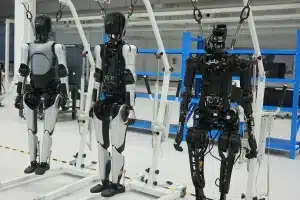
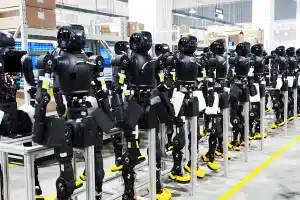
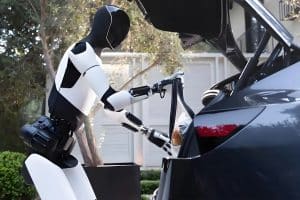
Robots are no longer limited to factory production lines. In 2026, they can be found in hospitals, semiconductor fabs, warehouses, airports, subway systems, public security patrols, and large public events. What was once considered experimental automation has become part of everyday industrial and urban operations.
The rapid expansion of robotics is being driven by several factors: labor shortages, rising quality requirements, AI-powered perception, and the push for smarter infrastructure. Modern robots are now capable of navigating complex environments, collaborating with humans, handling delicate materials, and operating continuously with minimal supervision.
This article explores how robots are used across different industries and public services, the representative systems already in operation, the value they create, the technical demands placed on them, and the broader impact they are having on manufacturing, healthcare, logistics, city management, and society as a whole.

Manufacturing
How Robots Are Used in Manufacturing
Manufacturing remains the largest and most mature robotics application sector. Industrial robots are widely used for welding, assembly, machine tending, palletizing, material handling, and quality inspection. In modern factories, robots often operate alongside automated conveyors, CNC machines, and vision systems to create highly integrated production lines.
A common example is machine tending, where a robot loads and unloads parts from CNC machines. This reduces idle time between machining cycles and allows production to continue around the clock. In automotive plants, robotic arms perform thousands of welds with consistent accuracy, while collaborative robots assist workers with repetitive assembly tasks.
Representative Manufacturing Robots
Several industrial robot families have become widely recognized in global manufacturing:
These systems are used across automotive, electronics, metal fabrication, and general industrial production.
Value Created by Manufacturing Robots
The primary value of robotics in manufacturing comes from productivity, consistency, and safety.
- Higher throughput: Robots can operate continuously and maintain stable cycle times.
- Consistent quality: Automated welding, dispensing, and assembly reduce human variation.
- Reduced labor intensity: Workers can focus on supervision, programming, and process optimization rather than repetitive manual tasks.
- Improved workplace safety: Hazardous operations such as welding, heavy lifting, and handling sharp components can be automated.
For many manufacturers, robotics is not only a cost-saving tool but also a way to achieve production stability and meet increasingly strict quality requirements.
Technical Requirements for Manufacturing Robots
Industrial environments place demanding requirements on robotic systems. Manufacturing robots typically need:
- High repeatability for precise positioning
- Structural rigidity to maintain accuracy under load
- Reliable servo control for smooth motion
- Durable components capable of long production cycles
- Resistance to heat, vibration, and industrial contaminants
As manufacturing moves toward higher precision and greater automation, the demand for robots with improved accuracy and reliability continues to increase.
Impact on Manufacturing and Employment
The adoption of robotics has significantly changed factory operations. Production lines can now achieve higher output with more predictable quality, while manufacturers gain greater flexibility in handling product variations and shorter production runs.
At the same time, the workforce is evolving. Many repetitive manual positions are being replaced by roles focused on robot programming, maintenance, process engineering, and automation management. Rather than eliminating manufacturing jobs entirely, robotics is shifting demand toward higher technical skills and creating new opportunities in industrial automation.
Manufacturing remains the foundation of the robotics industry, but it is also the sector that demonstrates how automation can transform productivity, quality control, and workforce structure on a large scale.

Medical
How Robots Are Used in Healthcare
Healthcare has become one of the fastest-growing robotics sectors. Medical robots are used for surgery, rehabilitation, hospital logistics, laboratory automation, and patient assistance. Unlike industrial robots that operate in controlled factory environments, medical robots must work safely around patients, healthcare professionals, and sensitive medical equipment.
In surgical applications, robots assist surgeons with minimally invasive procedures that require extremely precise movements. In hospitals, autonomous service robots transport medications, supplies, and laboratory samples between departments. Rehabilitation robots help patients recover mobility through guided and repeatable therapeutic exercises.
Representative Medical Robots
Several medical robotic systems have become widely recognized:
These systems represent different areas of healthcare robotics, from surgery and rehabilitation to hospital service automation.
Value Created by Medical Robots
Medical robotics delivers value through precision, safety, and operational efficiency.
- Enhanced surgical precision: Robotic systems can filter hand tremors and provide stable instrument control.
- Minimally invasive procedures: Smaller incisions often lead to reduced pain and faster recovery times.
- Reduced staff workload: Service robots can handle routine transport tasks within hospitals.
- Improved rehabilitation consistency: Robotic therapy devices can repeat exercises with controlled motion and force.
For healthcare providers, robotics can improve both patient outcomes and hospital operational efficiency.
Technical Requirements for Medical Robots
Medical environments impose stricter requirements than most industrial applications. Medical robots typically require:
- Extremely high positioning accuracy
- Smooth and stable motion control
- Biocompatible materials
- Easy sterilization or contamination control
- Reliable operation with redundant safety systems
- Compliance with medical regulatory standards
These requirements make healthcare robotics one of the most demanding fields for robot design and manufacturing.
Impact on Healthcare and Patients
The growth of medical robotics is changing how healthcare services are delivered. Patients can benefit from more precise surgeries, shorter hospital stays, and improved rehabilitation options, while hospitals gain new tools for addressing staffing challenges and increasing operational efficiency.
Robotics is also expanding access to advanced medical procedures. As systems become more capable and widely adopted, technologies that were once limited to major medical centers are gradually becoming available in a broader range of healthcare facilities.
Healthcare robotics demonstrates how automation can move beyond manufacturing and directly contribute to patient care, medical safety, and the overall quality of healthcare services.

Semiconductor
How Robots Are Used in Semiconductor Production
Semiconductor manufacturing is one of the most demanding robotic applications in the world. Robots are used for wafer handling, equipment loading, transfer between process chambers, and cleanroom automation. A modern semiconductor fabrication facility may contain hundreds of robotic systems operating continuously to move wafers through deposition, etching, lithography, and inspection processes.
Unlike general industrial environments, semiconductor production requires extremely tight control of particles, vibration, and contamination. Even microscopic contamination can affect chip yield, which is why robotic automation has become essential for advanced semiconductor manufacturing.
Representative Semiconductor Robots
Common semiconductor robotic systems include:
These robots are designed specifically for semiconductor fabs and are optimized for high precision and low contamination operation.
Value Created by Semiconductor Robots
Robotics creates significant value in semiconductor manufacturing through yield improvement, process consistency, and contamination reduction.
- Reduced particle contamination: Automated handling minimizes direct human contact with wafers.
- Higher process consistency: Robots repeat transfer and positioning operations with extremely stable accuracy.
- Increased throughput: Continuous automated wafer movement supports high-volume production.
- Improved yield: Fewer handling errors and contamination events can significantly affect overall chip production efficiency.
For advanced semiconductor nodes, robotics is no longer optional—it is a fundamental part of the manufacturing process.
Technical Requirements for Semiconductor Robots
Semiconductor applications impose exceptionally strict technical requirements. Robots used in fabs typically need:
- Ultra-clean operation with minimal particle generation
- Vacuum compatibility for process chamber transfer
- High positioning accuracy and repeatability
- Low vibration characteristics
- Resistance to chemicals and process environments
- Long-term reliability under continuous operation
These requirements make semiconductor robotics one of the highest-precision areas of automation engineering.
Impact on Chip Manufacturing
The semiconductor industry depends heavily on robotic automation to support the production of processors, memory chips, sensors, and advanced electronic devices. As chip complexity increases and manufacturing nodes continue to shrink, the role of robotics becomes even more critical.
Robotic systems help manufacturers maintain the cleanliness, accuracy, and process stability required for modern semiconductor production. Without this level of automation, achieving the yields necessary for large-scale advanced chip manufacturing would be significantly more difficult.
Semiconductor robotics illustrates how automation enables industries that demand extreme precision, ultra-clean environments, and uninterrupted high-volume production.

Warehouse and Logistics
How Robots Are Used in Warehousing
Warehousing and logistics has become one of the fastest-growing robotics sectors. Robots are widely used for inventory transport, order picking, sorting, pallet movement, and automated delivery inside distribution centers. The rapid growth of e-commerce has significantly increased the demand for warehouse automation capable of handling large order volumes with shorter delivery times.
Modern logistics facilities often combine Autonomous Mobile Robots (AMRs), Automated Guided Vehicles (AGVs), robotic picking systems, and automated sorting equipment. These systems work together to move goods between storage areas, packing stations, and shipping docks with minimal human intervention.
Representative Logistics Robots
Common warehouse robotic systems include:
These robots are designed to navigate dynamic warehouse environments and coordinate with warehouse management systems.
Value Created by Logistics Robots
Robotics improves logistics operations through speed, efficiency, and scalability.
- Faster order fulfillment: Robots can transport goods continuously between storage and packing areas.
- Reduced walking time for workers: Collaborative systems bring items directly to operators.
- Higher warehouse throughput: Automated movement reduces bottlenecks during peak demand periods.
- Improved inventory accuracy: Integrated robotic systems can track item movement in real time.
For large distribution centers, robotics enables operations that would be difficult to achieve with manual processes alone.
Technical Requirements for Logistics Robots
Warehouse environments require robots to operate safely among workers, shelves, and moving equipment. Key requirements include:
- Reliable autonomous navigation
- Obstacle detection and avoidance
- Long battery life or automated charging
- Stable operation under varying loads
- Real-time communication with warehouse management systems
- Safe interaction with human workers
As warehouses become larger and more automated, the importance of intelligent navigation and fleet coordination continues to increase.
Impact on Supply Chains
Logistics robotics is reshaping global supply chains. Faster warehouse operations support same-day delivery, higher order volumes, and more responsive inventory management. Companies can expand capacity without proportionally increasing manual labor requirements.
At the same time, warehouse jobs are evolving from primarily manual transport tasks toward robot supervision, fleet management, system maintenance, and data-driven operations. The combination of robotics, software, and real-time logistics data is creating a new generation of highly automated distribution centers.
Warehousing demonstrates how robotics can transform not only individual facilities but also the speed and efficiency of entire supply chain networks.

Automotive
How Robots Are Used in Automotive Manufacturing
The automotive industry has been a pioneer in industrial robotics for decades. Robots are used for body welding, painting, assembly, material handling, inspection, and battery production. Modern vehicle manufacturing plants rely on thousands of robotic systems working together to achieve high production volumes and consistent quality.
In body shops, robotic welding systems join vehicle panels with precise positioning and repeatable weld quality. In paint shops, robots apply coatings with controlled thickness and minimal overspray. Final assembly lines increasingly combine traditional industrial robots with collaborative robots that assist workers during complex assembly operations.
Representative Automotive Robots
Common automotive robotic systems include:
These systems are widely used in passenger vehicle, commercial vehicle, and electric vehicle production.
Value Created by Automotive Robots
Automotive robotics delivers value through high throughput, consistent quality, and improved safety.
- Higher production speed: Robots maintain stable cycle times across large production runs.
- Consistent weld quality: Automated welding reduces variation between vehicles.
- Improved paint quality: Robotic spraying provides uniform coverage and reduces material waste.
- Reduced worker exposure: Hazardous tasks such as welding fumes, heavy lifting, and paint application can be automated.
For automotive manufacturers, robotics is essential for meeting both production targets and quality standards.
Technical Requirements for Automotive Robots
Automotive production environments place demanding requirements on robotic systems. Key requirements include:
- High payload capacity for handling vehicle components
- Excellent repeatability for welding and assembly
- Resistance to heat, dust, and industrial contaminants
- Long service life under continuous operation
- Reliable integration with conveyors and production systems
- High-speed motion control for takt-time production
The transition toward electric vehicles is also increasing demand for robots capable of handling battery cells, modules, and packs with high precision.
Impact on Vehicle Production
Robotics has transformed vehicle manufacturing from largely manual assembly into highly automated production systems. Manufacturers can produce vehicles with greater consistency, shorter production times, and improved traceability across every stage of the process.
The automotive industry has also become a major driver of robotics innovation. Many advances in welding automation, vision-guided positioning, collaborative robotics, and battery assembly were developed or refined within automotive manufacturing before expanding into other industries.
As electric and intelligent vehicles continue to grow, automotive robotics will remain a critical technology for achieving high-volume production, quality control, and manufacturing flexibility.

Food
How Robots Are Used in Food Processing
Food processing has become an increasingly important robotics application area. Robots are used for sorting, packaging, palletizing, pick-and-place operations, cutting, and hygienic handling of food products. The industry’s focus on food safety, labor efficiency, and consistent quality has accelerated the adoption of automation.
Modern food production facilities often use robotic systems to handle products that vary in shape, size, and texture. Vision-guided robots can identify individual items on a conveyor and place them into trays, while high-speed palletizing robots prepare packaged products for shipping.
Representative Food Industry Robots
Common food processing robotic systems include:
These systems are widely used in beverage production, bakery processing, meat packaging, dairy operations, and frozen food manufacturing.
Value Created by Food Robots
Food robotics provides value through hygiene, consistency, and production efficiency.
- Reduced human contact: Automated handling can lower the risk of product contamination.
- Consistent packaging: Robots maintain uniform product placement and package quality.
- Higher throughput: High-speed pick-and-place systems can process large product volumes continuously.
- Improved worker safety: Robots can handle repetitive lifting and operation in cold or hazardous environments.
For food manufacturers, automation helps meet both productivity targets and increasingly strict food safety requirements.
Technical Requirements for Food Robots
Food processing environments require robots that can operate safely and hygienically. Key requirements include:
- Food-grade materials and surfaces
- Resistance to moisture and cleaning chemicals
- Washdown-compatible designs
- Corrosion resistance
- Reliable operation in refrigerated or wet environments
- Easy cleaning and sanitation procedures
These requirements make stainless steel structures and hygienic robot designs particularly important in food applications.
Impact on Food Safety and Production
Robotics is helping the food industry improve both production efficiency and product safety. Automated systems can maintain consistent handling standards while supporting high-volume production during periods of strong demand.
The adoption of food robotics is also changing workforce requirements. Many facilities are shifting from manual packaging and palletizing toward roles focused on robot operation, sanitation management, and automated production supervision.
As consumers continue to demand safer food, faster delivery, and more consistent product quality, robotics is becoming an increasingly important technology for modern food processing and packaging operations.

Aerospace
How Robots Are Used in Aerospace Manufacturing
Aerospace manufacturing requires robots capable of handling large structures, high-precision drilling, composite material processing, and complex assembly operations. Robots are widely used for fuselage assembly, wing drilling, fastening, inspection, painting, and composite trimming.
Aircraft components often have complex geometries and tight dimensional requirements. Robotic systems help manufacturers perform repetitive operations with consistent accuracy while reducing the risk of damage to expensive aerospace structures.
Representative Aerospace Robots
Common aerospace robotic systems include:
These systems are used in commercial aircraft, military aerospace programs, satellites, and advanced aerospace component manufacturing.
Value Created by Aerospace Robots
Robotics improves aerospace manufacturing through precision, repeatability, and process consistency.
- More accurate drilling and fastening: Robots can maintain precise hole positioning across large structures.
- Reduced rework: Consistent automated operations help minimize assembly errors.
- Improved traceability: Robotic systems can record process data for quality documentation.
- Safer handling of large components: Automation reduces manual lifting and positioning risks.
For aerospace manufacturers, robotics helps achieve the high quality standards required for flight-critical components.
Technical Requirements for Aerospace Robots
Aerospace applications impose demanding technical requirements on robotic systems. Key requirements include:
- High positioning accuracy over large work envelopes
- Excellent repeatability for drilling and fastening
- Capability to process composite materials
- High structural rigidity under load
- Integration with metrology and inspection systems
- Strict quality and process traceability
As aircraft increasingly use lightweight composites and advanced alloys, robotic systems must support both precision machining and delicate material handling.
Impact on Aerospace Production
Robotic automation has become a key enabler of modern aerospace production. Manufacturers can produce complex aircraft structures with greater consistency, improved documentation, and more efficient assembly processes.
The aerospace industry has also driven advances in large-scale robotic positioning, automated drilling, composite processing, and digital quality control. Many of these technologies are now influencing other high-precision industries.
As aerospace programs continue to pursue lighter structures, higher production rates, and stricter quality standards, robotics will remain essential for achieving precision manufacturing, reliable assembly, and full process traceability.

Research
How Robots Are Used in Research Laboratories
Research laboratories use robots for sample handling, liquid dispensing, automated experimentation, precision positioning, and high-throughput analysis. Unlike industrial production systems, research robots are often designed to support changing workflows, experimental setups, and rapidly evolving scientific requirements.
Robotics has become particularly important in fields such as biotechnology, pharmaceutical development, materials science, chemistry, and advanced engineering research. Automated laboratory systems can perform repetitive experimental steps with consistent timing and accuracy, allowing researchers to focus on analysis and innovation.
Representative Research Robots
Common laboratory robotic systems include:
These systems are widely used in research institutions, pharmaceutical laboratories, and advanced testing facilities.
Value Created by Research Robots
Research robotics provides value through repeatability, throughput, and data quality.
- Consistent experimental execution: Robots can repeat procedures with the same timing and motion.
- Higher sample throughput: Automated systems can process large numbers of samples continuously.
- Reduced human error: Precision dispensing and handling improve experimental reliability.
- Faster research cycles: Automation allows researchers to run more experiments in less time.
For many laboratories, robotics has become essential for large-scale screening, genomic analysis, drug discovery, and complex materials testing.
Technical Requirements for Research Robots
Research environments require flexibility as well as precision. Key requirements include:
- High positioning accuracy for small samples
- Gentle handling of sensitive materials
- Programmable and reconfigurable workflows
- Compatibility with laboratory instruments
- Low contamination operation
- Reliable data integration and traceability
Because research projects frequently change, laboratory robots must often adapt to new protocols, tools, and experimental conditions.
Impact on Scientific Innovation
Robotic automation is accelerating scientific discovery by enabling larger datasets, more repeatable experiments, and faster experimental iteration. Tasks that once required extensive manual labor can now be performed automatically with consistent quality.
The growth of laboratory robotics is also contributing to advances in drug development, genetic research, advanced materials, and precision diagnostics. By reducing routine manual work, robotics allows researchers to devote more time to interpreting results and developing new ideas.
Research laboratories demonstrate how robotics can support not only industrial productivity but also scientific innovation, medical discovery, and the development of future technologies.

Smart City and Public Service Robotics
How Robots Are Used in Smart Cities
Robots are increasingly becoming part of urban infrastructure. Smart city robotics includes autonomous patrol, traffic assistance, public safety inspection, subway and airport cleaning, environmental monitoring, and facility management. These systems operate in open and dynamic environments where they must interact with pedestrians, vehicles, and changing weather conditions.
Unlike factory robots, public service robots often rely on autonomous navigation, real-time perception, cloud connectivity, and remote supervision. They are designed to support city operations rather than manufacturing processes.
Representative Public Service Robots
Examples of smart city and public service robots include:
Many cities have already deployed these systems in pilot programs or commercial operations, particularly in transportation hubs, public facilities, and large urban districts.
Value Created by Smart City Robots
Public service robotics delivers value through continuous operation, broader coverage, and improved management efficiency.
- Reduced manual inspection costs: Robots can perform routine patrols and inspections automatically.
- Extended service coverage: Autonomous systems can operate in large public areas for long periods.
- Improved urban management: Real-time data collection supports faster decision-making.
- 24/7 operation: Robots can continue working outside normal staffing hours.
For transportation systems and municipal operators, robotics can help improve both operational efficiency and public service responsiveness.
Technical Requirements for Public Service Robots
Urban environments create challenges that differ significantly from industrial settings. Public service robots typically require:
- Reliable autonomous navigation
- Complex environment recognition
- Obstacle detection and avoidance
- Waterproof and dustproof protection
- Long battery endurance
- Remote monitoring and fleet management
Because these robots operate in public spaces, safety, reliability, and human interaction capabilities are particularly important.
Impact on Urban Management
Smart city robotics is changing how public services are delivered. Autonomous patrol and inspection systems can support security monitoring, infrastructure maintenance, transportation management, and environmental supervision.
The adoption of these robots also reflects a broader shift toward digital urban governance and intelligent infrastructure. Cities are beginning to integrate robotics with traffic systems, surveillance networks, and municipal management platforms to improve operational efficiency.
As smart city projects continue to expand, public service robotics is expected to become an increasingly visible part of daily urban life, transportation systems, and public facility operations.

Robotics in Sports and Public Events
How Robots Are Used in Sports and Events
Robots are increasingly appearing in marathons, exhibitions, stadium operations, public demonstrations, and large-scale events. What was once limited to laboratory demonstrations has evolved into real-world participation in public activities, including robotic races, event services, security patrols, and audience interaction.
In recent years, several cities have organized robot marathon events and public robotics competitions, demonstrating advances in autonomous navigation, motion control, and endurance performance. Stadiums and exhibition centers are also deploying robots for visitor guidance, cleaning, inspection, and information services.
Representative Event Robots
Examples of robotics used in sports and public events include:
These applications showcase robotics in highly visible public environments where performance and reliability can be observed directly by large audiences.
Value Created by Event Robots
Robotics brings several benefits to sports and public events:
- Enhanced visitor experience: Interactive robots can provide guidance and information.
- Technology demonstration: Public events allow companies and research organizations to showcase robotic capabilities.
- Operational support: Robots can assist with inspection, cleaning, and venue management.
- Public engagement: Large-scale events increase awareness and understanding of robotics technology.
For organizers, robots can serve both practical operational functions and promotional or educational roles.
Technical Requirements for Event Robots
Robots used in sports and public events must operate safely in crowded and unpredictable environments. Key requirements include:
- Stable motion control
- Real-time environment perception
- Reliable autonomous navigation
- Safe human-robot interaction
- Long-duration operation
- Robust communication and monitoring systems
In robotics competitions and endurance events, additional emphasis is placed on energy efficiency, balance, and continuous operation under changing conditions.
Impact on Society
Public robotics events are helping to increase acceptance of autonomous systems. When people encounter robots in marathons, exhibitions, airports, or stadiums, robotics becomes less of an abstract concept and more of a visible part of everyday life.
These events also encourage education, research collaboration, and industry innovation. Universities, startups, established manufacturers, and government organizations often use public robotics demonstrations to test technologies and inspire future development.
As robots continue to participate in sports, entertainment, and public activities, they are contributing to a broader social transition in which autonomous systems become increasingly integrated into urban culture, public services, and daily human interaction.

Emerging and Future Applications
While many robotics applications are already established in manufacturing, healthcare, logistics, and public services, several emerging areas are expected to drive the next stage of industry growth. These applications focus on environments that are less structured, more dynamic, and more dependent on advanced AI and autonomous decision-making.
Humanoid Robots
Humanoid robots are being developed for tasks that require movement and interaction in environments designed for humans. Potential applications include facility operations, logistics support, inspection, customer service, and industrial assistance. Advances in balance control, perception, and AI reasoning are accelerating development in this area.
Home Healthcare and Elderly Care
As populations age in many countries, robots are increasingly being explored for home monitoring, medication reminders, mobility assistance, and daily living support. These systems could help reduce caregiver workload while improving the independence of elderly users.
Autonomous Construction Robots
Construction remains one of the least automated major industries. Emerging robotic systems are being developed for bricklaying, concrete processing, site inspection, material transport, and autonomous equipment operation. The goal is to improve safety, productivity, and consistency on construction sites.
Disaster Response Robots
Robots designed for disaster response can enter environments that may be dangerous for human rescuers. Applications include search and rescue, structural inspection, hazardous material assessment, and remote operation in unstable areas.
Space Exploration Robots
Space agencies and commercial aerospace companies continue to develop robotic systems for planetary exploration, satellite servicing, autonomous maintenance, and space infrastructure assembly. These applications require extreme reliability and the ability to operate with limited human intervention.

Future Impact of Emerging Robotics
The next generation of robotics is expected to combine AI, advanced sensors, autonomous navigation, and cloud-connected intelligence. Future robots will likely be capable of adapting to changing environments, collaborating more naturally with humans, and performing tasks that currently require significant human judgment.
As these technologies mature, robotics will continue expanding beyond traditional industrial automation and play an increasingly important role in healthcare, infrastructure, construction, disaster management, space exploration, and everyday human activities.
Supporting the Growth of Robotics Through Precision Manufacturing
As robotics expands across manufacturing, healthcare, semiconductor production, logistics, smart cities, and public services, the demand for high-precision components and reliable manufacturing processes continues to grow. Advanced robotic systems depend on accurately machined structural parts, joint components, housings, shafts, brackets, and other critical mechanical elements to achieve stable performance and long-term reliability.
At DakingsRapid, we support robotics and automation projects through precision CNC machining, CNC turning, sheet metal fabrication, 3D printing, surface finishing, and assembly services. From prototype development to production-scale manufacturing, our goal is to help engineers and robotics companies bring innovative automation solutions to market faster and with greater confidence.