


Tungsten high speed steel (HSS) remains relevant in modern machining, even as carbide tools dominate many high-speed cutting operations. Its value lies in the balance of edge sharpness, toughness, grindability, and adaptability to complex tool geometries.
This article explores where tungsten HSS is still used, why manufacturers continue to choose it over carbide in specific applications, and where its limitations begin. The focus is not simply on what these tools can cut, but on the practical advantages that keep HSS in modern manufacturing.
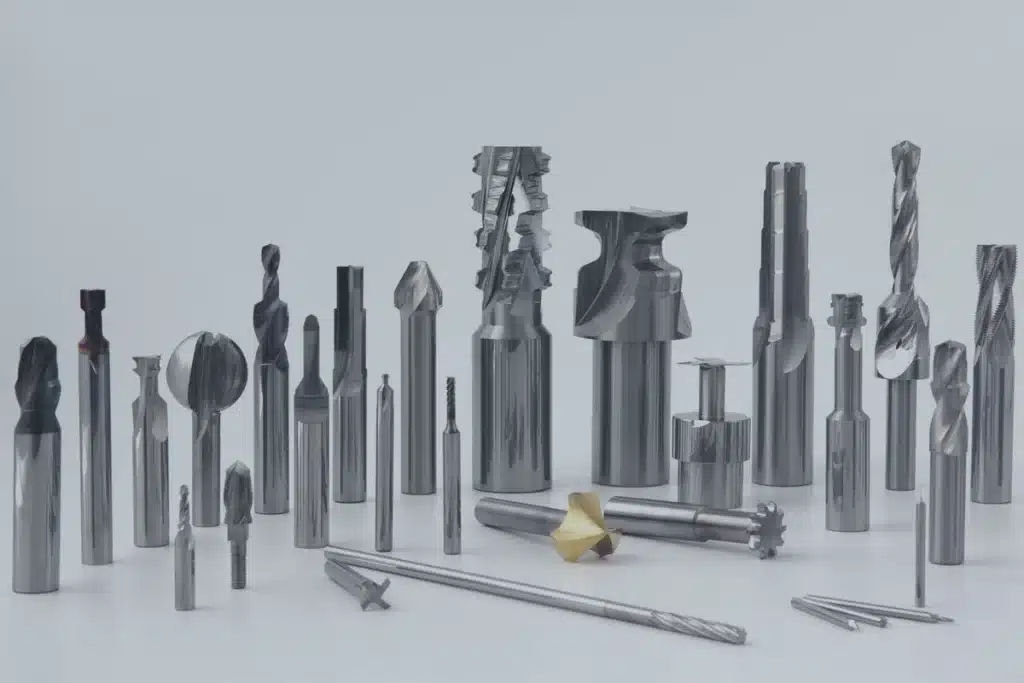
Where Is Tungsten HSS Used Today?
Tungsten HSS is still used for drills, taps, milling cutters, gear-cutting tools, broaches, and other precision tools. Although carbide offers higher hardness and wear resistance in many applications, HSS remains competitive when tool geometry, cutting-edge sharpness, impact resistance, and regrinding requirements matter.
The choice depends on the workpiece material, cutting conditions, tool design, and expected tool life—not hardness alone.
Cutting Tools for Steel
Tungsten HSS is used in turning tools, shaping tools, and other cutting tools for machining carbon and alloy steels. Its ability to retain a sharp cutting edge and withstand moderate cutting loads makes it suitable for applications where consistent edge geometry matters more than maximum cutting speed.
Compared with carbide, HSS is generally more tolerant of impact and intermittent contact. It can also be reground to restore the cutting edge, helping reduce tooling costs in suitable production environments.
Drills and Hole-Making Tools
Drills, reamers, and countersinks are common applications for HSS. These tools must maintain a defined cutting geometry while handling friction, heat, and the mechanical stresses generated during hole making.
HSS is particularly practical for general-purpose drilling, lower-volume production, and applications where tool flexibility and regrinding are important. Carbide drills are often preferred for higher cutting speeds and demanding production volumes, provided the machine setup offers sufficient rigidity and stability.
Milling and Form Tools
HSS milling cutters, end mills, and form cutters are used to produce slots, profiles, and other features that require specific cutting geometries.
One advantage of HSS is its suitability for tools with complex profiles or relatively delicate cutting edges. Manufacturers can grind these geometries accurately and regrind suitable tools after wear. This can be valuable for custom tooling and smaller production runs where replacing specialized carbide tools may be less economical.
Taps and Threading Tools
Taps, thread-cutting tools, and dies require sharp cutting edges and precise tooth profiles to produce accurate threads. HSS offers a useful combination of hardness, toughness, and grindability for these applications.
Its toughness helps reduce the risk of sudden edge failure under suitable operating conditions, while its regrindability can extend tool service life. For difficult-to-machine materials, cobalt-alloyed HSS grades may provide improved hot hardness, although the appropriate grade still depends on the workpiece and cutting conditions.
Gear Cutting Tools
Gear hobs, gear shaper cutters, and other gear-cutting tools often have complex profiles and multiple cutting edges. Their performance depends on maintaining precise tooth geometry throughout repeated cutting operations.
HSS remains useful because it can combine wear resistance with the toughness and grindability needed for specialized gear tooling. Regrinding can also help extend the service life of expensive, complex tools. Carbide may offer higher productivity in suitable high-volume applications, but the tooling design, machine capability, and economics must justify the change.
Broaches
Broaches use a series of progressively larger cutting teeth to remove material and generate a finished profile in a single pass. Their long, complex geometry makes material consistency, tooth strength, and manufacturing accuracy particularly important.
HSS is well suited to many broaching applications because it offers a practical balance of wear resistance and toughness. It can also be reground when the tool design and wear condition permit, helping reduce replacement costs for specialized broaches.
Precision and Complex-Geometry Tools
HSS continues to serve applications involving form cutters, special-purpose drills, reamers, threading tools, and other custom cutting tools with intricate profiles or narrow cutting edges.
The advantage is not that HSS is always harder or longer-lasting than carbide. Rather, it can be easier to grind into certain geometries, more tolerant of some forms of impact, and more economical to maintain through regrinding.
For small production batches, customized tooling, or machining setups with occasional interruptions, these characteristics can outweigh carbide's higher potential cutting speed. The right choice depends on the balance between tool manufacturing cost, cutting performance, and total service life.

Why Tungsten HSS Still Matters
Tungsten high-speed steel (HSS) is not obsolete. Although cemented carbide offers higher hardness and wear resistance in many applications, tungsten HSS retains practical advantages in specialized tooling, moderate-speed machining, and operations where tool maintenance and cutting-edge geometry matter.
- Good toughness: HSS can better withstand mechanical shocks and cutting loads than many brittle superhard materials in suitable applications.
- Complex tool geometry: It is well suited to manufacturing specialized cutters, taps, broaches, and other tools with intricate profiles.
- Excellent grindability: HSS tools can be ground accurately and, where tool design permits, reground to extend service life.
- Sharp cutting edges: HSS can be ground to produce sharp edges for precise cutting and specialized applications.
- Reasonable tooling cost: For certain custom tools and smaller production runs, manufacturing and regrinding HSS tools can be more economical than replacing specialized carbide tools.
- Reliable performance at moderate cutting speeds: HSS remains practical when maximum cutting speed is not the main production priority.
- Better tolerance for interrupted cutting in suitable applications: Its toughness can help reduce the risk of edge chipping when cutting forces fluctuate, depending on the grade, tool geometry, and operating conditions.
The key is application fit. Tungsten HSS is not a universal replacement for carbide, but neither has carbide made HSS unnecessary. HSS remains valuable when tool geometry, toughness, regrindability, and total tooling cost outweigh the benefits of higher cutting speeds.

What Are the Main Limitations of Tungsten HSS?
Despite its advantages, tungsten HSS has limitations that can make it less suitable than cemented carbide or other advanced cutting materials. Its actual performance depends on the specific grade, manufacturing route, heat treatment, and cutting conditions.
Lower Hardness Than Cemented Carbide
Tungsten HSS generally has lower hardness than cemented carbide, particularly in applications requiring high wear resistance. Under demanding cutting conditions, carbide can maintain its cutting edge longer and support higher cutting speeds.
HSS may still be preferable when toughness, sharp-edge grinding, or tool reconditioning is more important than maximum hardness.
Limited High-Temperature Performance
HSS retains useful hardness at elevated temperatures, but its performance eventually declines as cutting heat increases. Cemented carbide and other advanced tool materials can be better suited to high-speed operations that generate sustained, intense heat.
The practical limit depends on the HSS grade, heat treatment, cutting speed, workpiece material, and cooling conditions. No single temperature defines the operating limit for every tungsten HSS tool.
Lower Wear Resistance
Compared with cemented carbide, conventional tungsten HSS generally wears faster under high-speed or highly abrasive cutting conditions. This can lead to more frequent sharpening, tool changes, and production interruptions.
Higher-alloy HSS grades can improve wear resistance, but the appropriate choice depends on the balance between abrasion resistance, toughness, grindability, and cost.
Toughness vs. Hardness Trade-Off
Increasing hardness and wear resistance can reduce toughness in some HSS grades, depending on their composition and heat treatment. High-carbon and high-vanadium grades, for example, may offer improved wear resistance but require careful control of tool design and processing.
However, brittleness is not a universal fatal flaw of tungsten HSS. HSS grades vary considerably in toughness, and their resistance to chipping depends on alloy composition, carbide distribution, heat treatment, tool geometry, and operating conditions.
Carbide Segregation in Traditional Grades
Traditional tungsten-rich HSS grades can develop nonuniform carbide distributions during solidification and processing. Excessive carbide segregation may affect toughness, grindability, and consistency across the material.
Modern steelmaking and processing can help control these issues. Powder metallurgy (PM) HSS, in particular, can produce a more uniform carbide distribution than conventional production routes, although its benefits depend on the specific grade and process.
Heat-Treatment Sensitivity
Tungsten HSS requires carefully controlled hardening, quenching, and tempering to achieve the intended combination of hardness, toughness, and wear resistance.
Inadequate or excessive heat treatment can cause insufficient hardness, reduced toughness, distortion, or premature tool failure. Therefore, a grade's nominal composition alone does not guarantee its final performance; the heat-treatment condition matters just as much.
Higher Tungsten Cost
Tungsten is an expensive alloying element, and fluctuations in raw-material prices can affect the cost of tungsten-rich HSS grades. This can make some traditional grades less economical than alternatives with lower tungsten content, including certain molybdenum-based HSS grades.
However, material price should not be considered in isolation. Tool life, grinding requirements, reconditioning, replacement frequency, and production downtime all contribute to the total tooling cost.
Overall, tungsten HSS limitations are grade- and process-dependent. Conventional tungsten-rich grades may be affected by carbide segregation, while powder metallurgy grades can offer improved microstructural uniformity. Proper heat treatment also changes the balance of hardness and toughness. Selecting a suitable grade therefore requires evaluating the complete material and manufacturing process—not assuming that every tungsten HSS tool has the same weaknesses.

When Is Tungsten HSS Not the Right Choice?
Tungsten HSS is versatile, but it is not suitable for every workpiece material or cutting condition. When machining demands very high hardness, wear resistance, cutting speed, or thermal stability, cemented carbide and other advanced tool materials may offer better performance.
Very Hard Hardened Steels
Very hard, heat-treated steels can cause rapid cutting-edge wear and excessive heat when machined with conventional HSS tools. For demanding operations on hardened steels, CBN tools, ceramics, or suitable carbide grades may provide better productivity, depending on the hardness and machining conditions.
Cemented Carbide and Ceramics
Tungsten HSS is generally unsuitable for machining cemented carbide or advanced ceramics with conventional cutting methods. These materials have extremely high hardness and wear resistance, making specialized grinding, EDM where electrically conductive, or other suitable processes more appropriate.
Extremely Wear-Resistant Applications
When machining highly abrasive materials or running long production cycles with strict tool-life requirements, HSS may wear too quickly to remain economical. Cemented carbide, ceramic tools, or other wear-resistant tool materials can be better choices when their performance advantages justify the higher tooling cost.
High-Speed Cutting
HSS has lower hot-hardness and wear-resistance limits than cemented carbide in many applications. When production requires high cutting speeds and short cycle times, carbide tools generally offer greater productivity, provided the machine, tool setup, and workpiece conditions are suitable.
Severe High-Temperature Cutting
Operations that generate sustained, intense cutting heat can exceed the practical limits of HSS. In such conditions, suitable carbide, ceramic, or other heat-resistant cutting materials may retain their performance more effectively. The best option depends on the workpiece material, cutting parameters, and cooling strategy.
Very High-Strength Materials
High-strength materials can impose substantial cutting forces and generate considerable heat, accelerating tool wear. Titanium and nickel-based alloys are not materials that HSS categorically cannot cut. Suitable HSS grades can machine some of these alloys under controlled conditions, particularly at conservative cutting speeds. However, carbide and other advanced tool materials generally provide higher productivity in demanding production environments.
The practical rule is to evaluate both the workpiece and the cutting conditions. Tungsten HSS remains useful for many conventional and specialized machining tasks, but when heat, hardness, abrasion, or production speed becomes the dominant constraint, another tool material may deliver a better balance of tool life and manufacturing cost.

Tungsten HSS vs Modern Tool Materials
Modern cutting materials have expanded the range of machining speeds, workpiece hardness, and production conditions that manufacturers can handle. However, no single material is ideal for every application. The right choice depends on cutting speed, wear resistance, toughness, tool geometry, and total tooling cost.
Tungsten HSS vs Cemented Carbide
Cemented carbide generally offers higher hardness, wear resistance, and cutting speeds than conventional tungsten HSS. It is often preferred for high-volume production and demanding machining conditions.
Tungsten HSS remains competitive when impact resistance, sharp-edge grinding, complex tool geometry, or regrinding is important. For specialized tools and moderate-speed operations, it can offer a practical balance of performance and cost.
Tungsten HSS vs Ceramic Tools
Ceramic cutting tools offer excellent hot hardness and wear resistance, making them suitable for certain high-speed finishing operations, particularly on cast iron and hardened materials. However, many ceramic grades are less tolerant of impact and interrupted cutting.
Tungsten HSS is often more suitable for complex tools and applications involving variable cutting loads, although it cannot match the high-temperature performance of ceramics in their intended applications.
Tungsten HSS vs CBN
Cubic boron nitride (CBN) is particularly useful for machining hardened steels and other difficult-to-machine ferrous materials. It can maintain cutting performance under conditions where conventional HSS would wear rapidly.
Tungsten HSS is generally more economical for conventional cutting tools and moderate machining conditions. CBN is a specialized option when workpiece hardness and wear resistance requirements justify its higher tooling cost.
Tungsten HSS vs PCD
Polycrystalline diamond (PCD) offers outstanding wear resistance and is widely used for machining abrasive nonferrous materials, such as aluminum alloys and certain composites. However, diamond is generally unsuitable for conventional cutting of ferrous materials at elevated temperatures because of its chemical interaction with iron.
Tungsten HSS is more versatile for cutting ferrous materials and manufacturing complex tools, while PCD is better suited to applications that benefit from diamond's exceptional wear resistance.
Tungsten HSS vs Powder Metallurgy HSS
Powder metallurgy (PM) HSS is an advanced form of high-speed steel produced through a process designed to improve carbide distribution and microstructural uniformity. Compared with conventional HSS, suitable PM grades can offer improved wear resistance, toughness consistency, and grindability.
PM HSS does not replace tungsten HSS as a completely different material category. Instead, it provides an alternative manufacturing route for producing high-performance HSS grades, particularly when conventional grades cannot meet demanding tooling requirements.
Tungsten HSS with Modern Coatings
Modern coatings, such as TiN, TiAlN, and AlCrN, can improve surface hardness, reduce friction, and enhance wear resistance when properly matched to the substrate and application.
Coated tungsten HSS tools can achieve longer tool life and better performance under suitable cutting conditions. However, coatings do not eliminate the substrate's limitations in hot hardness or mechanical strength. The coating, HSS grade, tool geometry, and cutting parameters must work together.
The main takeaway is that these materials address different machining challenges. Carbide prioritizes productivity, ceramics and CBN serve demanding high-temperature or hardened-material applications, PCD excels in suitable nonferrous and abrasive materials, and PM HSS improves the performance potential of high-speed steel.

Is Tungsten HSS Being Replaced?
Tungsten HSS is losing ground in some applications, but it is not disappearing from modern manufacturing. The shift toward carbide and other advanced tool materials is driven mainly by higher productivity requirements and increasingly demanding machining conditions.
Where Is Tungsten HSS Being Replaced?
- High-speed cutting: Cemented carbide supports higher cutting speeds in many applications, reducing cycle times.
- Hardened materials: CBN, ceramics, and suitable carbide grades can outperform conventional HSS when machining hard workpieces.
- Extreme wear applications: Carbide, PCD, and other specialized materials can provide longer tool life under suitable abrasive cutting conditions.
- Automated, high-productivity machining: Carbide tools are often favored where consistent performance, long tool life, and minimal tool changes are essential.
These shifts are especially significant in stable, high-volume production, where even small improvements in cycle time and tool life can generate substantial savings.
Where Does Tungsten HSS Remain Competitive?
- Complex tools: HSS can be ground into intricate profiles for specialized cutters, broaches, taps, and other tooling.
- Moderate cutting speeds: It remains effective when maximum cutting speed is not the primary objective.
- Interrupted cutting: Its toughness can help it withstand fluctuating cutting loads in suitable applications.
- Sharp-edge applications: HSS can be ground to produce precise, sharp cutting edges.
- Tools requiring extensive grinding: Its grindability supports custom tool manufacture, edge restoration, and reconditioning.
- Cost-sensitive applications: Lower initial tooling costs and regrinding can make HSS economical for certain small-batch or specialized operations.
The Future of Tungsten HSS
Tungsten HSS is becoming more specialized rather than disappearing. Carbide and other advanced materials continue to expand in high-speed, high-volume, and demanding machining applications. Meanwhile, HSS retains value where tool geometry, toughness, grindability, and maintenance costs influence the final decision.
For manufacturers, the objective is not to select the hardest or most advanced tool material by default. It is to choose the material that delivers the best combination of cutting performance, tool life, reliability, and total cost for the specific application.

The Future of Tungsten High Speed Steel
The future of tungsten high-speed steel is not simply a choice between retaining traditional grades and replacing them with carbide. Instead, development is moving toward improved microstructures, more efficient alloy compositions, advanced coatings, and specialized tool designs.
Powder Metallurgy HSS
Powder metallurgy (PM) HSS is an important development in high-performance tool steels. Its manufacturing process can produce a more uniform carbide distribution than conventional steelmaking, helping improve wear resistance, toughness consistency, and grindability in suitable grades.
PM HSS is particularly valuable for demanding cutting tools where conventional grades may not provide a sufficient balance of properties.
High-Performance HSS
High-performance HSS grades use carefully balanced alloy compositions and heat treatments to improve hardness, wear resistance, hot hardness, or toughness for specific applications.
Rather than maximizing one property alone, modern grades aim to balance these characteristics according to tool design and cutting conditions. This allows HSS to remain competitive in specialized applications where carbide may not offer the most economical solution.
Low-Tungsten and Tungsten-Molybdenum Grades
The relatively high cost of tungsten encourages the use of alternative alloying strategies. Molybdenum-containing HSS grades can reduce dependence on tungsten while providing a useful balance of hardness, toughness, and wear resistance.
These grades are not automatically superior to traditional tungsten HSS. Their suitability depends on the composition, heat treatment, required tool performance, and production economics.
Cobalt-Reduced Alternatives
Cobalt can improve the hot hardness of HSS, but its cost and supply considerations encourage the development of alternative alloy designs. Some grades use different combinations of alloying elements and heat treatments to achieve the required performance with reduced cobalt content.
However, removing or reducing cobalt does not guarantee equivalent performance. The resulting grade must be evaluated against the specific requirements for hot hardness, wear resistance, and toughness.
Coated HSS Tools
Surface coatings such as TiN, TiAlN, and AlCrN can improve wear resistance and reduce friction when matched to the tool substrate and operating conditions.
Coated HSS tools can extend tool life without requiring a complete change to carbide tooling. Their effectiveness depends on coating quality, adhesion, tool preparation, cutting parameters, and the thermal limits of the underlying HSS.
HSS for Complex and Specialized Tooling
HSS is likely to retain an important role in specialized tools with intricate profiles, narrow cutting edges, or demanding regrinding requirements. Examples include taps, broaches, form cutters, gear-cutting tools, and custom drills.
In these applications, manufacturability, edge geometry, toughness, and tool maintenance can matter as much as maximum cutting speed. Improvements in HSS grades and manufacturing processes will continue to support these uses.
The Direction of Development
The overall trend can be understood as a progression:
Traditional tungsten HSS → High-performance HSS → Powder metallurgy HSS → Coated and hybrid tool solutions
This is not a strict replacement sequence. These technologies overlap, and each serves different requirements. Traditional tungsten HSS remains suitable for established applications, while advanced grades, PM processing, and coatings expand the performance options available to tool manufacturers.
Tungsten HSS is more likely to become increasingly specialized than to disappear. Its future depends on how effectively manufacturers balance material performance, tool complexity, service life, and total cost.
