



The Critical Role of Precision Components in Modern Robotics
The rapid evolution of robotics and automation is driven by the demand for higher operational efficiency and industrial capability. The reliability of these modern systems hinges on precision-engineered components that ensure consistent functionality. This analysis examines the critical role of these parts—ranging from advanced actuators to high-fidelity sensors—in enhancing the performance, durability, and adaptability of automated machinery. By adhering to strict dimensional tolerances, precision manufacturing minimizes mechanical backlash and ensures the seamless integration necessary for Industry 4.0 innovations.
Introduction to Robotics and Automation: The Industrial Impact
Automation is a fundamental driver of operational efficiency, cost reduction, and workplace safety in modern industry. By delegating repetitive and hazardous tasks to automated systems, facilities significantly improve throughput and reduce occupational risks. This transition is evident across diverse sectors: manufacturing relies on automation for dimensional consistency; agriculture utilizes robotics for planting and harvesting; healthcare leverages it for surgical precision; and logistics depends on automated storage and retrieval systems to optimize supply chains. While the integration of these technologies presents challenges regarding initial capital expenditure (CapEx) and workforce retraining, the industry is addressing these through upskilling programs focused on system maintenance and management.
The Criticality of Precision Components
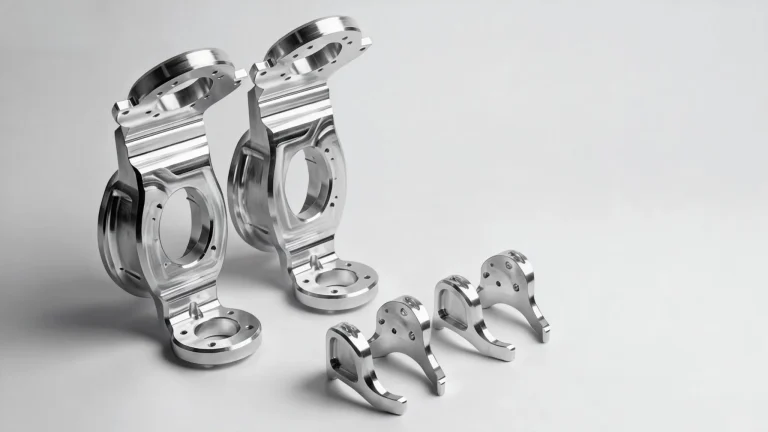
The reliability of automated machinery is entirely dependent on the quality of its constituent precision parts. In high-stakes sectors such as aerospace, automotive, and medical device manufacturing, components must meet ultra-tight tolerances to ensure compatibility and minimize error rates. High-precision manufacturing reduces mechanical friction and wear, significantly extending equipment lifecycles and extending maintenance intervals. This durability directly lowers the Total Cost of Ownership (TCO) for contractors by preventing premature breakdown. Ultimately, the ability to manufacture components with micron-level accuracy is the prerequisite for advancing R&D in next-generation robotics and sustainable industrial technologies.
Key Components of Robotics Systems: A Technical Overview

A functional robotics system relies on the seamless integration of four primary subsystems: control, perception, actuation, and power.
Control and Perception: The controller functions as the central processing unit, utilizing microcontrollers and complex algorithms to process data input. Sensors act as the perception layer, measuring environmental variables—such as distance, temperature, or object proximity—to create feedback loops that govern the robot’s logic and adaptability.
Actuation: Actuators are responsible for converting energy into physical motion. Whether driving precision servos for a gripper or high-torque motors for locomotion, these components execute the physical commands dictated by the controller.
Power and Connectivity: Reliable operation requires a stable energy source, ranging from lithium-ion battery arrays to tethered power supplies, managed by power distribution units. Simultaneously, communication modules (wired or wireless) ensure data telemetry and system interoperability.
Mechanical Architecture: Distinct from the electronic infrastructure, the mechanical subsystem provides the structural chassis, gears, and linkages necessary for physical integrity. The efficacy of any automated solution depends on the precise electromechanical integration of this rigid hardware with the dynamic capabilities of the control software.

Applications of Robotics Precision Parts
Industrial Automation Precision robotic components enable automated machinery to execute repetitive tasks with high repeatability. Common applications include conveyor assembly, optical inspection, and packaging. Automated systems operate continuously, maximizing throughput in sectors requiring tight tolerances, such as automotive, electronics, and pharmaceutical manufacturing. Robotic integration also improves workplace safety by isolating operators from hazardous environments, toxic materials, and extreme temperatures.
Robotics in Healthcare Medical robotics utilize precision actuators and motion control systems for surgical assistance, rehabilitation, and diagnostics. Surgical platforms enable minimally invasive procedures requiring sub-millimeter accuracy and reduced tissue trauma. Automated logistics systems manage medication dispensing and sample transport, allowing clinical staff to focus on patient care. The reliability of these systems depends on high-tolerance components to maintain positioning accuracy over extended duty cycles. Telemedicine and rehabilitation robots further utilize these components to facilitate remote diagnostics and adaptive physical therapy.
Consumer Electronics Manufacturing Consumer electronics manufacturing relies on precision robotics to accommodate component miniaturization and high-density assembly. Automated work cells handle microscopic parts found in smartphones and wearables, ensuring assembly integrity where manual dexterity is insufficient. Robotic integration increases production line velocity and yield rates while maintaining consistent quality. This level of automation is necessary to meet global cost targets and high-volume production requirements.
Benefits of Using Precision Parts in Robotics

Improved Performance and Reliability Precision components minimize mechanical backlash and positional errors, ensuring high repeatability across varying duty cycles. Tight tolerance control reduces friction and wear points, significantly extending the Mean Time Between Failures (MTBF). This mechanical stability ensures adherence to programmed parameters without deviation.
Cost Efficiency and Scalability High-fidelity parts reduce scrap rates and unplanned downtime, directly improving Overall Equipment Effectiveness (OEE). Modular precision designs allow systems to handle increased production loads without requiring fundamental mechanical re-engineering. Extended component lifecycles lower the Total Cost of Ownership (TCO) by reducing the frequency of spare part replacement.
Enhanced Capabilities and Functionality Precision manufacturing enables advanced motion profiles with rapid settling times and minimal vibration. Reduced inertia and friction improve dynamic response, allowing robots to execute high-speed operations. These mechanical characteristics enable the handling of delicate payloads and integration into high-density automation cells.

Quality Control and Standards Component reliability relies on rigorous dimensional verification and stress testing. Parts must adhere to specific industry standards, such as ISO 9001, to minimize mechanical failure risks. High-precision robotics require tight Geometric Dimensioning and Tolerancing (GD&T) adherence beyond standard machining capabilities. Automated Optical Inspection (AOI) and 3D laser scanning identify dimensional deviations early in the production cycle.
Supply Chain Issues Production continuity depends on the consistent availability of raw alloys and electronic sub-components. Global shortages and logistics bottlenecks increase lead times and material costs. Mitigation strategies involves diversifying the supplier base and localizing sourcing to reduce single-region dependency. Predictive inventory analytics are required to anticipate disruptions and prevent line-down scenarios.
Technological Limitations Achieving theoretical design tolerances in physical production presents manufacturability challenges. Maintaining sub-micron accuracy becomes increasingly difficult when scaling from prototyping to high-volume mass production. Legacy machining infrastructure often lacks the rigidity or thermal stability required for these micro-tolerances. Additionally, hardware interoperability remains a hurdle when integrating mechanical components with disparate control protocols or AI interfaces.
Frequently Asked Questions (FAQ)
What are Robotics and Automation Precision Parts and why are they essential?
Precision robotics parts are high-tolerance mechanical components, such as shafts, bearings, and hubs, used in automated assemblies. These components ensure positional accuracy, consistent motor control, and structural integrity under dynamic loads. They are required for both industrial automation cells and competitive robotics platforms like the First Robotics Competition (FRC).
How do I select the correct components for an automation project?
Component selection depends on payload capacity, required torque, and operating speeds. Common drivetrain elements include gearboxes, DC motors, and mecanum wheels for omnidirectional travel. Use CAD modeling to verify component fitment, specifically shaft-to-bore tolerances and mounting hole patterns. Design decisions must balance structural weight against load capacity requirements.
What are the advantages of using aluminum plate and extrusion?
Aluminum alloys provide a high strength-to-weight ratio and excellent machinability. Plate stock is typically used for custom chassis frames and gussets, while extrusions serve as modular structural framing. Both forms support standard bolt patterns and allow for drilling, tapping, and modification to fit specific spatial constraints.
How do motor controls integrate with mechanical robotics parts?
Motor controllers and servo drivers interface directly with DC motors and rotary encoders. Integration requires matching voltage and continuous current ratings across the power train. Electronic components must be mechanically secured to the chassis to prevent vibration damage. Wiring harnesses require appropriate gauge conductors and interconnects based on circuit load.
What are the key considerations for building an FRC competition robot?
Prioritize heavy-duty bearings and rigid framing for competition chassis. Standardize motion hardware, such as hex shafts and common bolt patterns, to simplify maintenance and repair. Maintain a dedicated inventory of spare fasteners and modular drivetrain components to minimize downtime during events.
How can I reduce material costs for robotics builds?
Reduce Bill of Materials (BOM) costs through volume purchasing and utilizing Commercial Off-The-Shelf (COTS) hardware. Supplement machined assemblies with additive manufacturing (3D printing) for non-structural components. Allocate budget priority to critical electromechanical parts, such as motors and controllers, to ensure system reliability.