



Cost Reduction through Design Optimization
Unoptimized geometric features in CNC components disproportionately increase production costs by extending cycle times and requiring complex setups. Implementing Design for Manufacturability (DfM) principles can reduce these manufacturing expenses by up to 50%. This analysis details specific design modifications to optimize tool paths and material removal rates without compromising critical quality standards.
Understanding CNC Machining Cost Drivers
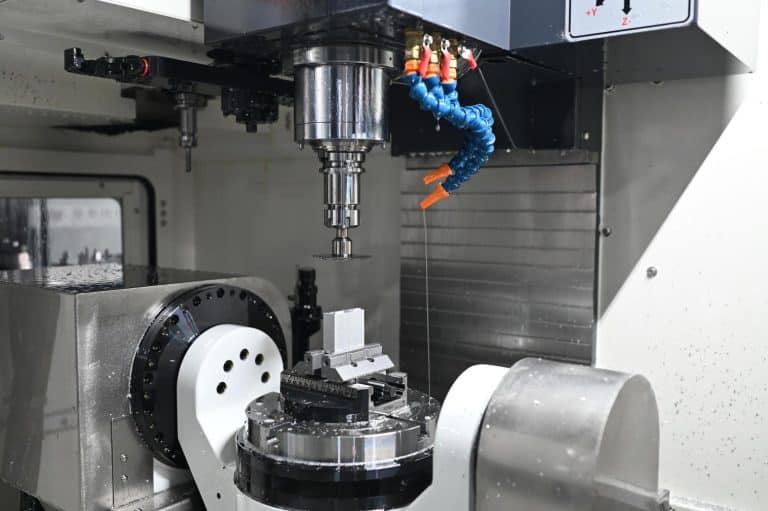
Material Selection Material choice determines both raw stock cost and machinability ratings. Free-machining metals, such as aluminum and mild steel, allow for higher feed rates and reduced tool wear. Harder alloys, like titanium and stainless steel, increase cycle times and consumable tooling expenses.
Part Complexity Geometric complexity and tight tolerances dictate machining time and fixturing requirements. Features requiring 5-axis machining, custom tooling, or multiple setups significantly increase programming overhead and run time.
Production Volume Unit costs decrease as production volume increases due to economies of scale. High-volume runs amortize setup times and Non-Recurring Engineering (NRE) costs across a larger total quantity. Bulk material purchasing further reduces the cost per part.
Design for Manufacturing (DFM)
DFM principles align component geometry with manufacturing process capabilities during the design phase. Strategies include simplifying assemblies, reducing total part count, and standardizing features to minimize waste. Specifying standard materials and open tolerances wherever possible prevents unnecessary processing steps and design revisions. This approach reduces lead times and ensures compatibility with standard machining infrastructure.
Practical Design Modifications for Cost Efficiency

Geometry and Setup Optimization Simplifying part geometry reduces machining cycle time and eliminates the need for specialized tooling. Avoid complex curvatures, deep cavities, and tight internal radii that require multiple tool changes or slow finishing passes. Design parts to be machined from a single orientation (3-axis) to minimize fixture changes and alignment errors. Reducing the number of setups directly decreases operator labor and machine downtime.
Material and Stock Selection Select free-machining materials, such as aluminum, over harder alloys to minimize tool wear and increase cutting speeds. Design components to fit within standard stock sizes to eliminate custom material preparation costs.
Avoiding Common Design Mistakes
❌ Mistake #1: Improper Tolerance Specification Specifying globally tight tolerances increases cycle time and inspection requirements. Conversely, undefined tolerances compromise mechanical fit and function. Apply geometric dimensioning and tolerancing (GD&T) only to critical mating surfaces and allow open tolerances on non-functional features.
❌ Mistake #2: Inefficient Material Selection Choosing low-machinability materials without functional justification increases cutting forces and tool degradation. Consult with manufacturing engineers to select materials that balance mechanical properties with machinability ratings.
❌ Mistake #3: Disregarding Process Constraints Designing features that require simultaneous 5-axis machining or custom form tools often renders parts non-manufacturable at scale. Remove non-functional aesthetic features and ensure internal radii match standard end mill sizes.
Case Study: Component Redesign
The Challenge A precision component required complex multi-axis machining and custom tooling, resulting in excessive cycle times and high unit costs.
The Solution Engineering redesigned the component to utilize standard stock dimensions and removed non-critical intricate features. This modification allowed for standard tooling and simplified workholding.
The Results
Cycle Time: Reduced by 30%.
Quality: Defect rate decreased due to simplified processing.
Output: Increased throughput with lower manual intervention.
Techniques to Reduce Material Costs

Stock Selection and Geometry Select raw stock dimensions that closely match the final part geometry (near-net shape) to minimize Material Removal Rates (MRR) and cycle times. Prioritize standard commodity alloys over exotic materials unless specific mechanical or chemical properties are required. Incorporate coring or pocketing into the design to reduce total material volume while maintaining structural rigidity.
Scrap Management Implement swarf segregation systems to separate chips and offcuts by alloy type. Clean, sorted scrap yields higher recycling revenue, offsetting raw material expenditures.
Using Simulations to Optimize Machining Time
Utilize CAM simulation software to validate toolpaths and identify inefficiencies, such as excessive air cutting or suboptimal rapid movements. Virtual verification allows programmers to optimize feeds and speeds without consuming machine time.
Simulation Benefits:
Tool Life: Optimized cutting parameters prevent tool breakage and reduce load on spindle bearings.
Machine Utilization: Offline verification eliminates the need for on-machine “dry runs,” reducing changeover time.
Collision Detection: Identifies programming errors, gouges, and potential fixtures collisions prior to physical machining.
Process Validation: Ensures NC code produces parts within tolerance, improving first-pass yield without physical trial-and-error.
Real-World Examples of Cost Reduction Through Innovation
In the automotive manufacturing industry, there is a prime example of cost reduction achieved through innovation. Many manufacturing companies have installed robotics and automation systems to make their production processes faster and simpler.
| Innovation | Impact | Result |
|---|---|---|
| Robotics & Automation | Performs repetitive tasks with high precision | Reduces labor costs and eliminates human error |
| Lightweight Composite Materials | Reduces vehicle weight | Better fuel economy and shorter production cycles |
| Predictive Maintenance Software | Analyzes sensor data to predict maintenance needs | Prevents downtime and extends machine lifespan |
This proactive approach not only extends the operational life of machinery but also ensures the regularity and continuity of production flows, thereby delivering significant cost savings for manufacturers at various stages of the production process.

Optimizing Cycle Time and Material Removal Rates
Profitability in CNC manufacturing is a direct function of cycle time reduction. Maximizing Material Removal Rates (MRR) without compromising surface finish requires precise synchronization of spindle speeds and feed rates relative to workpiece machinability. High-Speed Machining (HSM) protocols reduce thermal accumulation and tool deflection, allowing for deeper axial cuts with fewer passes. For complex geometries, simultaneous 5-axis machining consolidates operations into a single setup, effectively eliminating the accumulated error associated with manual re-fixturing. Advanced CAM software further compresses production schedules by optimizing toolpaths to eliminate air-cutting and non-productive rapid movements.
Process Stability and Resource Management
Consistent part quality relies on the interaction between cutter geometry and material hardness. Abrasive superalloys demand reduced Surface Feet Per Minute (SFM) and specialized coatings to prevent catastrophic edge failure, whereas softer non-ferrous metals require specific flute designs to evacuate chips and prevent built-up edge (BUE). Preventive maintenance regimes—specifically axis lubrication and ballbar calibration—are non-negotiable for preventing mechanical backlash and spindle runout. Operator competency also remains a defining variable; skilled technicians utilize offset adjustments to compensate for tool wear and thermal expansion in real-time, ensuring dimensional adherence throughout high-volume runs.
Throughput Enhancement via NPT Reduction
Mitigating Non-Productive Time (NPT) begins with offline verification. Digital twin simulations validate NC code against collision models before the machine is powered on, eliminating the risks of on-machine trial runs. On the production floor, implementing Single-Minute Exchange of Die (SMED) techniques via modular zero-point clamping systems decouples setup tasks from active run time. Tool length and diameter offsets are measured on external presetters, ensuring the machine spindle remains engaged in value-added cutting operations rather than static measurement. Finally, integrating data analytics to monitor spindle utilization and idle states provides the Overall Equipment Effectiveness (OEE) metrics necessary to identify and resolve process bottlenecks.
Material Selection Criteria and Cost Optimization

Material selection begins with a rigorous definition of the functional performance envelope. Engineering teams must map specific mechanical properties—such as tensile strength, thermal conductivity, and operating temperature limits—directly to the application’s load cases to prevent costly over-specification. Specifying an exotic alloy where a standard commodity grade suffices artificially inflates the Bill of Materials (BOM) without adding measurable performance value. Commercial viability also dictates evaluating supply chain liquidity; prioritizing readily available stock sizes and domestic sourcing reduces exposure to logistics volatility and freight premiums. Finally, lifecycle analysis supports the integration of recyclable substrates. Selecting materials with established reclamation streams ensures compliance with environmental standards while maintaining long-term cost efficiency.
Material Selection: Balancing Yield Strength and Acquisition Cost
Optimizing the strength-to-cost ratio defines the profitability of high-performance assemblies. While high-strength alloys typically command a premium during raw stock acquisition, their superior fatigue resistance often lowers the Total Cost of Ownership (TCO) by extending service life and reducing maintenance intervals. Engineering teams must segregate components based on specific load paths; critical structural members subject to high cyclic loading justify the investment in premium grades, whereas non-load-bearing elements should utilize commodity materials to control the overall Bill of Materials (BOM). True value assessment relies on a comprehensive lifecycle analysis—accounting for replacement frequency and downtime—rather than evaluating procurement costs in isolation.
| Material Type | Strength Level | Cost | Best Use Cases |
|---|---|---|---|
| High-Strength Alloys / Composites | Very High | High | Heavy-duty applications requiring extreme durability |
| Standard Grade Steel | Moderate | Low-Moderate | General applications not requiring extreme durability |
| Plastics | Low-Moderate | Low | Projects requiring less durability |
What design modifications yield a 50% reduction in CNC costs?
Significant cost reduction stems from geometry simplification and setup reduction. Eliminating non-functional 5-axis contours allows for processing on standard 3-axis vertical machining centers, which carry lower hourly machine rates. Design modifications that enable the use of larger cutter diameters increase Material Removal Rates (MRR) while minimizing tool deflection. Consolidating features to accessible faces reduces the number of required setups (flips), directly cutting operator labor and accumulated fixture error.
How does Design for Manufacturability (DFM) lower production expenses?
DFM aligns component geometry with standard machining kinematics and tooling constraints. Specifying internal corner radii that match standard end mill diameters eliminates the need for custom-ground tooling or secondary EDM operations. By limiting cavity depth-to-width ratios, engineers prevent the requirement for long-reach tools, which necessitate slower feed rates to mitigate chatter. Restricting tight tolerances to critical mating surfaces reduces cycle time by eliminating unnecessary finishing passes.
Does simplifying component design compromise part quality?
No. Simplification targets non-value-added complexity rather than functional performance. Removing aesthetic blending or purely cosmetic chamfers reduces runtime without affecting mechanical integrity. Utilizing standard stock sizes prevents material waste. These strategies lower the unit cost by maximizing machine efficiency while maintaining the component's ability to meet all engineering specifications.
What is the correlation between tolerance specification and machining cost?
Cost scales exponentially with tolerance stringency. Tight Geometric Dimensioning and Tolerancing (GD&T) callouts require slower finishing feeds, frequent in-process gauging, and often demand coordinate measuring machine (CMM) verification. A surface finish specification of 32 Ra requires significantly more machine time than a standard 125 Ra "as-machined" finish. Limiting high-precision tolerances strictly to bearing surfaces or interface points optimizes the balance between function and manufacturing expenditure.
How do tool diameter and tooling choices impact the budget?
Tool stiffness is proportional to the fourth power of its diameter. maximizing the tool diameter allows for aggressive chip loads and deeper axial depths of cut, drastically reducing cycle time. Designing features that accommodate standard, rigid tooling eliminates the need for fragile, long-reach end mills required for deep, narrow pockets. Avoiding custom form tools in favor of standard carbide end mills reduces the initial tooling investment and simplifies replacement logistics.
When should we engage a manufacturing partner for cost optimization?
Early Supplier Involvement (ESI) is most effective during the initial design phase, prior to design freeze. Manufacturing engineers can identify cost drivers—such as material machinability issues or excessive 5-axis requirements—before hard tooling is procured. A qualified partner will evaluate the trade-offs between 3-axis indexing and simultaneous 5-axis machining to determine the most improved manufacturing strategy for the specific production volume.
Can costs be reduced without increasing machining time?
Yes. Optimizing part orientation to maximize access for the spindle minimizes non-cutting rapid movements and manual re-fixturing. Selecting free-machining alloys (e.g., Aluminum 6061 over 7075 where applicable) allows for higher surface speeds (SFM) and feed rates. These process adjustments effectively lower the cost per part by increasing throughput without altering the component's final geometry.
How does splitting a monolithic part into an assembly affect cost?
Decomposing a complex component with undercuts or internal features into multiple simple parts often eliminates the need for 5-axis machining or EDM. Simple components can be processed in parallel on standard 3-axis equipment, reducing lead time. However, the engineering team must weigh the savings in machining hours against the additional costs associated with assembly labor and fastening hardware to ensure a lower Total Cost of Ownership (TCO).
References
- Optimization of Part Consolidation for Minimum Production Costs
This study focuses on minimizing costs across production processes, including CNC machining, through design optimization.
View the study here - Design Optimization for a CNC Machine
This research breaks down CNC machining costs into raw material, setup, machining, and tool-changing costs, offering insights into cost reduction strategies.
Read the research here - Head & Base Production Optimization: Setup Time Reduction
This study aims to reduce CNC machine setup time while maintaining quality, improving productivity, and cutting costs.
Explore the research here - CNC Machining Service