
Navbar Flip Text Corrected

Rapid Prototyping and On-Demand Production for

Aerospace Industry Title Preview

Optical communications

Industry

Obtain high-quality manufacturing services for your custom optical communication components

Precision Optical Tube Assemblies for Optical Communications

From Microscope Lenses to Astronomical Telescopes — Solving Your Toughest Optical Machining Challenges
Dakings specializes in high-precision optical tube manufacturing, addressing critical pain points: tight concentricity, oxidation control, and reliable light-blocking finishes. Our expertise spans 5-axis CNC machining, custom surface treatments, and strict quality validation to meet the demands of telescopes, microscopes, and high-end optical devices.
Optical Applications Block

Applications

Optical Tubes for Critical Applications

Astronomical Telescopes

Astronomical Telescopes

Large-diameter optical tubes (Invar material) with strict concentricity (≤0.005mm) to ensure stable light path alignment.
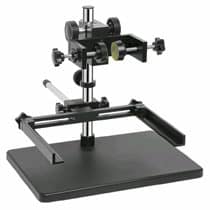
Microscopes

Microscopes

Thin-walled aluminum tubes (6061) with matte black finish, preventing internal reflections for clear imaging.

Industrial Cameras

Industrial Cameras

Precision-machined lens mounts (304 stainless steel) with 90° angle accuracy, ensuring focus stability.

Military Optics

Military Optics

Titanium alloy tubes with anti-oxidation treatment, resistant to extreme temperatures and corrosion in field environments.

Optical Machining Capabilities

Advanced Manufacturing for Optical Tubes

Precision CNC Services
01.

5-Axis CNC Machining

Handles complex geometries like thin-walled tubes (0.5mm) with minimal deformation. Ensures precise angles for lens mounts with ±0.01° tolerance.

EXPLORE SPECS
02.

Light-Blocking Threads

High-precision threading designed specifically for optical trapping. Strict dimensional control prevents rotation noise in telescopic systems.

VIEW DETAILS
03.

Anti-Oxidation Process

Featuring pre-machining solution treatment for 2A12 aluminum and deep cryogenic treatment post-roughing to ensure stability in extreme environments.

LEARN MORE
04.

Surface Finishing Options

Specialized matte black anodizing for aluminum and vacuum plating (black nickel) for Titanium/Invar. Designed to meet strict light-blocking requirements.

VIEW TABLE
Automotive Usage Grid (8 Items)

How do optical communication companies use the DakingsRapid network?

Optical Module Development and Testing

High-Speed Optical Communication Device Samples

Optical Communication Racks and Structures
systems

Prototype Manufacturing of Optical Communication Equipment

Optical Transmission System Components

Small-Batch Optical Communication Test Components

Optoelectronic Hybrid Integrated Components

Optical Communication Racks and Structures

Quality Control Section

We tailor our services to the specific needs of the automotive industry: from design optimization (such as wrinkle-resistant treatment of body panels) to scalable production. Whether it's prototyping 3D-printed plastic parts or mass production of small batches of engine components, we can adjust processes to meet rapid cycle times and assembly requirements, thereby accelerating your time to market.
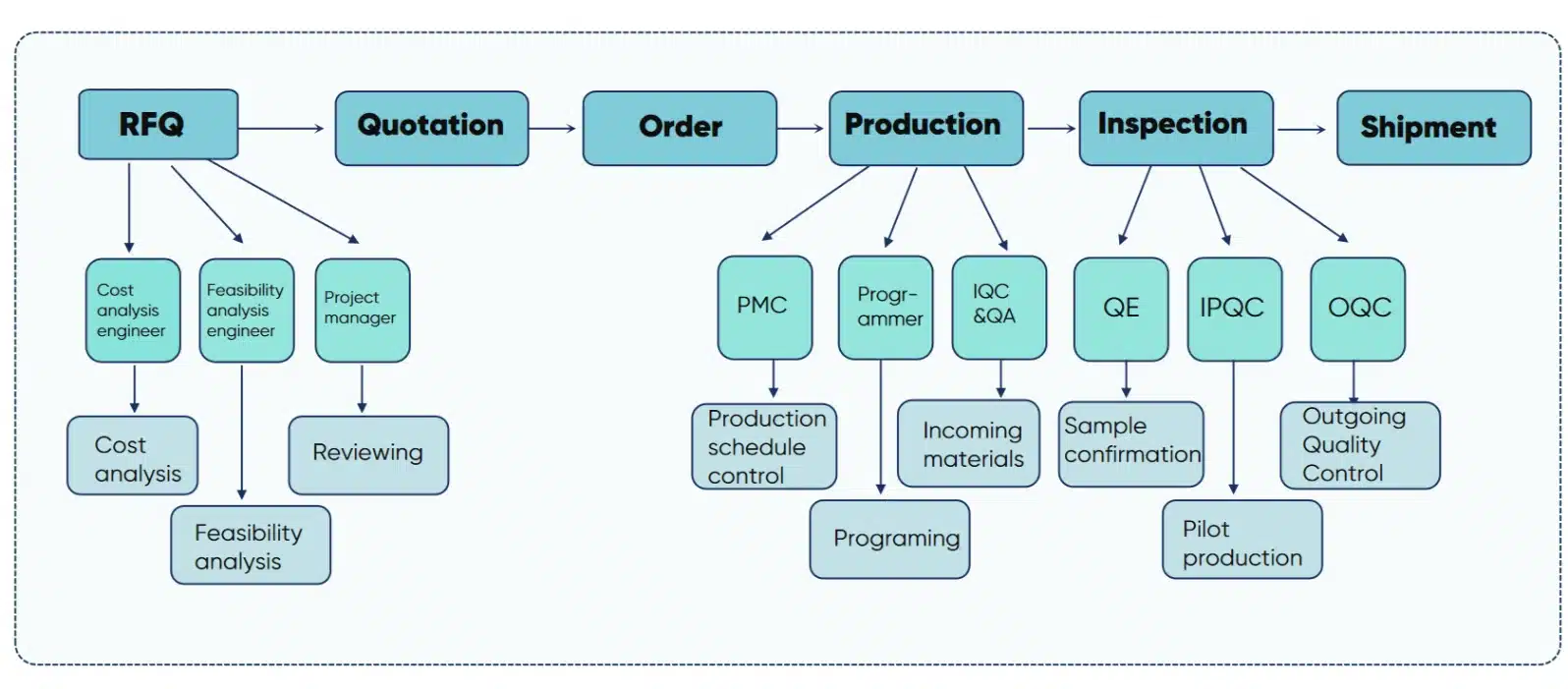
Customized Solutions Flowchart

Our production processes comply with IATF 16949 standards, including raw material inspection (certified metals/plastics), in-process inspection (surface smoothness, angular accuracy), and traceable documentation. Each component meets OEM standards for safety-critical components.

Quality Control Cards

We are equipped with Zeiss coordinate measuring machines, Maer projectors, and Mitutoyo gauges to verify stringent tolerances (geometric tolerance ≤ 0.005 mm) and surface quality (Ra ≤ 0.8 μm). A 99.5% yield rate ensures reliable product performance in automotive systems.
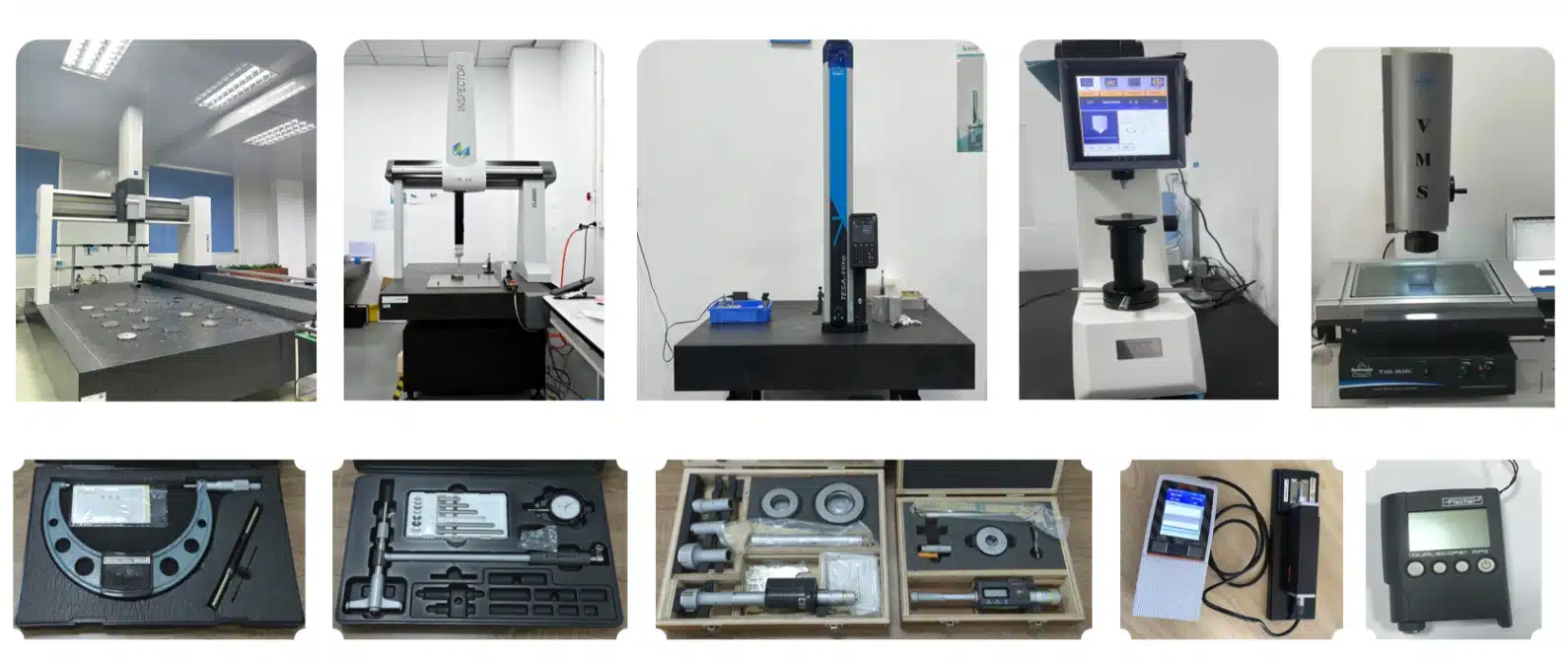
Precision Inspection Equipment

Materials & Surface Treatments

Materials & Finishes for Optical Performance

54e284ca 1671 46b0 b8a4 b69bf5cdc93e

Key Materials

Aluminum (2A12/7075):Lightweight, cost-effective for microscopes; stabilized via heat treatment.
Titanium Alloys (TC4):High strength for military optics; compatible with vacuum black plating.
Invar (4J36):Low thermal expansion for astronomical telescopes, ensuring dimensional stability.
304 Stainless Steel/POM:Corrosion-resistant options for industrial cameras.

Surface Treatments

Aluminum: Matte black anodizing (light-blocking, no streaks).
Titanium/Invar: Vacuum black nickel plating (wear-resistant, no peeling).

d11613dd c628 42b7 8ec5 f939b13fefa8

FAQs

Q: We need engine components (e.g., intake manifolds) and body panels with complex geometries and strict tolerances. Can Dakings handle these?
A: Yes. We leverage 5-axis CNC machining for engine parts (e.g., ±0.005mm tolerance on intake port angles) and 3-4 axis machining for body panels (ensuring wrinkle-free, seamless curves). For surface quality:Engine components achieve Ra ≤0.8μm (smoothness for optimal performance).Body panels undergo strict visual checks (no scratches, wrinkles). We also specialize in materials like 7075-T6 aluminum (engine parts, high strength) and 304 stainless steel (body panels, corrosion resistance), balancing precision and functionality.

What's your lead time for small-batch automotive production?
 
Q: We require small batches (50–500 units) of automotive parts with fast delivery. How quickly can you respond?
A: Our workflow is optimized for automotive’s fast cycles:

Prototypes: Ready in 24 hours (e.g., 3D-printed plastic dashboards, CNC-machined aluminum brackets).
Small batches: Delivered in 5–7 days for most parts (e.g., stamped body panels, 5-axis machined engine components).
We reduce delays by:
Grouping similar materials (e.g., aluminum profiles for multiple parts).
Streamlining processes (e.g., parallel surface treatment and inspection).
Even for multi-variety orders, we prioritize speed without compromising quality.
How do you ensure quality and IATF 16949 compliance?
 
Q: Our automotive parts need to meet IATF 16949 standards. What quality controls do you have?
A: We adhere to IATF 16949 for end-to-end quality and traceability:
Precision Inspection:
Zeiss CMMs verify dimensional tolerances (e.g., ±0.005mm for engine ports).
Projectors check flatness; Ra testing ensures surface smoothness.
Documentation:
Material certificates, first-article reports, and in-process logs are stored for audits.
Functional Validation:
Assembly trials confirm seamless fit; hardness tests (e.g., HRC 30–35 for 7075 aluminum) ensure material performance.
This rigor guarantees parts meet OEM safety and quality requirements.