




Key Takeaways
Diamond-coated routers or polycrystalline diamond (PCD) end mills increase tool life by up to 10x compared to standard uncoated carbide when cutting carbon fiber sheets.
Maintaining a feed rate of 1,000–1,500 mm/min at 15,000–24,000 RPM minimizes heat buildup and resin melt along laminate edges during custom drone frame CNC production.
Tolerances of ±0.05 mm are achievable in 3K carbon fiber plates using high-flow vacuum workholding, which prevents part lift and high-frequency vibration during profile milling.
The Mechanics of Cutting Carbon Fiber Sheets
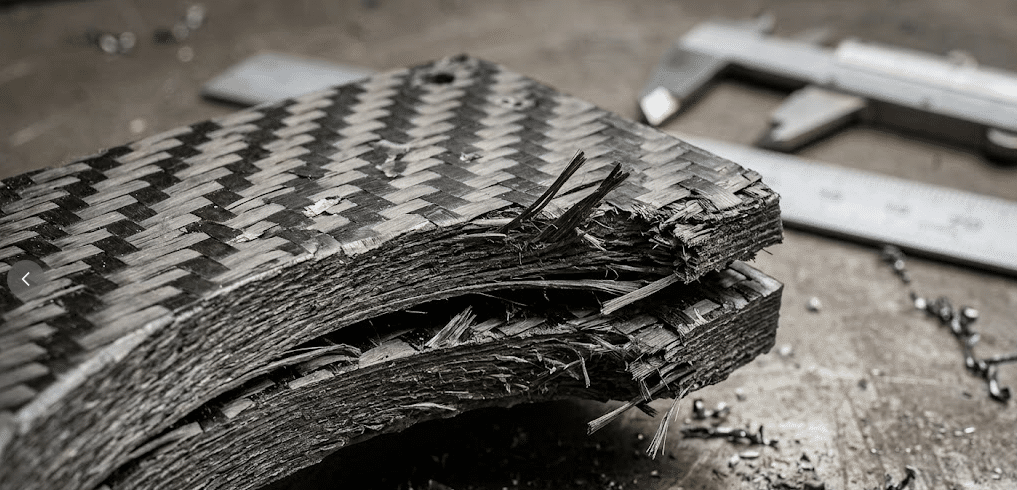
Cutting carbon fiber sheets requires abrasive shearing rather than traditional metal chip formation. Standard fluted end mills try to pull a continuous chip, which fractures the brittle carbon matrix and instantly melts the epoxy binder.
Engineers often treat CFRP like 6061-T651 aluminum.
That assumption destroys tools and ruins parts. Carbon fiber is highly abrasive. When a US job shop running at $120–$180/hr uses standard uncoated carbide, the cutting edge rounds off within the first 150 millimeters of travel. The blunt tool then acts like a friction heater. The resin hits its glass transition temperature, usually around 150°C, and smears. You lose the structural integrity of the laminate entirely.
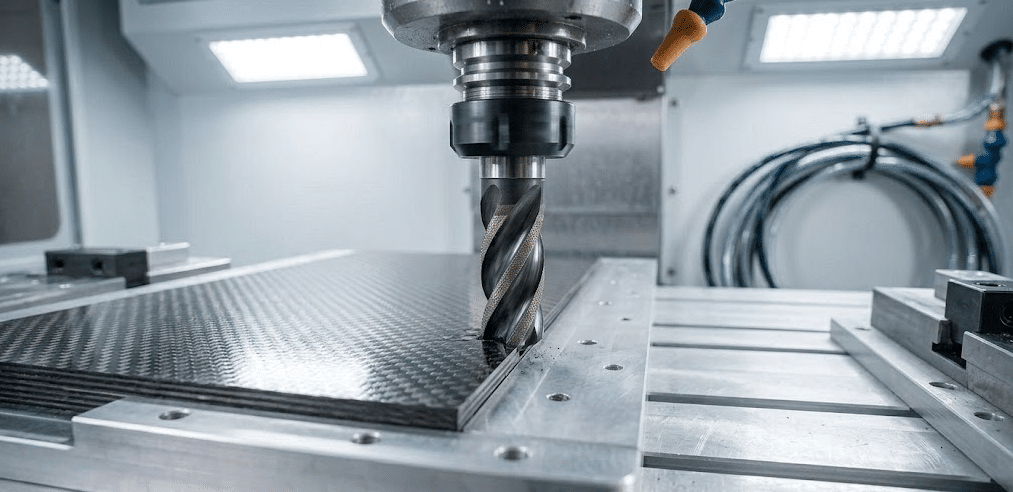
To prevent edge breakout, the cutting mechanics rely on specialized compression routers or polycrystalline diamond (PCD) tooling that shears the fibers cleanly toward the center of the sheet. When machining thick quadcopter chassis parts at DakingsRapid, stepping down the Z-axis with up-cut/down-cut compression geometry is the primary manufacturing method we use to eliminate top-layer splintering during heavy profile passes.
Workholding Strategies for Flat Plate Milling
This is where most RFQs break down.
A designer slaps an ASME Y14.5-2018 flatness callout of 0.05 mm across a 400 mm diagonal drone frame. They don’t consider how a 3 mm thick sheet of composite behaves under a 20,000 RPM spindle. Thin carbon plates vibrate like a drum skin. High-frequency chatter destroys surface finishes, making a targeted Ra 0.8 impossible and causing micro-fractures in the matrix.
Mechanical clamping induces bow.
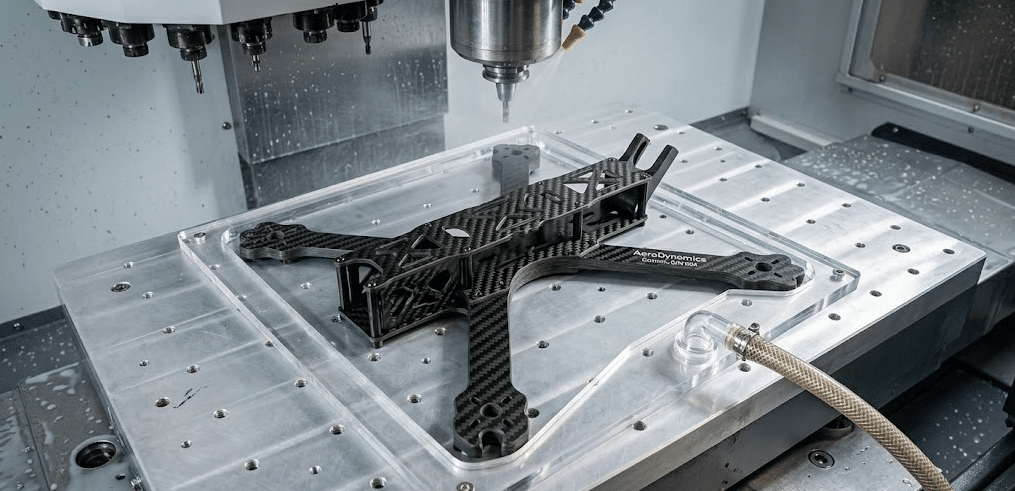
When you clamp the edges of a carbon fiber plate, the center lifts slightly. As the tool cuts through the material and relieves internal stress, the plate shifts. The only reliable method for custom drone frames is a high-flow, multi-zone vacuum table. A sacrificial MDF spoilboard acts as a bleeder board, allowing the vacuum to pull evenly across the entire surface area of the stock. This neutralizes vibration and anchors the part firmly without geometric distortion.
When an RFQ requires complex workholding or tight flatness controls, we leverage the 12-hour time difference. The engineering team at DakingsRapid runs the DFM review overnight during the US evening, adjusting the workholding strategy and adding sacrificial tabs. By the time the US purchasing managers log on the next morning, the machining setup is finalized and ready to run.
Carbon Fiber Milling Techniques: Feeds, Speeds, and Tooling
You can’t just slow down the feed rate to improve surface quality.
Dropping the feed in carbon fiber creates rubbing. Rubbing creates heat, and heat melts the matrix. To maintain a process capability of Cpk > 1.33 on continuous production runs, the chip load must stay aggressive enough to carry heat away in the abrasive dust, while the spindle speed remains high enough to sever the carbon fibers cleanly.
For standard 3K carbon fiber drone plates, typical spindle speeds hover between 18,000 and 24,000 RPM. Feed rates generally sit between 1,000 and 1,500 mm/min. Air blast is mandatory to clear abrasive dust and cool the tool. Liquid coolant turns the dust into an unmanageable paste that wreaks havoc on CNC guideways.
Carbon Fiber Machining Parameters

CNC Tool Performance & Parameters Guide
Select the right tool material and geometry to maximize machining efficiency and tool life.
Processing Parameters
Material & Performance Reference| Tool Material | Geometry | RPM Range | Feed Rate | Life (Linear) |
|---|---|---|---|---|
| Solid Carbide | Compression Router | 18k - 20k | 800 - 1.2k mm/min | 15 - 25m |
| CVD Diamond | Multi-Flute | 20k - 24k | 1k - 1.5k mm/min | 150 - 250m |
| PCD (Poly) | Straight Flute | 24,000+ | 1.5k - 2k mm/min | 800+ m |
Machining economics dictate the tooling choice. While PCD tooling costs significantly more upfront, the extended tool life drastically reduces machine downtime for tool changes during high-volume jobs.
When machining motor mounts that require a 0.02 mm true position for bearing alignment, tool deflection from worn cutters will kill the batch. To guarantee these specs, DakingsRapid validates the first-article dimensions using optical comparators and CMM measurement systems, cross-referencing the original material traceability reports (MTRs) to ASTM D3039 standards to verify the composite’s structural limits haven’t been compromised by cutting forces.
Managing Delamination and Burr Formation
To prevent delamination when machining carbon fiber, specify compression routers with alternating up-cut and down-cut flutes that drive the composite layers toward the center of the sheet.
Standard end mills rip the fibers outward. That upward pulling force destroys the top ply. Delamination is not just a cosmetic surface defect; it immediately compromises the structural load paths of the laminate. If a designer calls out an Ra 0.8 surface finish on a routed outer profile, standard fluted carbide will never achieve it. The abrasive carbon fibers dull the cutting edge in minutes, turning a clean shearing action into a tearing action. Burr formation in carbon composites is actually a trail of uncut, frayed fibers dragging behind a worn toolpath.
This is where most RFQs break down.
An engineer specifies a standard roughing end mill to clear material faster. The material clears, but the top layer of the epoxy matrix peels back from the substrate. Controlling this requires tooling geometry designed explicitly for abrasive shearing.
Prototyping Custom Drone Frame CNC Components
That tolerance looks harmless on the drawing.
A US engineering team recently sent an RFQ for a 5 mm thick 3K carbon plate with internal corner radii of 1.5 mm. To clear that corner, the machine must run a 3 mm tool. Plunging a 3 mm tool through 5 mm of abrasive composite causes severe tool deflection, guaranteeing out-of-tolerance features on the bottom face.
Engineers often prototype drone chassis in 6061-T651 aluminum before committing to carbon fiber, but the machining dynamics do not translate. Aluminum yields; carbon fiber fractures.
At DakingsRapid, our DFM feedback flagged this immediately. We recommended opening the internal radii to 2.5 mm, allowing clearance for a more rigid 5 mm end mill. This single geometry change delivered immediate manufacturing advantages:
Increased the feed rate by 400 mm/min
Reduced overall cycle time by 22%
Eliminated two fragile tool changes per frame
In standard US job shops running at $120–$180/hr, that kind of cycle time reduction shifts the economics of a prototype run entirely.
Quality Inspection and Dimensional Verification
Inspection criteria often ignore material relaxation.
You pull the machined plate off the vacuum fixture, and it immediately bows 0.1 mm. Carbon fiber relieves internal stress dynamically as layers are cut. Validating a 0.02 mm true position on a motor mount requires fixturing the part in its free state, exactly as it will sit in the final assembly.
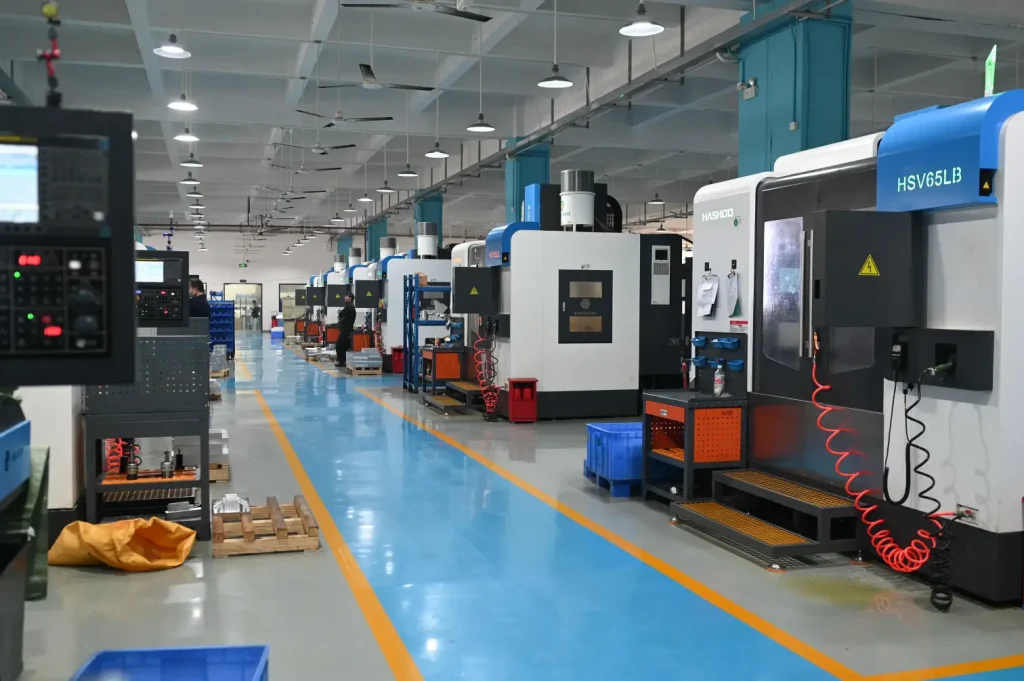
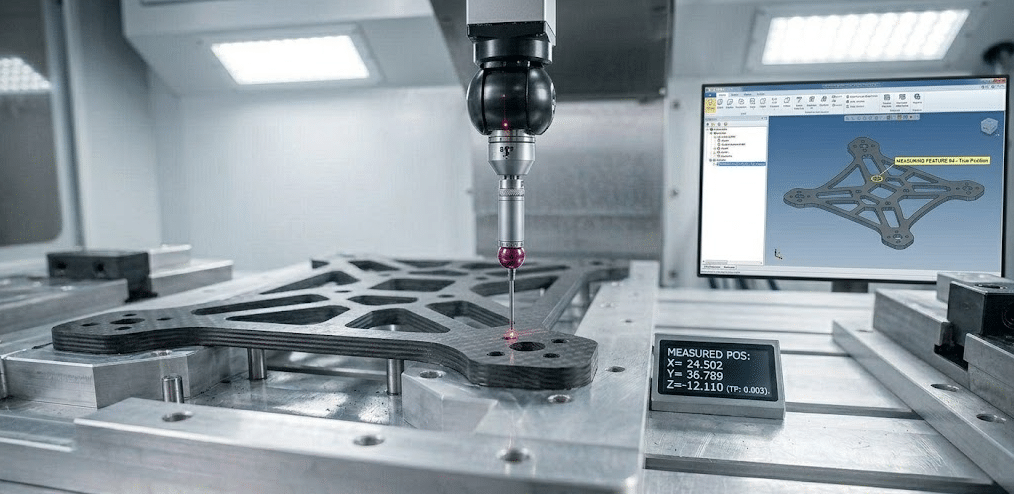
To meet ASME Y14.5-2018 GD&T standards, traditional calipers and drop indicators are insufficient. At DakingsRapid, we utilize automated CMM measurement systems to probe the critical hole locations and establish the datum reference frames before the batch leaves the floor.
Optical comparators verify edge quality and check for micro-delamination.
Pin gauges confirm tight-tolerance hardware mounting holes.
Material traceability (MTRs) are cross-referenced to ASTM specifications to guarantee the resin matrix matches the original design intent.
Relying on a visual inspection for composite structural components is a guaranteed path to field failure.
Transitioning from Prototype to Production
Scaling uncovers the hidden costs of tool wear.
You can baby a single prototype through the spindle. You cannot baby a 5,000-piece production run. Tool life dictates the economics of high-volume composites. A solid carbide router might last 20 meters of linear cutting before edge degradation pushes tolerances out of the acceptable ±0.005mm range required for press-fit bearing bores.
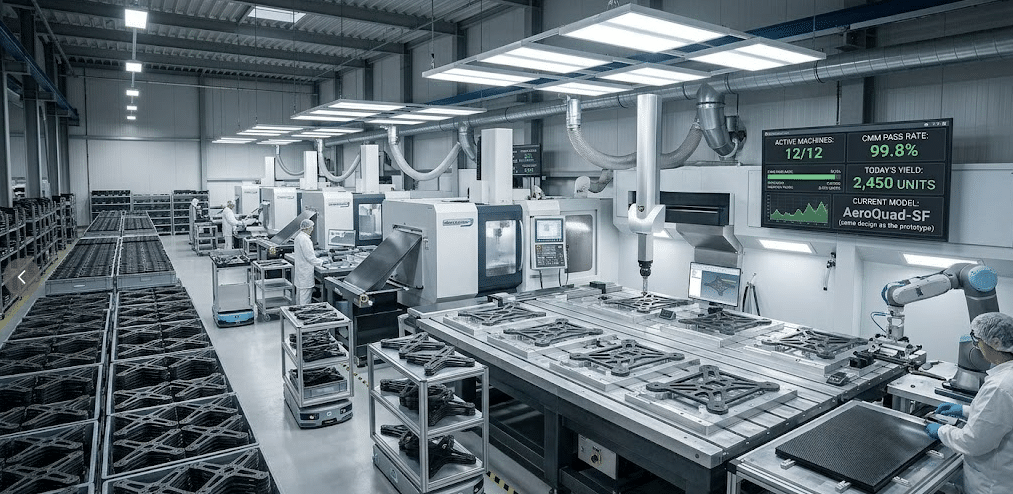
Transitioning from a prototype batch to full-scale manufacturing requires locking in polycrystalline diamond (PCD) tooling setups. This is the only way to maintain a strict Cpk > 1.33 process capability across hundreds of consecutive parts without shutting down the machine every hour for tool changes and Z-height recalibrations.
Supply chain velocity matters just as much as spindle time. We utilize the Shenzhen time zone advantage at DakingsRapid to conduct overnight RFQ reviews. US teams submit their finalized CAD models at 5 PM EST, and by 8 AM the next morning, they have a fully costed production plan, eliminating days of administrative downtime.
Final Engineering & Sourcing Verdict:
1、Specify PCD tooling upfront to prevent batch-ruining tool wear, locking in higher initial tooling costs but drastically lowering the per-part machine cycle time.
2、Mandate CMM inspection and optical comparator checks before batch release to catch material relaxation and micro-delamination that traditional calipers miss.
3、Leverage overseas high-flow vacuum table configurations to eliminate the risk of geometric distortion without absorbing premium US job shop rates on complex setups.
FQA
What are the standard achievable CNC machining tolerances for 3K carbon fiber drone plates?
±0.1 mm standard. Precision setups utilizing rigid, multi-zone vacuum workholding can hold ±0.05 mm across flat profiles. Tighter controls like ±0.005 mm fail due to material relaxation and inevitable fiber spring-back immediately after the plate leaves the fixture.
How do you prevent delamination when drilling through-holes in carbon fiber composite?
Brad-point or dagger drill bits. The sharp outer points score the carbon fibers before the primary cutting edge engages the brittle epoxy matrix. Standard 118-degree twist drills pull the fibers outward, splintering the top and bottom plies.
What primary variables drive the cost of custom carbon fiber CNC machining?
Tool wear and cycle time. The highly abrasive nature of CFRP dictates expensive diamond-coated or PCD tooling. Standard solid carbide degrades in minutes, forcing slower feeds, frequent tool changes, and machine recalibrations that spike the hourly run rate.
Should I specify liquid coolant or air blast when milling carbon fiber parts?
High-pressure air blast only. Pair this with localized HEPA vacuum extraction. Introducing liquid coolant mixes with the fine carbon dust to form a highly abrasive sludge that severely damages machine way covers, ball screws, and guideways.
How do we verify the structural integrity and dimensional accuracy of machined carbon fiber after production?
CMM measurement and ultrasonic scanning. Coordinate measuring machines verify the true position of critical mounting holes against CAD data. Non-destructive testing and optical comparators confirm the edges lack uncut fibers or micro-fractures hidden within the epoxy resin.

Written By
Ryan
Conscientious sales engineer at DakingsRapid with demonstrated experience working in the machine and parts manufacturing industry. Ability to independently manage sales operations for commodities and proficiency in quality customer service.
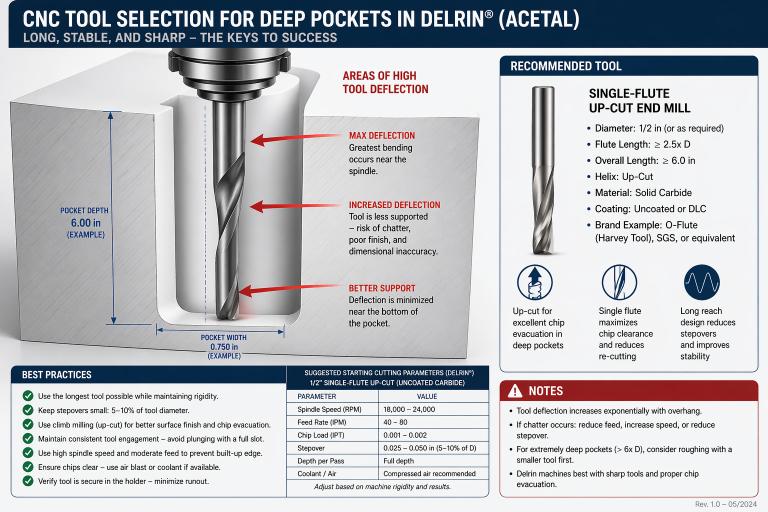
POM CNC Machining Parameters: Speeds, Feeds & Setup Guide
Dial in your POM CNC machining parameters. Learn Delrin milling feed rates, RPM, and setup tips to stop chatter, hit ±0.001″ tolerances, and cut shop rates.
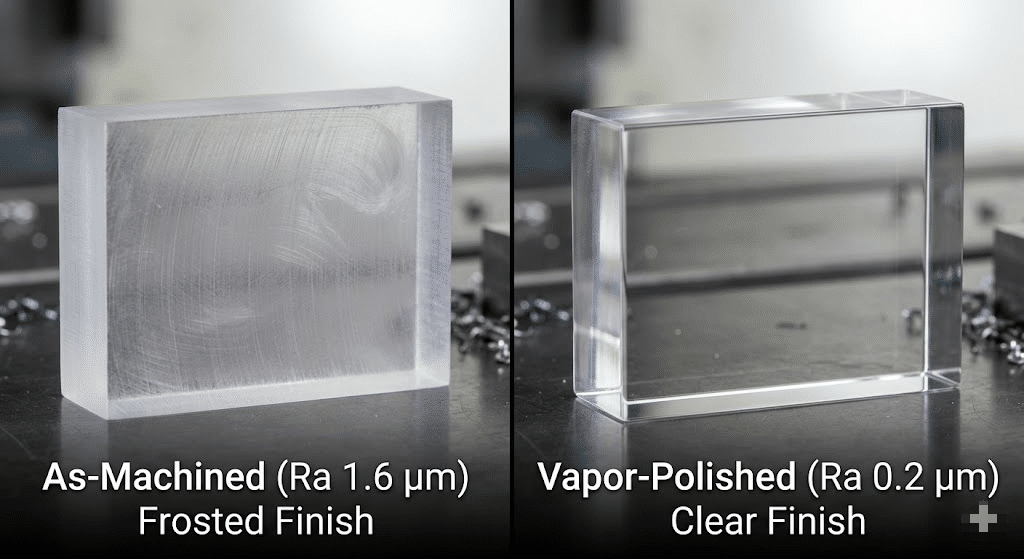
Acrylic CNC Machining Guide: Cost & DFM Reality
Stop scrapping PMMA. A Senior Engineer breaks down cast vs. extruded acrylic, surface finishes, and why your $150/hr CNC quote is the cheaper option.
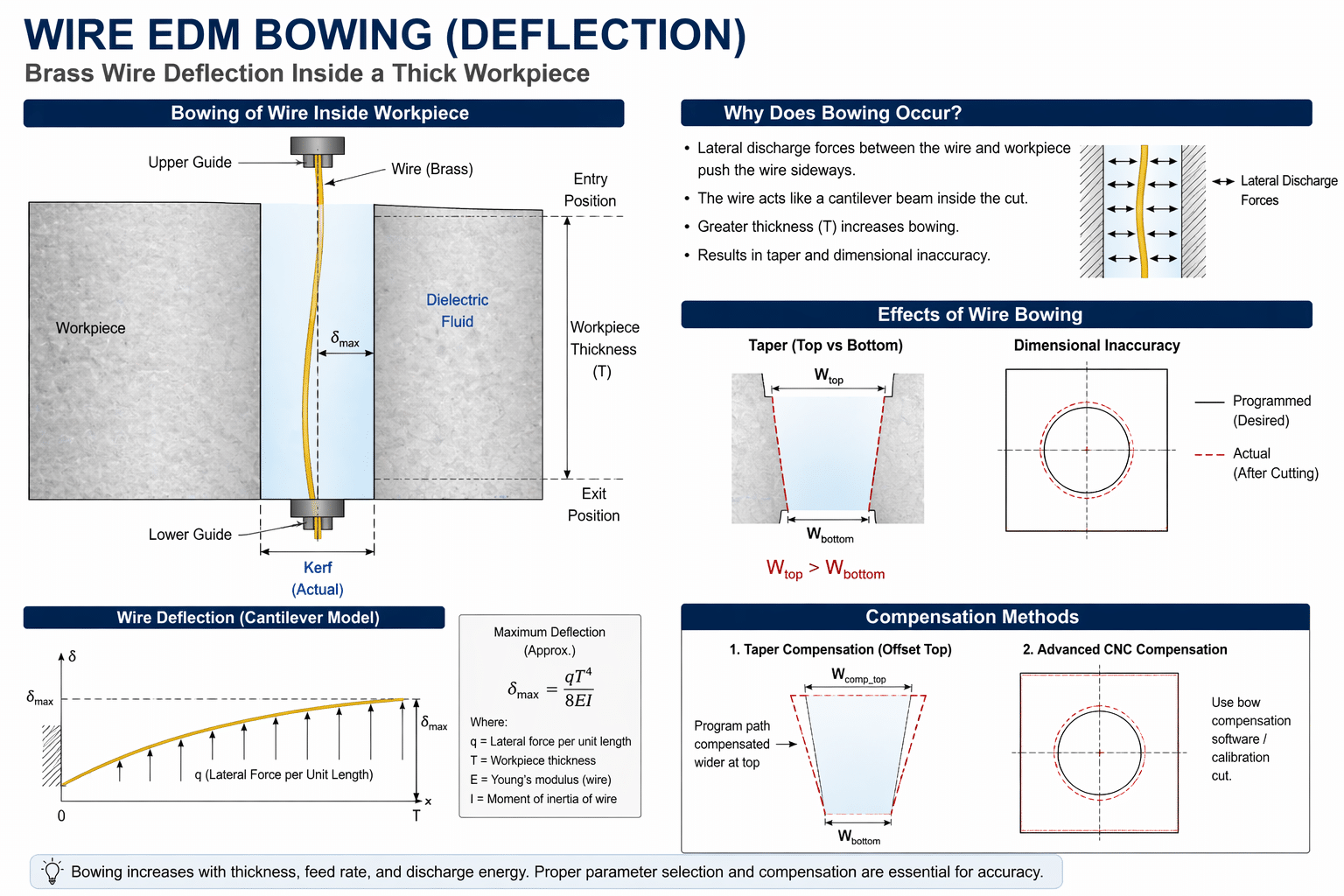
Wire EDM Tolerances: Stop Overpaying in 2026
Stop over-tolerancing Wire EDM parts. Learn how to balance ±0.0001″ precision with 2026 shop rates, surface finishes, and real-world GD&T.