




Key Takeaways
Specifying ±0.002 mm (±0.00008″) on every feature pushes Wire EDM cycle times up by 300%, easily inflating a $50 part to $200 at standard $150/hr shop rates.
Targeting an Ra 0.2 µm (8 µin) surface finish requires 5 to 6 skim passes, which kills throughput; sticking to Ra 0.8 µm (32 µin) drops machining time by 40%.
Switching from a blind profile to a through-hole allows standard Wire EDM instead of Sinker EDM, reducing custom electrode tooling costs by $1,200 on low-volume runs.
The Reality of Wire EDM Tolerances vs. Shop Rates
This is where quotes start to diverge. Procurement sends an RFQ for a D2 tool steel punch block. One shop quotes $80, another quotes $350. The print dictates a ±0.001 mm (±0.00004″, or less than half a tenth) profile tolerance.
At current 2026 US shop rates of $120–$180/hr, hitting that number is not just pushing a button. It requires:
Strict shop temperature control.
Fresh deionized water to prevent conductivity variations.
Extremely slow feed rates.
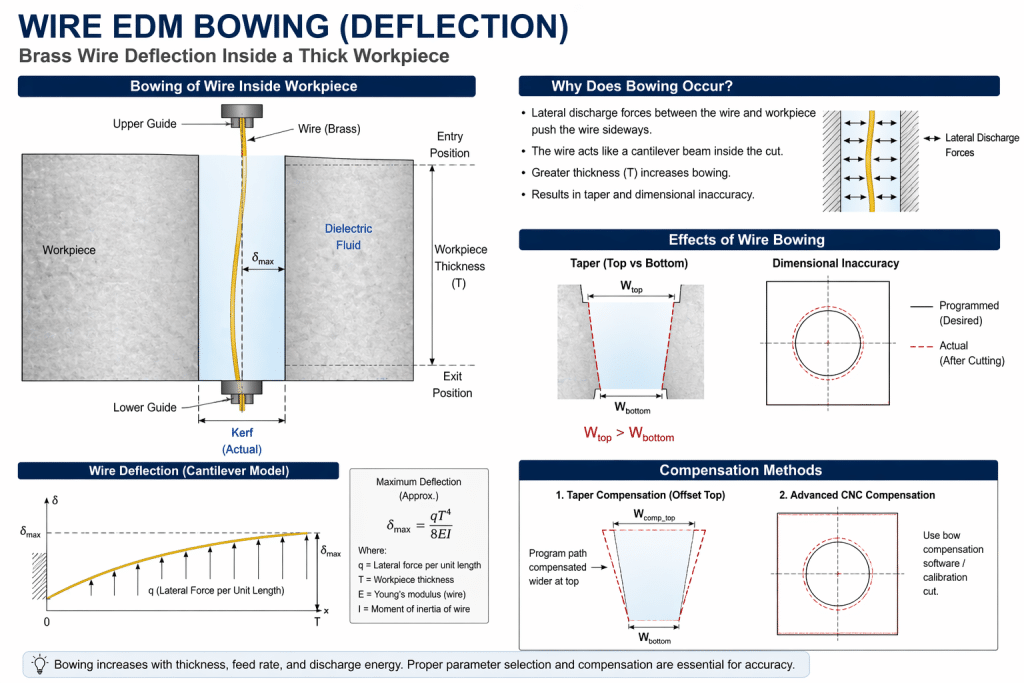
Standard wire EDM can easily hold ±0.005 mm (±0.0002″) with a rough cut and one skim pass. Pushing past that tight tolerance causes the brass wire to deflect slightly under sparking pressure.
Tighter tolerance increases cycle time by up to 300%. If the part mates with a standard slip fit, you are throwing money away. We evaluate the Profile of a Surface per ASME Y14.5 to understand the real intent. A standard rough cut leaves an Ra 1.6 µm (63 µin). To hold tight tolerances without the wire dragging on the recast layer, the machine must drop spark energy and run multiple passes, spiking the final price.
Surface Finish (Ra) Dictates Your Skim Passes
Engineers often loosen dimensional tolerances to save money but leave a strict surface finish callout on the print. This causes RFQ confusion. A looser tolerance does not reduce cost if the print still demands a mirror finish.
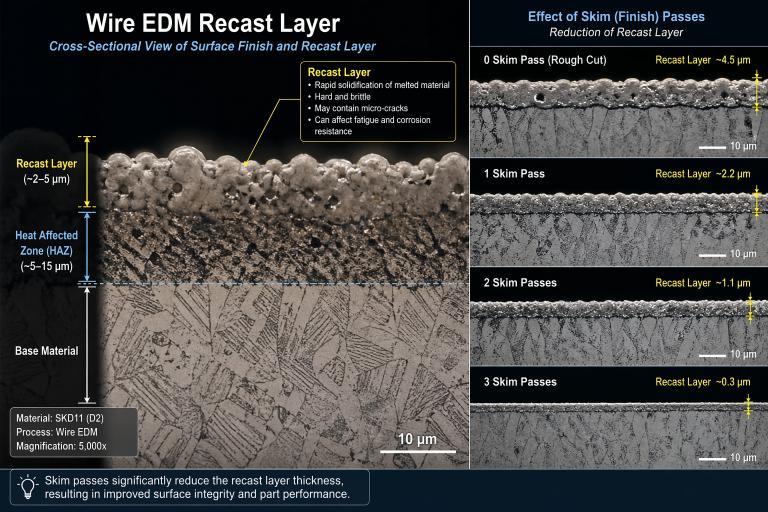
If the drawing requires an Ra 0.2 µm (8 µin) to prevent O-ring seal wear, the operator cannot just blast high current through the part. High-energy roughing leaves a thick, brittle recast layer (white layer).
To wipe out that white layer, the machine must:
Run the perimeter 4 to 5 times.
Use progressively lower energy.
Reduce flushing pressure to avoid wire chatter.
Each skim pass adds cycle time. Moving from Ra 0.8 µm (32 µin) down to Ra 0.2 µm increases machining time by 40%, directly hitting the bottom line at the $150/hr average rate. You might only need ±0.02 mm (±0.0008″, nearly a thou) dimensionally, but you pay for ±0.002 mm precision just to get the finish. ASME Y14.5 surface texture symbols must align with the functional requirement, not a copied-and-pasted block tolerance.
GD&T True Position vs. Dimensional Callouts
This usually shows up during inspection. A buyer rejects a batch of dowel pins because the slot width measures 10.005 mm instead of the required 10.000 mm ±0.002 mm (±0.00008″).
The actual failure is a bad drawing. The tight dimensional tolerance was applied to the slot width, but the real functional issue was the location of that slot relative to the center datum.
During a DFM review with DakingsRapid, we caught this exact issue on a titanium actuator bracket. We opened the dimensional width to ±0.01 mm (±0.0004″) but applied a True Position callout of Ø0.005 mm at Maximum Material Condition (MMC) per ASME Y14.5.
Indicating a part to perfect center introduces runout and setup error. Allowing bonus tolerance via MMC let the EDM operator run faster without scrapping parts. The results were measurable:
Scrap rate dropped to zero.
Cycle time fell by 15%.
Surface finish was maintained at Ra 0.4 µm (16 µin).
Flushing, Wire Breakage, and Tall Parts
This is where parts fail in production. When cutting a 150 mm (6″) tall block of 4140 steel, the dielectric fluid struggles to flush conductive chips out of the deep kerf.
Poor flushing leads to secondary arcing. The wire vibrates, chatters, and bows in the middle. You end up with a barrel-shaped cut. You might ask for a straightness tolerance of ±0.005 mm (±0.0002″) per ASME Y14.5. The top and bottom measure perfectly, but the middle of the cut bellies out by ±0.02 mm (±0.0008″).
We can compensate with taper settings and lower feed rates to prevent wire breakage, but cycle time explodes. Modifying the design to hollow out the center or split the part into thinner plates reduces EDM time by 60%. Bowing also degrades the surface finish mid-span, often failing a required Ra 0.8 µm (32 µin) callout.
Milling vs. EDM: When to Pull the Trigger
Supplier disagreement on process selection happens daily. A shop tries to mill 60 HRC D2 tool steel to hit a ±0.01 mm (±0.0004″) profile tolerance.
Milling hardened steel destroys carbide endmills. Tool deflection pushes the cutter away from the wall, causing severe taper and chatter marks. The surface finish barely hits Ra 1.6 µm (63 µin) before the tool wears out. The shop passes the tooling costs to the buyer.
EDM cuts 60 HRC exactly the same as mild steel, easily hitting Ra 0.4 µm (16 µin) without tool pressure. When submitting an RFQ to DakingsRapid, specifying the exact heat treat condition upfront dictates the routing. Routing hard milling to EDM saves on tooling and provides a stable 5-day lead time instead of unpredictable scrap loops.
Milling vs. Wire EDM Cost and Capability
| Process | Material Condition | Machining Limit | Surface Finish (Ra) | Est. 2026 Rate |
|---|---|---|---|---|
| 5-Axis Milling | Soft (< 45 HRC) | Tool reach, chatter | 0.8 µm (32 µin) | $100 - $150/hr |
| Wire EDM | Hardened (up to 65 HRC) | Wire bow, flushing | 0.2 µm (8 µin) | $120 - $180/hr |
Inspection and Verification: Prove It Or Lose It
An unclear GD&T plan ruins perfectly machined parts. You receive a batch of aerospace brackets, and your incoming QC rejects them for a profile error.
This is a classic inspection mismatch. The supplier checked the ±0.005 mm (±0.0002″) tolerance using gauge pins and micrometers. The buyer checked it on a CMM using a scanning probe.
Micrometers measure the peaks of the surface finish. If the Ra is 1.6 µm (63 µin), the micrometer reads the high spots. A CMM stylus might drop into the valleys of the recast layer, throwing the measurement out of the specified ASME Y14.5 tolerance band. Disputing inspection data wastes days of production schedule and drives up indirect costs.
DakingsRapid aligns inspection methods before the first spark. If a feature demands micro-machining precision, we lock in the CMM probing strategy during the kickoff. If you cannot prove the tolerance with correlated data, the money spent on a $180/hr EDM machine is wasted.
Final Engineering & Sourcing Verdict
Defaulting to a ±0.002 mm (±0.00008″) profile tolerance across the board increases your unit cost by up to 300% due to required skim passes; opening non-critical dimensions to ±0.01 mm (±0.0004″) instantly drops standard $150/hr EDM cycle times.
Sourcing deep cuts over 100 mm (4″) without taper compensation risks middle-bowing and scrap; explicitly defining inspection methods upfront prevents 15% to 20% scrap rates caused by CMM versus micrometer discrepancies.
Routing hardened tool steels directly to Wire EDM instead of fighting 5-axis hard milling limits tooling wear and secures a predictable 5-to-7 day prototype lead time, cutting supply chain delays in half.
FAQ
Related popular articles

Written By
Ryan
Conscientious sales engineer at DakingsRapid with demonstrated experience working in the machine and parts manufacturing industry. Ability to independently manage sales operations for commodities and proficiency in quality customer service.
Hannover Messe 2026 CNC: Industrial AI in Machining
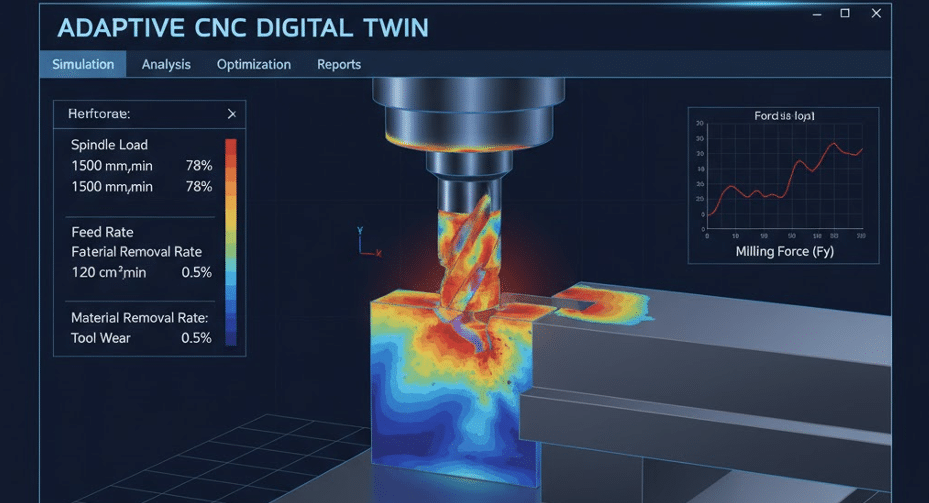
Tool wear and thermal distortion drive up cycle times. This breakdown explores how AI-native manufacturing and adaptive control mitigate these variables.
CNC vs 3D Printing Robotics: Selecting a Production Method
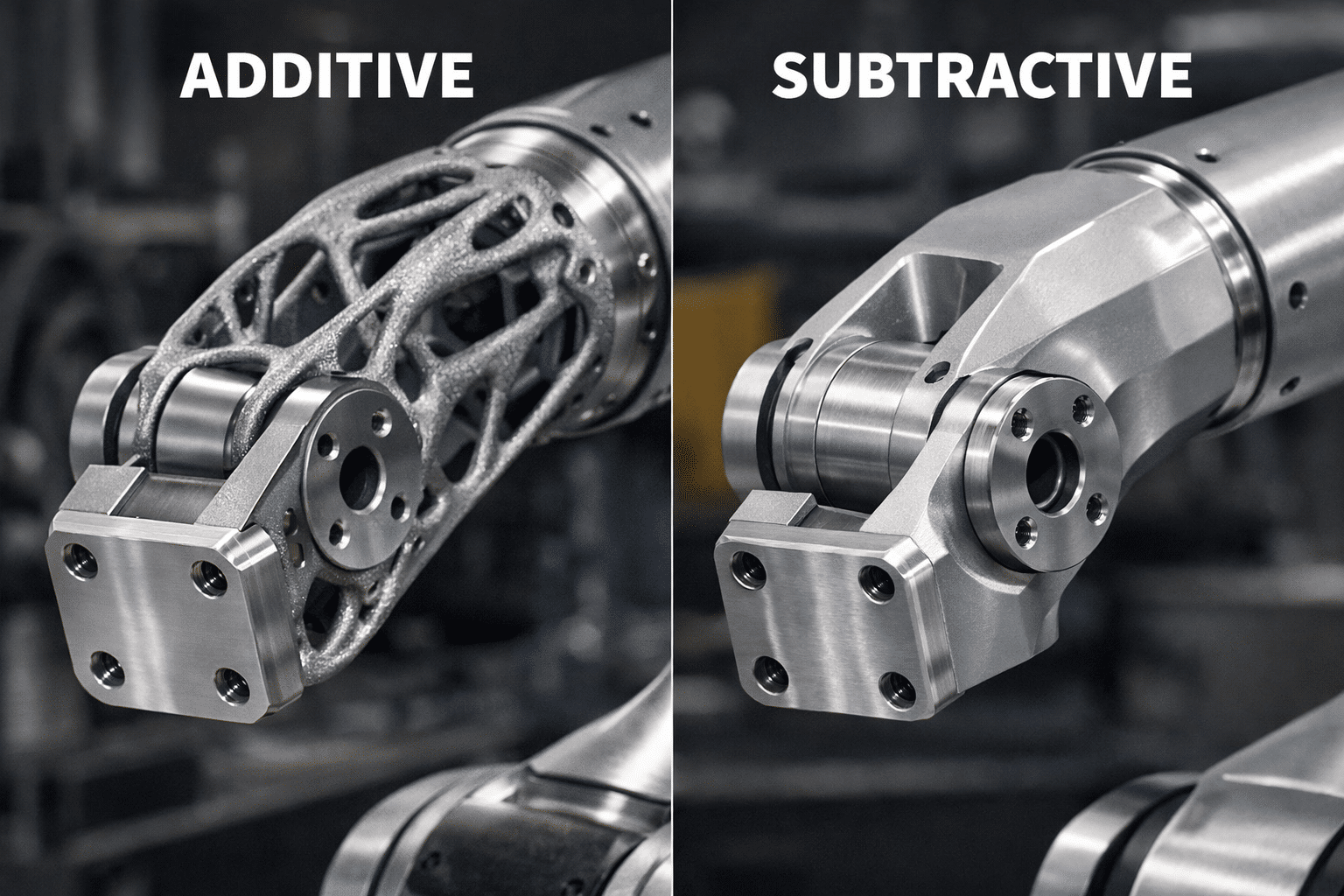
Compare CNC machining and 3D printing for humanoid robotic components. Analyze mechanical properties, tolerances, and scalability for actuators and frames.
US Metal Import Certification Requirements: Engineering Guide
Technical documentation requirements for importing CNC machined parts, including ASTM material traceability, RoHS compliance, and Customs-specific certifications.