


Medical devices often require components with tight dimensional control, consistent performance, controlled surface finishes, and repeatable production quality. Precision machining provides the manufacturing control needed for these requirements, from small medical components and housings to complex machined parts.
If you have a medical device component that requires tight tolerances, specific materials, complex geometry, or controlled surface finishes, our engineering team can review your drawings and help determine the right machining approach, material, and production process.
Why Medical Devices Require Precision Machining
Medical device components often work as part of a larger system, where even small dimensional variations can affect fit, movement, alignment, sealing, or assembly. Precision machining helps maintain these requirements consistently across individual parts and production batches.
For medical components, precision is not simply about achieving the smallest possible tolerance. The machining process must also provide repeatable dimensions, controlled surface quality, stable production, and reliable inspection results.
This is particularly important for components with mating features, small interfaces, moving elements, or complex geometries. A well-controlled machining process can reduce dimensional variation and help ensure that each component performs as designed.
Precision Requirements for Medical Components
The required level of precision depends on the component's function, material, geometry, and how it interfaces with other parts. Four factors are particularly important in medical precision machining.
Dimensional Accuracy
Critical dimensions must remain within the tolerances specified on the engineering drawing. This can include diameters, lengths, hole locations, wall thicknesses, and mating features.
The machining strategy should therefore be selected according to the actual functional requirements rather than applying unnecessarily tight tolerances to every feature.
Repeatability
Medical components often need to be produced consistently across prototypes, small batches, and larger production runs. Repeatability ensures that dimensions and critical features remain consistent from one part to the next.
Stable machine conditions, tooling, workholding, process parameters, and inspection procedures all contribute to maintaining this consistency.
Surface Finish
Surface finish can affect friction, wear, cleaning, sealing, assembly, and the functional performance of a medical component. The required finish depends on the part's application and contact conditions.
Machining parameters, tooling, material selection, and secondary finishing processes should therefore be considered together when a controlled surface finish is required.
Complex Geometries
Medical components can include small features, thin walls, deep cavities, intricate contours, and closely positioned holes. These geometries can increase the difficulty of maintaining dimensional accuracy during machining.
Multi-axis CNC machining, appropriate workholding, specialized tooling, and carefully planned machining sequences can help produce complex features while minimizing unnecessary setups and dimensional variation.

Materials for Medical Precision Machining
Material selection affects machinability, dimensional stability, surface quality, and the long-term performance of a medical component. The right choice depends on the component’s function, required properties, sterilization conditions, and applicable specifications.
Stainless Steel
Stainless steel is widely used for medical components that require corrosion resistance, strength, and good dimensional stability. Common grades include 316L and 17-4 PH stainless steel, depending on the application. Precision machining can produce housings, fittings, structural components, and other parts with controlled dimensions and surface finishes.
Titanium
Titanium combines high strength, low weight, and excellent corrosion resistance, making it suitable for selected medical device components. Ti-6Al-4V is commonly machined for applications where strength-to-weight performance and material durability are important. Titanium requires controlled cutting conditions and tooling because excessive heat can affect tool life and surface quality.
Engineering Plastics
Engineering plastics such as PEEK, POM, and nylon are used when a component requires low weight, chemical resistance, low friction, or electrical insulation. Compared with metals, plastics can be more sensitive to heat and machining stress, so cutting parameters and workholding need to be carefully controlled to maintain dimensional accuracy.
CNC Processes for Medical Components
Different medical components require different machining strategies depending on their geometry, tolerance requirements, material, and production volume. A combination of CNC processes may be used when one operation cannot efficiently produce all required features.
Precision Milling
Precision CNC milling is suitable for medical components with pockets, slots, holes, contours, and complex 3D features. Multi-axis milling can reduce the number of setups while maintaining positional accuracy between critical features.
Precision Turning
CNC turning is commonly used for cylindrical medical components such as shafts, pins, sleeves, bushings, and precision fittings. Turning provides controlled diameters, threads, grooves, and other rotational features with consistent part-to-part dimensions.
5-Axis Machining
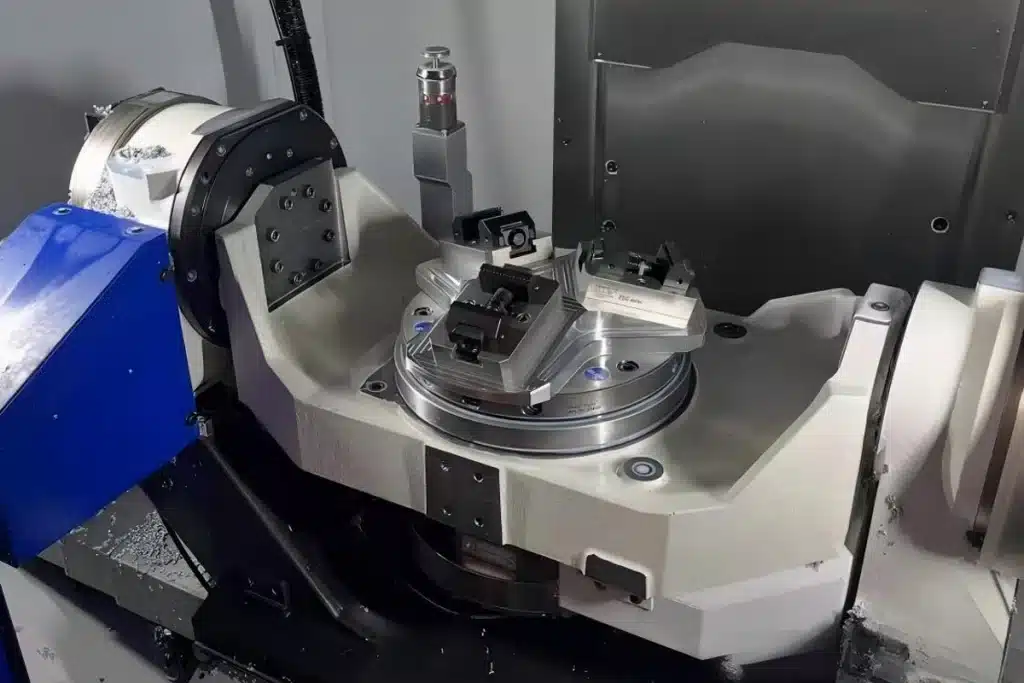
5-axis CNC machining is useful for medical components with complex contours, angled surfaces, deep features, or multiple orientations. Simultaneous or indexed multi-axis machining can reduce setups and improve access to difficult features while helping maintain the relationship between critical surfaces.
Grinding and Finishing
Grinding and secondary finishing can be used when tighter dimensional control or specific surface characteristics are required. Finishing may include deburring, polishing, or other treatments selected according to the component's functional and surface requirements. For medical parts, finishing should be controlled together with inspection to ensure the final component meets the drawing requirements.

How Precision Machining Improves Medical Device Quality
Precision machining supports medical device quality by controlling the dimensions, interfaces, and consistency of individual components throughout production.
· Consistent Dimensions
Critical dimensions are manufactured within specified tolerances, helping components maintain the required fit and function.
· Reliable Interfaces
Controlled holes, threads, mating surfaces, and contact features help ensure reliable assembly between machined components and other device parts.
· Repeatable Production
Stable machining processes help maintain consistent dimensions and feature quality from prototype parts through repeat production.
· Inspection and Documentation
Inspection results and production records provide evidence that critical features meet drawing and project requirements.
Quality Control for Medical Machining
Medical machining requires more than producing parts to a drawing. Quality control should cover the manufacturing process, inspection results, material information, and production records.
Inspection
Inspection verifies critical dimensions, geometric features, surface requirements, and other drawing specifications. Depending on the component, inspection may include CMM measurement, dimensional inspection, surface inspection, and functional checks.
Traceability
Material and production traceability helps connect finished components with relevant material information, production records, and inspection results. This is particularly important when specific material grades or documentation are required.
Documentation
Quality documentation may include material certificates, inspection reports, dimensional records, and other production documentation required by the project. Clear records make it easier to verify that components meet defined requirements.
ISO 13485
ISO 13485 provides a quality management framework specifically for organizations involved in medical devices. For medical machining suppliers, an ISO 13485-based quality system supports controlled processes, documented procedures, traceability, and consistent quality management throughout production.

Medical Precision Machining from Prototype to Production
Medical components often move through several production stages as a device develops—from prototype validation to small-batch production and larger-volume manufacturing. A machining partner should be able to maintain consistent requirements as production scales, rather than treating each stage as a separate process.
At the prototype stage, engineering teams can review drawings, materials, tolerances, and critical features to identify potential manufacturing issues early. Once the design is validated, stable machining processes and inspection procedures can be carried into repeat production to maintain consistent part quality.
For higher-volume medical component programs, production capacity, process stability, material traceability, and inspection capability become increasingly important. An experienced manufacturing partner can help manage these requirements while scaling production without unnecessary changes to the approved part specifications.
With extensive batch manufacturing experience, Dakings supports medical component projects from prototype quantities through repeat and higher-volume production. If you have medical device drawings or are evaluating a new component, send us your requirements and let our engineering team review the project with you.
