




Key Takeaways
Specifying cast acrylic instead of extruded adds 15-20% to raw material costs but drops scrap rates by over 40% when machining tight ±0.05 mm (±0.002″) features.
Pushing for an Ra 0.2 µm (8 µin) surface finish on internal bores doubles cycle times due to mandatory vapor polishing, increasing total part cost by up to 60%.
A standard 2026 US shop rate of $150/hr for high-speed PMMA processing is often cheaper than a $60/hr shop that ruins parts with tool chatter and stress-induced crazing.
Cast Acrylic vs. Extruded Acrylic: The 300% Quote Difference
A buyer sends an RFQ for a clear acrylic cover. One supplier quotes $45 each. Another quotes $135. This is where quotes start to diverge. The price gap comes down to the raw material state.
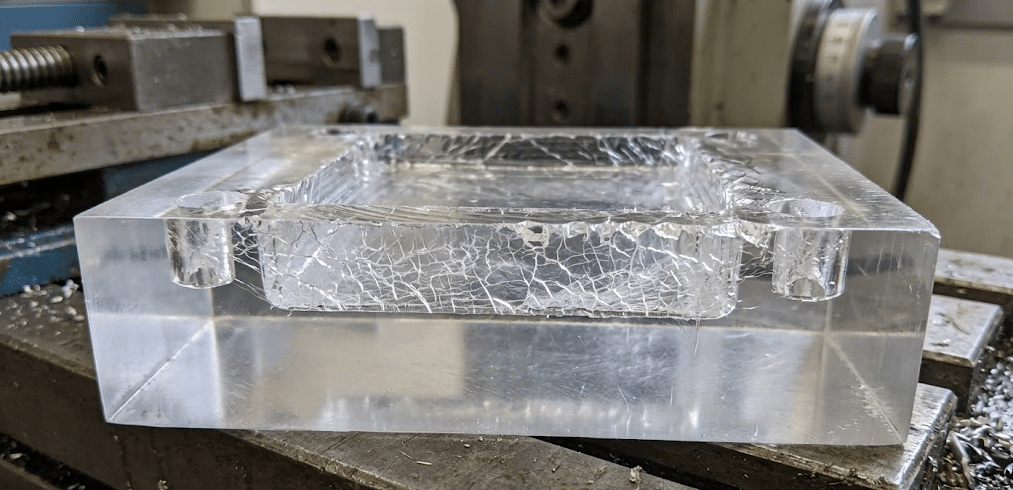
Extruded acrylic is manufactured by pushing resin through hot rollers. This process bakes directional stress directly into the sheet. When a machinist starts hogging out material at a standard 2026 US shop rate of $150/hr, the tool releases that internal stress. The material reacts by warping, bowing, or developing micro-fractures known as crazing.
Cast acrylic is poured into glass molds and cured slowly. It is stable. It holds its shape during heavy roughing passes. If the print demands a tight profile tolerance of ±0.05 mm (±0.002″), extruded stock will yield a massive scrap rate.
When we review a drawing at DakingsRapid, if the material block simply reads “Acrylic” without specifying “Cast,” we halt the RFQ immediately. Specifying cast acrylic adds about 20% to the raw material cost, but it prevents the entire batch from twisting into scrap during the first operation.
Acrylic Material State vs. Machining Outcome
| Material Grade | Internal Stress | Machined Tolerance Capability | Risk of Crazing | Cost Impact |
|---|---|---|---|---|
| Extruded | High (Directional) | ±0.15 mm (±0.006") | High | Low initial, high scrap |
| Cast | Low (Isotropic) | ±0.025 mm (±0.001") | Low | Higher initial, zero scrap |
| Cast (Annealed) | Very Low | ±0.01 mm (±0.0004") | None | Highest initial, stable |
Surface Finish Requirements and Optical Clarity Limits
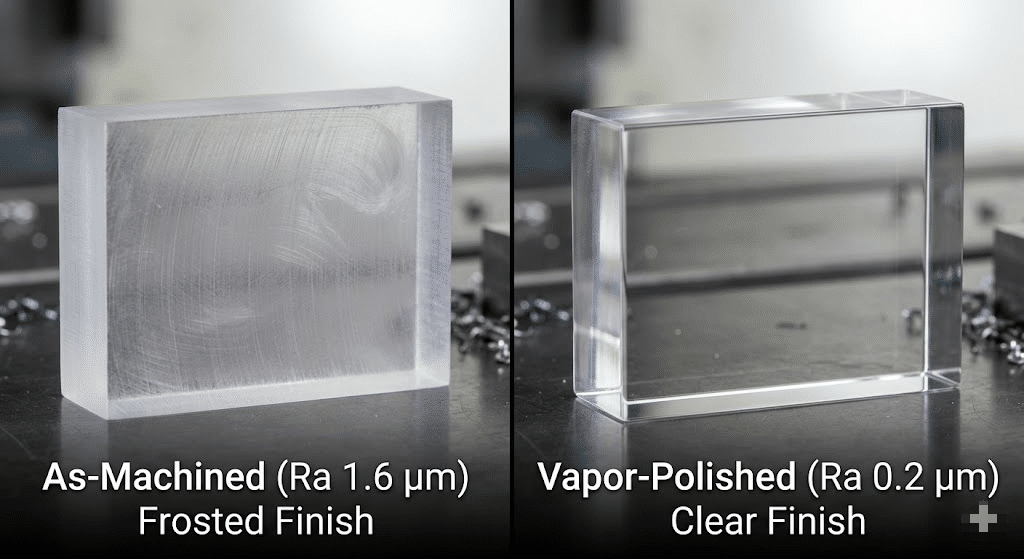
You cannot run a standard carbide endmill across PMMA and get a transparent window. A sharp, single-flute polished tool leaves an as-machined finish of roughly Ra 1.6 µm (63 µin). It looks frosted and translucent.
Achieving true optical clarity requires pushing the surface finish down to Ra 0.2 µm (8 µin). This introduces a hard machining limitation: spindle runout. If the machine’s Total Indicator Runout (TIR) exceeds 0.012 mm (0.0005″), the cutter leaves visible scallop marks on the wall.
This usually shows up during inspection. The shop uses a contact profilometer to measure the Ra value, confirming it meets the print. The client receives the part, expects glass, sees distortion through an optical comparator, and rejects the batch.
Fixing this requires chemical vapor polishing. This secondary process change doubles the total cycle time. Tighter optical tolerances mean your cost increases significantly. Dropping the Ra 0.2 µm (8 µin) requirement on non-functional internal surfaces drops the unit cost by up to 40%.
Holding GD&T Flatness on Acrylic Manifolds
Applying ASME Y14.5 GD&T controls to flexible plastics requires understanding how the material physically behaves in a vise. You cannot fixture a thin acrylic plate with heavy clamping force. If a machinist locks the part down, faces it flat, and releases the jaws, the plate springs back into a potato chip shape.
This is where parts fail in production. An engineer specs a Flatness control of 0.025 mm (0.001″) across a 300mm manifold. The supplier forces it flat against a granite surface plate to measure it and ships it. We check it on the CMM at DakingsRapid using a free-state setup without restraints, and it fails inspection immediately.
Holding that Flatness spec requires custom soft jaws, double-sided tape fixturing, and multiple light spring passes. It doubles the machine time. A simple design change—loosening the Flatness tolerance to 0.15 mm (±0.006″) and switching to a thicker, compressible silicone O-ring for the seal—eliminates the machining bottleneck and drops the unit cost by over 30%.
Feeds, Speeds, and Heat: Managing Deflection
Plastics act as thermal insulators. In aluminum machining, the heat leaves the cut zone inside the metal chip. In acrylic, the heat stays at the cutting edge.
If the spindle speed is too high and the feed rate is too low, the tool rubs against the plastic instead of slicing it. The friction melts the PMMA, welding a blob of plastic to the flute. The tool chatters and rips the surface finish to a rough Ra 3.2 µm (125 µin). Machinists push the feed rate high to prevent melting.
This high-feed approach causes severe tool deflection. An unclear drawing often exacerbates this problem. A print specifies a 50mm deep pocket with a sharp R1.0 mm (R0.040″) internal corner.
A standard endmill cannot reach that depth.
A long-reach tool will deflect by several thousandths of an inch under heavy pressure.
The walls end up tapered, failing dimensional tolerances.
During a DFM review at DakingsRapid, we request opening that internal corner radius to R6.0 mm (R0.250″). This process change allows a thicker, more rigid tool to clear the pocket. The outcome is a 50% reduction in cycle time and zero wall taper.
The Cost of Over-Tolerancing PMMA
The mechanical properties of PMMA make chasing “tenths” a waste of money. Acrylic has a high coefficient of thermal expansion. It grows when it gets warm.
A designer calls out a tight ±0.01 mm (±0.0004″) tolerance for a bearing bore. A high-end shop quoting $180/hr will machine it perfectly in a climate-controlled 20°C (68°F) room. The parts sit in a delivery truck in July and arrive at the assembly line measuring completely out of spec. Supplier disagreements immediately follow.
Tight tolerances on plastics do not improve part quality; they just inflate the price. Chasing that bore requires slow, controlled cuts and constant temperature monitoring that double the labor cost.
Changing a press-fit requirement to a looser ±0.05 mm (±0.002″) clearance fit and securing the component with a UV-cure structural adhesive provides the exact same mechanical hold. This design change bypasses the need for high-precision boring, reducing the total assembly cost by 25%.
Final Engineering & Sourcing Verdict
Specifying cast acrylic instead of extruded increases raw material spend by roughly 20%, but wipes out the 40%+ scrap rate caused by crazing and warping under standard machining pressure.
Forcing a tight ±0.01 mm (±0.0004″) tolerance on PMMA doubles labor costs due to thermal expansion management; opening to ±0.05 mm (±0.002″) and utilizing structural adhesives cuts total assembly costs by 25%.
Requiring optical clarity (Ra 0.2 µm / 8 µin) forces secondary chemical vapor polishing, extending lead times by 2-3 days and increasing the total unit cost by up to 60%.
Reference Sources
FAQ
Can I achieve an optically clear finish straight off the CNC?
No. The absolute best off-machine finish with monocrystalline diamond tooling is a translucent Ra 0.4 µm (16 µin). True window-like clarity always requires manual or chemical vapor polishing, which drives up cycle times and labor costs.
Why did my acrylic parts craze after machining?
Internal stress. Extruded acrylic holds directional tension from the manufacturing rollers. When the endmill cuts into it, or if you clean it with isopropyl alcohol, that stress fractures the surface. Buy cast acrylic to stop this failure.
What is a realistic tolerance for a machined PMMA part?
Stick to ±0.05 mm (±0.002″). Plastics expand with shop heat. Pushing below ±0.025 mm (±0.001″) forces the machinist to run slow passes in a temperature-controlled cell, drastically inflating your unit price for zero functional gain.
How does quote variation happen on simple acrylic parts?
Material grade and finishing assumptions. A $40 quote means the supplier is hogging out cheap extruded sheet and skipping the deburring bench. A $120 quote buys stable cast block and light finishing passes to hit your Ra specs.
Does DakingsRapid handle vapor polishing for PMMA?
Yes. We calculate the dimensional shift from vapor polishing during the initial DFM review. This ensures the final geometry stays in spec after the chemical treatment. Expect an additional 2-3 days on lead time for the batch.
Related popular articles

Written By
Ryan
Conscientious sales engineer at DakingsRapid with demonstrated experience working in the machine and parts manufacturing industry. Ability to independently manage sales operations for commodities and proficiency in quality customer service.
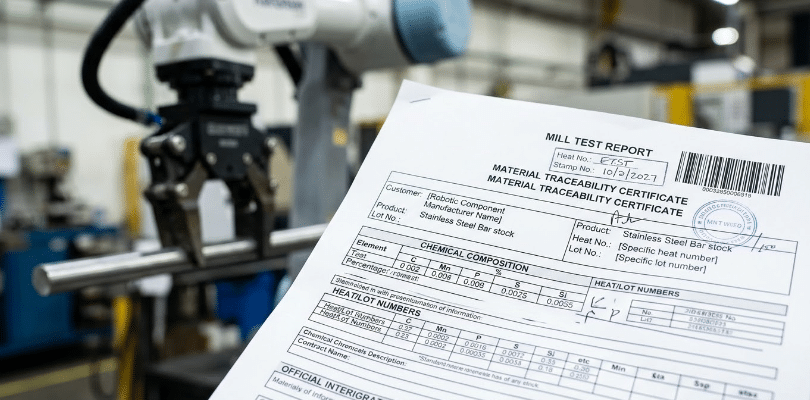
Robotic Component Material Traceability: Engineering Guide
Validation protocols for robotic joint actuators, focusing on ASTM material certifications, torque load verification, and CMM inspection for US-based B2B procurement.
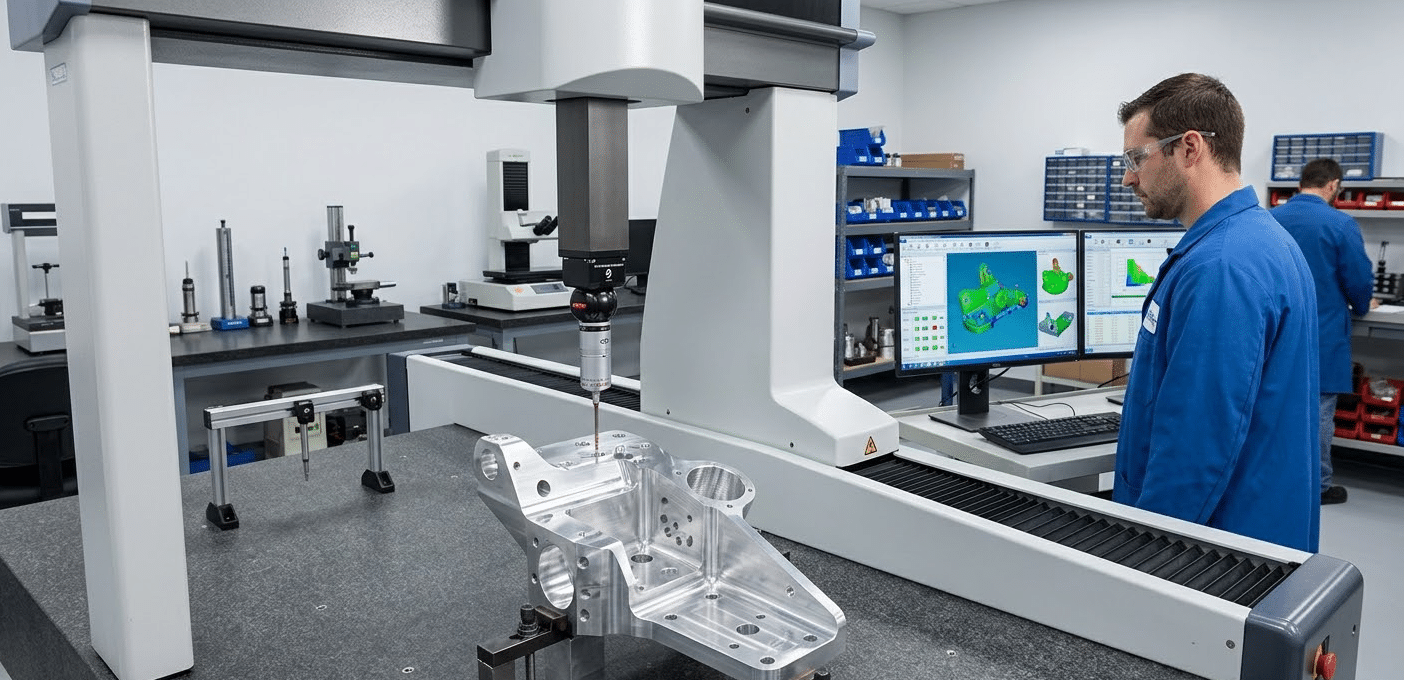
Material Traceability: MTRs and ASTM Compliance in Machining
A technical guide to material traceability, Mill Test Reports (MTRs), and heat number tracking to ensure mechanical integrity and supply chain transparency.
Carbon Fiber vs Aluminum: Engineering Selection & Cost Data
A technical comparison of stiffness-to-weight ratios, fatigue limits, and total cost of ownership for aerospace-grade 7075-T6 vs. CFRP components.