Robotics is entering a new phase driven by artificial intelligence, advanced sensors, digital connectivity, lightweight materials, and intelligent manufacturing systems. Robots are no longer limited to repetitive industrial tasks. They are becoming increasingly autonomous, collaborative, adaptable, and capable of operating in complex real-world environments.
Over the next decade, developments such as AI-powered decision making, humanoid robots, Industry 5.0, smart factories, digital twins, and next-generation manufacturing technologies will reshape how robots are designed, built, and deployed. These advances will not only expand robotic applications across manufacturing, healthcare, logistics, and service industries, but will also create new requirements for precision components, lightweight structures, integrated actuators, and high-performance materials.
This guide explores the major technologies and trends that are expected to define the future of robotics, including the rise of intelligent automation, human-robot collaboration, advanced manufacturing methods, and the engineering challenges that must be solved to enable the next generation of robotic systems.

AI Is Transforming Robotics
Artificial intelligence is becoming one of the most important technologies shaping the future of robotics. The key difference between today’s advanced robotic systems and the next generation of robots is not simply faster hardware or better mechanics—it is the ability to perceive, learn, adapt, and make decisions in real time.
Many current industrial robots already achieve excellent precision and repeatability, but they typically operate within well-defined environments. Future robotic systems are expected to handle a much wider range of tasks, including variable workpieces, changing production conditions, and unstructured environments where pre-programmed motions alone are no longer sufficient.
How AI Changes Robot Capabilities
Traditional automation focuses on executing predefined instructions. AI-enabled robotics adds an additional layer of intelligence that allows robots to interpret data and respond dynamically.
Future AI-driven robots will increasingly be able to:
- Recognize objects with computer vision
- Identify defects automatically
- Adjust motion paths based on sensor feedback
- Optimize cycle times during operation
- Coordinate with other robots and machines
- Predict maintenance requirements before failures occur
This shift moves robotics from fixed automation toward adaptive automation, enabling greater flexibility in manufacturing, logistics, healthcare, and service applications.
AI-Driven Motion Planning
One of the most significant future developments is AI-assisted motion planning. Instead of relying solely on manually programmed trajectories, robots will increasingly generate and refine motion paths automatically.
For example, a future assembly robot may:
- Analyze the position of incoming components
- Select an optimal grasping strategy
- Adjust joint movements to avoid collisions
- Compensate for small positional variations
- Reduce unnecessary travel distance
This capability is particularly important for high-mix, low-volume production, where product variations make traditional programming less efficient.
Machine Learning in Industrial Robotics
Machine learning is also expected to expand the role of robots in quality control and process optimization. Future robotic systems will continuously analyze operational data and improve performance over time.
In manufacturing environments, AI may help robots:
- Detect dimensional deviations
- Identify surface defects
- Monitor tool wear
- Optimize machining parameters
- Improve assembly consistency
As production data accumulates, robots will become increasingly capable of identifying patterns that are difficult to detect through conventional rule-based systems.

AI and Human-Robot Collaboration
Future collaborative robots will rely heavily on AI to work safely and efficiently alongside humans. Instead of operating within rigidly separated work zones, AI-enabled cobots will be able to interpret human movement, predict operator intent, and adjust their behavior accordingly.
This will support applications such as:
- Assisted assembly
- Material handling
- Precision positioning
- Inspection support
- Flexible workstation automation
The result is a more responsive production environment where robots complement human capabilities rather than simply replacing manual tasks.
The Impact on Robot Design and Components
The growth of AI is not only changing software—it is also influencing robot hardware design. Future intelligent robots will require:
- Higher-performance processors
- More integrated sensor systems
- Faster communication networks
- Compact actuator modules
- Lightweight structural components
- Improved thermal management
As robots process larger amounts of data and perform more complex calculations, component integration and heat dissipation will become increasingly important engineering considerations.
The Next Stage of Intelligent Robotics
Over the next decade, the most competitive robotic systems are likely to combine AI, advanced sensing, real-time data processing, and precision mechanical design. This integration will enable robots to operate with greater autonomy, adapt to changing environments, and support a broader range of industrial and commercial applications.
Rather than replacing traditional robotics, AI is extending what robots can accomplish. The future of robotics will be defined not only by mechanical precision, but by the ability of robots to understand their environment, make informed decisions, and continuously improve their performance.
This evolution lays the foundation for the next major trend in robotics: the rapid development of humanoid robots capable of operating in environments designed for humans.

The Rise of Humanoid Robots
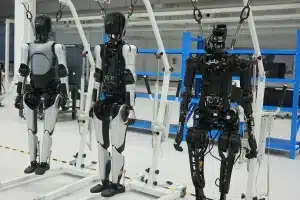
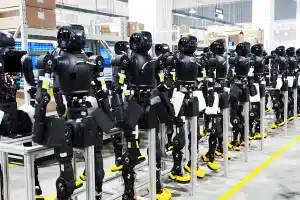
Humanoid robots have moved from research laboratories into real industrial and commercial development programs. Companies across the robotics industry are investing heavily in systems that can walk, manipulate objects, interact with humans, and perform tasks in environments originally designed for people. This shift is attracting significant attention because it expands the potential use of robotics beyond traditional fixed automation.
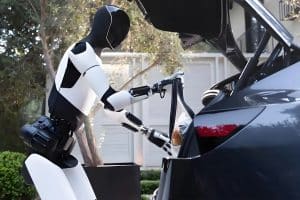
Unlike specialized industrial robots that are optimized for a single process, humanoid robots are designed to operate in a wide variety of environments, including factories, warehouses, service facilities, healthcare settings, and public spaces. Their human-like form allows them to use existing tools, access standard workstations, and navigate spaces without requiring major infrastructure changes.
Why Humanoid Robots Are Gaining Attention
Several factors are driving current interest in humanoid robotics:
- Labor shortages in manufacturing, logistics, and service industries
- Advances in AI and computer visionthat improve perception and decision-making
- More compact and powerful actuators
- Improved battery technology
- Falling costs of sensors and computing hardware
- Growing demand for flexible automation
Many modern production environments require automation that can adapt to changing tasks rather than repeat a single motion. Humanoid robots are increasingly viewed as a potential solution for these flexible operations.
Key Technologies Behind Humanoid Robots
Current humanoid development focuses on integrating multiple advanced technologies into a single platform.
Motion control is one of the most challenging areas. A humanoid robot must coordinate dozens of joints simultaneously while maintaining balance and stability.
Computer vision allows the robot to recognize objects, detect obstacles, and understand its surroundings.
AI-based planning helps determine how to grasp objects, move through spaces, and complete tasks efficiently.
Force and torque sensing enables safer interaction with tools, equipment, and people.
Together, these technologies allow humanoid robots to perform increasingly complex tasks that would be difficult to automate using conventional fixed robotic systems.
Lightweight Joint Structures
One of the most important engineering requirements for humanoid robots is weight reduction. Every kilogram added to the upper body increases the load on lower-body joints and affects energy consumption.
To address this challenge, manufacturers are increasingly using:
- High-strength aluminum alloys
- Titanium components
- Carbon fiber structures
- Thin-walled precision housings
- Integrated actuator modules
Lightweight design is not simply about reducing mass. Engineers must maintain sufficient stiffness, durability, and dimensional stability while minimizing overall weight. This creates significant demand for high-precision machining and advanced structural optimization.

High-Performance Actuation Systems
Modern humanoid robots require actuators that deliver high torque density in a compact package. Current designs often integrate:
- Servo motors
- Reducers
- Encoders
- Brakes
- Thermal management features
- Precision bearings
These integrated joint modules reduce assembly complexity and improve overall system performance. As humanoid robots become more capable, the precision requirements for gearbox housings, motor mounts, shafts, and bearing interfaces continue to increase.
Current Industrial Applications
Although fully autonomous humanoid robots are still evolving, current deployments are already being explored in:
- Material handling
- Warehouse operations
- Factory logistics
- Machine tending
- Inspection tasks
- Repetitive assembly operations
- Remote or hazardous environment work
Early implementations often focus on structured industrial environments where navigation and task requirements can be carefully managed while the technology matures.
Energy and Thermal Challenges
Battery life remains one of the most significant practical limitations. Humanoid robots must power locomotion, sensing, computation, communication, and manipulation simultaneously.
This creates a strong need for:
- Efficient power management
- Lightweight structures
- Low-friction transmission systems
- Advanced cooling solutions
- High-efficiency actuators
Thermal management is becoming increasingly important as AI processing workloads grow and actuator power density increases.
What Humanoid Robots Mean for Future Manufacturing
The rise of humanoid robots is creating new requirements for robot component manufacturing. Future humanoid systems will depend on:
- Precision-machined joint housings
- Lightweight structural frames
- High-strength transmission components
- Compact actuator assemblies
- Integrated sensor mounts
- Advanced surface finishing for wear resistance
As commercialization accelerates, demand for high-precision, lightweight, and highly integrated robotic components is expected to grow significantly.
The expansion of humanoid robotics is also closely connected to a broader industrial transformation. As factories become more flexible and collaborative, robotics is increasingly being integrated into Industry 5.0 and smart manufacturing environments, where humans and intelligent machines work together rather than operate in separate systems.

Industry 5.0 and Human-Robot Collaboration
Industry 5.0 is becoming an important direction for modern manufacturing because it emphasizes collaboration between people and intelligent machines. Rather than focusing only on automation efficiency, Industry 5.0 aims to combine human creativity, flexibility, and problem-solving ability with the precision, consistency, and data-processing capabilities of robotics and AI.
Many manufacturers today are facing a mix of challenges, including labor shortages, shorter product life cycles, increasing customization requirements, and pressure to improve productivity without sacrificing quality. As a result, factories are increasingly deploying collaborative robotic systems that can work alongside operators instead of operating in completely isolated cells.
What Is Industry 5.0?
Industry 5.0 is generally characterized by three key principles:
- Human-centric manufacturing– technology is designed to support workers rather than simply replace them.
- Sustainable production – factories seek higher resource efficiency and reduced environmental impact.
- Resilient operations– production systems are built to adapt quickly to changes in demand, supply chains, and product configurations.
In practical terms, this means robotic systems must be more flexible, easier to reconfigure, and capable of interacting safely with people in shared workspaces.
Collaborative Robots in Modern Factories
Collaborative robots, or cobots, are already being used in a wide range of industrial applications. Current deployments commonly include:
- Assembly assistance
- Screwdriving operations
- Machine tending
- Pick-and-place tasks
- Packaging
- Quality inspection
- Material transfer
Unlike traditional high-speed industrial robots that often require extensive safety fencing, cobots are designed with integrated safety features such as force limitation, collision detection, and controlled-speed operation. This allows them to share workspace with human operators under appropriate risk assessments.
Human-Centered Automation
A major trend in Industry 5.0 is the development of human-centered automation. In many production environments, robots handle repetitive, physically demanding, or highly precise tasks, while humans focus on decision-making, troubleshooting, and process optimization.
For example, during a complex assembly process:
- The operator may position and verify components.
- The cobot performs precise fastening operations.
- AI systems monitor torque, alignment, and process quality.
- The operator reviews exceptions and handles non-standard situations.
This division of responsibilities can improve both productivity and ergonomics while maintaining flexibility for product variations.

AI-Enhanced Collaboration
Current collaborative systems are increasingly integrating AI capabilities that improve interaction between humans and robots.
AI can help cobots:
- Recognize human gestures and movements
- Adapt to changing workpiece positions
- Optimize task sequencing
- Reduce idle time
- Identify abnormal operating conditions
- Learn from repeated production cycles
As AI becomes more capable, collaborative robots are expected to operate with greater autonomy while still remaining responsive to human supervision.
Flexible Manufacturing and Mass Customization
Industry 5.0 is closely linked to the growing demand for high-mix, low-volume production. Many manufacturers no longer produce a single product in extremely large quantities. Instead, they must frequently switch between different models, configurations, or customer-specific variants.
Human-robot collaboration supports this trend because collaborative systems can often be reprogrammed or reconfigured more quickly than fully dedicated automation lines. This flexibility is becoming increasingly valuable in industries such as:
- Electronics manufacturing
- Medical devices
- Robotics equipment
- Semiconductor support systems
- Automotive subassemblies
- Industrial automation equipment
Component Requirements for Collaborative Robotics
The expansion of collaborative robotics is also changing the requirements for robot components. Cobots and future human-assist robots typically require:
- Compact actuator assemblies
- Lightweight structural parts
- Low-inertia moving components
- High-precision joint housings
- Integrated sensor mounting features
- Wear-resistant bearing interfaces
Because collaborative systems often operate near people, smooth motion control and accurate force feedback become especially important. This increases the importance of precision machining, dimensional consistency, and assembly quality.
The Factory of the Near Future
Current Industry 5.0 initiatives suggest that future factories will rely on a combination of AI, collaborative robots, connected equipment, real-time data analytics, and flexible manufacturing systems. Production lines will increasingly be designed around cooperation between human operators and intelligent robotic platforms rather than around isolated automation cells.
This evolution is also driving the development of smart factories, where robots, machines, sensors, and software systems exchange data continuously to optimize production performance, quality, maintenance, and resource utilization across the entire manufacturing environment.

Smart Factories Powered by Robotics
Smart factories are becoming a central part of modern manufacturing strategies because they combine robotics, automation, data analytics, connectivity, and AI into a unified production environment. In many current facilities, robots are no longer isolated machines performing individual tasks. They are increasingly connected to inspection systems, production management software, warehouse automation platforms, and cloud-based monitoring tools.
The goal of a smart factory is not simply to automate a single process. It is to create a manufacturing system that can collect data, analyze performance, respond to changing conditions, and continuously improve operational efficiency.
Robotics as the Core of Smart Manufacturing
Industrial robots play a critical role in smart factories because they generate large amounts of operational data while performing highly repeatable processes. This data can be used to monitor production quality, equipment utilization, cycle times, and maintenance requirements.
Current smart manufacturing applications commonly involve robots working with:
- Machine vision systems
- Automated inspection equipment
- Conveyor and material handling systems
- MES (Manufacturing Execution Systems)
- ERP production planning software
- Warehouse automation platforms
- Cloud-based analytics tools
By sharing information across these systems, manufacturers gain better visibility into the entire production process.
Connected Production Systems
A defining feature of smart factories is real-time connectivity. Robots can exchange information with other machines, sensors, and software platforms throughout the factory.
For example, a machining cell may automatically:
- Receive updated production orders from the MES system
- Load the correct machining program
- Verify part identification through vision systems
- Adjust process parameters based on inspection data
- Report completion status to the scheduling system
- Request maintenance if abnormal conditions are detected
This level of integration reduces manual intervention and improves production traceability.
Real-Time Factory Optimization
Modern smart factories increasingly rely on real-time analytics to optimize operations. Instead of reviewing production data only after a shift or production run, manufacturers can monitor performance continuously.
Robotic systems may provide data related to:
- Cycle time variations
- Robot utilization rates
- Tool wear indicators
- Motor temperatures
- Vibration levels
- Energy consumption
- Process deviations
- Quality inspection results
When combined with AI analytics, this information can help identify bottlenecks and improve overall equipment effectiveness (OEE).

Robotics and Predictive Maintenance
One of the most practical benefits of smart factory robotics is predictive maintenance. By continuously monitoring operating conditions, manufacturers can detect signs of wear or performance degradation before a failure occurs.
Current monitoring systems may analyze:
- Bearing condition
- Servo motor load
- Gearbox vibration
- Temperature trends
- Lubrication status
- Positioning accuracy
Predictive maintenance helps reduce unplanned downtime and allows maintenance activities to be scheduled more efficiently.
Flexible Production for High-Mix Manufacturing
Many manufacturers are producing a growing number of product variants. Smart factories support this trend by enabling rapid changeovers and flexible automation.
Robotic systems can automatically switch between different product configurations by loading new programs, adjusting tooling parameters, and updating inspection criteria through connected software systems. This is particularly valuable for industries such as:
- Robotics and automation equipment
- Medical devices
- Electronics manufacturing
- Semiconductor equipment
- Automotive subassemblies
- Industrial machinery
Implications for Robot Components
The growth of smart factories is increasing demand for robot components that can support higher levels of connectivity, precision, and reliability. Future production environments will require:
- High-precision actuator housings
- Integrated sensor mounting features
- Compact cable management structures
- Thermally optimized motor housings
- Lightweight structural components
- Highly repeatable bearing interfaces
As robots become more connected and data-driven, component integration and dimensional consistency become increasingly important for maintaining system performance.
The Expanding Role of Digital Infrastructure
Smart factories are also driving closer integration between physical equipment and digital systems. Production data, inspection results, maintenance records, and process parameters are increasingly being stored and analyzed within digital platforms that support continuous optimization.
This trend is closely connected to the next major development in robotics manufacturing: digital twins, which create virtual representations of robotic systems and production processes for simulation, monitoring, and performance optimization.

Digital Twins for Robot Development
Digital twins are becoming an increasingly important tool in robot development because they allow engineers to create a virtual representation of a robotic system that remains connected to real operational data. Instead of relying solely on physical prototypes and on-site testing, manufacturers can simulate robot behavior, evaluate performance, and optimize designs within a digital environment before large-scale deployment.
As robotic systems become more complex, involving AI, advanced sensing, multi-axis motion control, and integrated manufacturing processes, digital twins help reduce development risk and improve decision-making throughout the product lifecycle.
What Is a Digital Twin?
A digital twin is more than a static 3D model. It combines geometric data, motion parameters, sensor information, control logic, and operational feedback to create a dynamic model that reflects the behavior of a real robot.
For robot development, a digital twin can include:
- Robot kinematics
- Joint motion limits
- Payload characteristics
- Collision zones
- Sensor data
- Control algorithms
- Thermal behavior
- Energy consumption
- Production cycle data
This integrated approach allows engineers to analyze both mechanical and operational performance within a single virtual platform.
Virtual Robot Simulation
One of the most common current applications is virtual robot simulation. Engineers can test robot movements, workspace accessibility, and process sequences before installing equipment on the factory floor.
Simulation can help identify:
- Potential collisions
- Reach limitations
- Excessive joint loads
- Unstable motion paths
- Inefficient cycle times
- Tooling interference
- Assembly accessibility issues
By resolving these problems digitally, manufacturers can reduce commissioning time and minimize costly modifications during installation.

Optimizing Robot Performance
Digital twins are increasingly used to optimize robot performance before physical production begins. Engineers can evaluate different design options and compare their impact on speed, accuracy, weight, and energy efficiency.
For example, a development team may simulate:
- Alternative joint configurations
- Different gearbox ratios
- Lightweight structural designs
- Various actuator selections
- Thermal management strategies
- Payload distribution changes
This allows performance trade-offs to be analyzed early in the development process.
Predictive Maintenance Using Digital Twins
Current industrial deployments increasingly connect digital twins to real operating data. Sensor information from the physical robot can be used to update the virtual model continuously.
This enables predictive maintenance functions such as:
- Monitoring bearing wear
- Tracking gearbox vibration
- Analyzing motor temperature trends
- Detecting abnormal torque loads
- Estimating remaining component life
When the digital twin identifies performance deviations, maintenance teams can investigate issues before they lead to unexpected downtime.
Improving Robot Manufacturing
Digital twins are also being applied to the manufacturing process itself. In robotic component production, virtual models can help validate:
- Machining strategies
- Fixture designs
- Assembly sequences
- Tolerance stack-ups
- Thermal distortion effects
- Inspection plans
- Production line layouts
This is particularly valuable for high-precision components such as joint housings, gearbox housings, actuator modules, and lightweight structural parts, where small dimensional variations can affect overall robot performance.

Supporting High-Mix, Low-Volume Production
As robotics manufacturing increasingly moves toward flexible production, digital twins help manufacturers adapt more quickly to new product variants. Instead of rebuilding physical test setups for every configuration, engineers can validate many changes within the virtual environment first.
This capability is especially important for:
- Prototype development
- New product introduction (NPI)
- Custom robotic systems
- Low-volume production runs
- Rapid design iterations
Data Integration Across the Robot Lifecycle
A major advantage of digital twins is the ability to connect data from multiple stages of a robot’s lifecycle, including:
- Design
- Simulation
- Manufacturing
- Assembly
- Testing
- Operation
- Maintenance
- Performance optimization
This creates a continuous feedback loop that helps improve future robot designs and manufacturing processes.
The Future of Digital Twin Technology in Robotics
As AI, cloud computing, and industrial connectivity continue to advance, digital twins are expected to become a standard component of robotic development workflows. Future systems will likely provide more accurate real-time simulation, automated performance analysis, and deeper integration with manufacturing and maintenance platforms.
For robotics manufacturers, digital twins are increasingly becoming a practical engineering tool that helps accelerate development, improve product quality, reduce commissioning risk, and support the production of more complex, lightweight, and highly integrated robotic systems.
The growing use of digital twins is also closely connected to another major trend in robotics: the development of lightweight robot structures and advanced materials that enable higher performance while reducing energy consumption.

Lightweight Robots and Advanced Structures
Lightweight design has become one of the most important engineering priorities in modern robotics. As robots are expected to move faster, carry higher payloads relative to their size, operate safely around people, and achieve longer operating times on battery power, reducing structural weight while maintaining stiffness and durability is becoming increasingly critical.
This trend is especially visible in humanoid robots, collaborative robots, mobile robots, and high-speed industrial automation systems, where every kilogram of mass affects energy consumption, actuator load, dynamic performance, and overall system efficiency.
Why Lightweight Design Matters
Lower structural weight provides several practical advantages:
- Reduced actuator torque requirements
- Lower energy consumption
- Faster acceleration and deceleration
- Improved motion responsiveness
- Less wear on joints and transmission systems
- Longer battery operating time for mobile and humanoid robots
- Safer human-robot interaction
For many current robotic platforms, weight reduction directly influences both performance and operating cost.
High-Strength Aluminum Alloys
Aluminum remains one of the most widely used materials for lightweight robotic structures because it offers a strong balance of low density, good machinability, corrosion resistance, and structural performance.
Common applications include:
- Robot arms
- Joint housings
- Structural frames
- Mounting brackets
- End-effector supports
- Sensor housings
High-strength grades such as 7075 aluminum are increasingly used in applications where higher stiffness-to-weight ratios are required.
Carbon Fiber in Robotics
Carbon fiber composites are gaining attention in advanced robotic systems because they provide exceptional stiffness with very low weight. Current applications include:
- Humanoid robot links
- Lightweight manipulators
- Mobile robot chassis
- High-speed automation arms
- Precision positioning systems
The primary challenge is balancing performance benefits with manufacturing complexity, assembly methods, and cost considerations.

Titanium for High-Performance Structures
Titanium is increasingly used in robotic applications that require high strength, low weight, and excellent fatigue resistance. It is particularly attractive for:
- Humanoid robot joints
- Medical robotic components
- High-load link structures
- Precision transmission assemblies
- Critical structural interfaces
Although titanium is more difficult to machine than aluminum, its mechanical performance makes it valuable for demanding applications where weight reduction is a priority.
Topology Optimization for Robot Structures
Modern robotic development increasingly uses topology optimization to remove unnecessary material while preserving load-bearing capability. Instead of relying solely on traditional geometric design, engineers use simulation software to determine where material contributes most effectively to structural performance.
This approach is commonly applied to:
- Robot arms
- Joint brackets
- Actuator mounts
- Support frames
- Lightweight housings
- Mobile robot chassis structures
The resulting components often feature complex internal ribs, pockets, and load-path-oriented geometries that reduce weight without significantly compromising stiffness.
Thin-Walled Precision Structures
Many current lightweight robotic components use thin-walled designs to minimize mass. Examples include:
- Actuator housings
- Gearbox covers
- Sensor enclosures
- Structural shells
- Battery compartment frames
Manufacturing these parts requires careful control of machining strategy, clamping methods, stress relief, and dimensional inspection to maintain stability and prevent distortion.

Balancing Weight, Stiffness, and Durability
Reducing weight is not simply a matter of removing material. Robotic structures must still withstand:
- Repeated dynamic loading
- Vibration
- Shock loads
- Thermal expansion
- Assembly forces
- Long-term fatigue cycles
As a result, engineers must carefully balance mass reduction, structural rigidity, fatigue life, and manufacturability. This balance is particularly important for humanoid robots and collaborative robots that operate continuously in dynamic environments.
Manufacturing Implications
The shift toward lightweight robotic structures is driving demand for advanced manufacturing capabilities, including:
- 5-axis CNC machining
- Precision thin-wall machining
- Complex pocket milling
- Carbon fiber processing
- High-precision turning
- Advanced surface finishing
- Coordinate measuring machine (CMM) inspection
As robotic systems become more lightweight and integrated, manufacturing precision becomes increasingly important because small dimensional deviations can affect alignment, joint performance, and overall system accuracy.
The Role of Lightweight Structures in Future Robotics
Current industry trends suggest that future robotic platforms will continue moving toward lighter, stronger, and more integrated structures. Advances in materials, simulation, topology optimization, and precision manufacturing are enabling robotic systems that deliver higher performance while consuming less energy and occupying less space.
This evolution is closely connected to the development of new materials and advanced manufacturing technologies, which are expected to play a major role in the next generation of robotic systems.

Emerging Materials for Future Robots
Material selection is becoming increasingly important as robotic systems demand higher strength, lower weight, improved thermal performance, and greater durability. The rapid development of humanoid robots, collaborative robots, mobile robots, and high-performance industrial automation is driving interest in materials that can support more compact, efficient, and integrated designs.
Future robotic platforms are unlikely to rely on a single material family. Instead, manufacturers are increasingly combining lightweight metals, advanced engineering plastics, composite materials, and specialized alloys to optimize performance for specific components.
High-Strength Lightweight Metals
Lightweight metal structures remain a core requirement for many robotic systems. Advanced aluminum alloys continue to be widely used because they offer a favorable combination of strength, machinability, corrosion resistance, and low density.
For applications with higher load requirements, titanium alloys are gaining attention due to their excellent strength-to-weight ratio and fatigue resistance. These materials are increasingly considered for:
- Humanoid robot joints
- High-load link structures
- Actuator housings
- Precision transmission components
- Medical robotic systems
The growing use of lightweight metals is closely connected to the industry’s focus on energy efficiency and dynamic motion performance.
Advanced Engineering Plastics
Engineering plastics are playing a larger role in future robotic designs because they provide low friction, chemical resistance, electrical insulation, and reduced weight.
Materials such as PEEK, POM, PTFE, and high-performance nylon grades are increasingly used in:
- Bushings
- Sliding interfaces
- Sensor mounts
- Cable management systems
- Insulating components
- Lightweight internal structures
In many applications, engineering plastics help reduce noise, minimize wear, and simplify assembly while lowering overall system mass.
Composite Materials
Composite materials, particularly carbon fiber reinforced structures, are attracting significant interest in advanced robotics. Their high stiffness-to-weight ratio makes them suitable for components that must remain lightweight while maintaining structural rigidity.
Current and emerging applications include:
- Humanoid robot limbs
- Mobile robot chassis
- High-speed manipulators
- Precision positioning arms
- Lightweight support frames
As manufacturing methods for composites become more accessible, their use in commercial robotic systems is expected to expand.

Thermal Management Materials
Modern robots increasingly integrate powerful processors, AI acceleration hardware, and compact actuator modules. This creates growing demand for materials with improved thermal conductivity and heat dissipation performance.
Manufacturers are exploring:
- High-conductivity aluminum alloys
- Copper-based thermal components
- Graphite-enhanced materials
- Advanced thermal interface materials
- Integrated heat-spreading structures
Effective thermal management is becoming a critical factor in maintaining reliability as computing power and actuator density continue to increase.
Materials for High-Wear Components
Robot joints, transmission systems, and precision motion assemblies are subjected to continuous mechanical loading. To improve service life, manufacturers are increasingly using materials and surface treatments that enhance wear resistance, hardness, and fatigue performance.
Examples include:
- Hardened alloy steels
- Nitrided surfaces
- DLC-coated components
- Wear-resistant bronze alloys
- Specialized bearing materials
These solutions help maintain positioning accuracy and reduce maintenance requirements in high-duty-cycle robotic applications.
Sustainable Material Trends
Environmental considerations are also influencing future robot design. Manufacturers are increasingly evaluating materials that support:
- Recyclability
- Lower energy consumption during production
- Longer component life
- Reduced maintenance frequency
- Lower overall material waste
While performance remains the primary requirement for most industrial robots, sustainability is becoming an additional factor in material selection decisions.

The Importance of Multi-Material Design
One of the most significant current trends is the move toward multi-material robotic structures. Instead of manufacturing an entire robot from a single material, engineers increasingly combine different materials based on functional requirements.
A single robotic joint assembly may include:
- Aluminum structural housings
- Steel load-bearing shafts
- Engineering plastic bushings
- Copper thermal components
- Elastomer sealing elements
- Composite covers or supports
This approach allows each component to be optimized for strength, weight, wear resistance, thermal performance, or manufacturability.
Material Selection and Manufacturing
The adoption of advanced materials is also influencing manufacturing processes. Future robotic components increasingly require:
- 5-axis CNC machining for complex lightweight structures
- Precision turning for high-strength alloys
- Specialized tooling for titanium and composite materials
- Advanced surface finishing for wear resistance
- High-accuracy inspection for multi-material assemblies
As robotic systems become more compact and integrated, successful material selection will depend not only on mechanical properties but also on how efficiently the material can be manufactured, assembled, and maintained.
The Future Material Landscape for Robotics
Current industry development suggests that future robots will increasingly combine lightweight metals, advanced engineering plastics, composite structures, thermal management materials, and wear-resistant alloys within highly integrated assemblies. The ability to select and manufacture the right material combination for each component will become a key factor in achieving higher performance, lower energy consumption, and greater reliability in next-generation robotic systems.
This material evolution is closely linked to the broader transformation of robot manufacturing, where advanced machining, additive manufacturing, and flexible production technologies are enabling more complex and optimized robotic components than ever before.

The Future of Robot Manufacturing
Robot manufacturing is evolving toward greater precision, higher integration, shorter development cycles, and more flexible production. As robotic systems become increasingly complex, manufacturers must produce lightweight structures, high-performance actuator modules, precision transmission components, and integrated sensor assemblies while maintaining tight dimensional control and repeatable quality.
Current industry trends show that future robot manufacturing will rely on a combination of advanced CNC machining, additive manufacturing, automated inspection, digital production management, and flexible low-volume manufacturing systems. These technologies are enabling faster product development and more efficient transitions from prototype to production.
Advanced CNC Machining
Precision CNC machining remains one of the most important manufacturing methods for robotic components. Future robotic systems increasingly require parts with:
- Complex multi-axis geometries
- Thin-walled structures
- Lightweight internal pockets
- High-precision bearing interfaces
- Integrated mounting features
- Tight geometric tolerances
5-axis CNC machining is becoming particularly important because it allows complex components to be produced in fewer setups, improving accuracy and reducing cumulative positioning errors. This is especially valuable for joint housings, gearbox housings, actuator mounts, and structural robot frames.
Additive Manufacturing for Robotics
3D printing and additive manufacturing are increasingly being used during robot development and for selected production components.
Current applications include:
- Rapid prototyping
- Lightweight topology-optimized structures
- Complex internal channels
- Custom end effectors
- Fixture and tooling production
- Low-volume specialized components
Additive manufacturing allows engineers to evaluate new designs quickly and produce geometries that would be difficult or inefficient to create using conventional machining alone.

Hybrid Manufacturing Approaches
Many robotic manufacturers are adopting hybrid manufacturing workflows that combine additive manufacturing with precision machining.
A typical process may involve:
- 3D printing a near-net-shape structure
- Machining critical interfaces
- Finishing bearing seats and mounting surfaces
- Adding threaded features
- Performing precision inspection
This approach can reduce material waste while maintaining the accuracy required for high-performance robotic assemblies.
Flexible Production Systems
Future robot manufacturing is increasingly focused on high-mix, low-volume production. Robotic platforms often evolve rapidly, and manufacturers must support frequent design revisions, customized configurations, and shorter product lifecycles.
Flexible production systems help manufacturers:
- Reduce changeover time
- Introduce new product variants quickly
- Support prototype and pilot production
- Scale gradually to larger volumes
- Maintain consistent quality across multiple configurations
This flexibility is becoming a major competitive advantage in robotics manufacturing.
Automated Inspection and Quality Control
As robot components become more precise and integrated, automated inspection is playing a larger role in production.
Current quality control systems increasingly use:
- Coordinate Measuring Machines (CMM)
- Optical measurement systems
- Laser scanning
- Vision-based inspection
- In-process probing
- Digital inspection reporting
These technologies help verify critical dimensions, geometric tolerances, surface quality, and assembly interfaces for components such as actuator housings, shafts, bearing seats, and precision structural parts.
Digital Manufacturing and Traceability
Future robot manufacturing is also becoming more data-driven. Production systems increasingly track material batches, machining parameters, inspection results, assembly records, and process history throughout the manufacturing lifecycle.
Digital traceability supports:
- Quality management
- Regulatory compliance
- Root-cause analysis
- Process optimization
- Predictive maintenance
- Continuous improvement initiatives
This is particularly important for robotics applications in medical devices, semiconductor equipment, and other high-reliability industries.

Manufacturing Challenges for Next-Generation Robots
Current manufacturing teams are increasingly dealing with components that combine lightweight design, complex geometry, and high precision. Common challenges include:
- Machining thin-walled structures without distortion
- Maintaining accuracy across multi-axis operations
- Controlling thermal deformation
- Managing difficult-to-machine materials such as titanium and composites
- Achieving consistent surface finishes
- Integrating multiple functions into compact assemblies
These challenges require close coordination between design, machining, inspection, and assembly teams.
From Prototype to Production
One of the most important trends in robotics manufacturing is the acceleration of the prototype-to-production workflow. Manufacturers increasingly seek partners that can support:
- Design feedback
- Prototype machining
- Functional testing
- Design iteration
- Pilot production
- Low-volume manufacturing
- Scaled production
Reducing the time between initial concept and market deployment has become a critical factor in the rapidly evolving robotics industry.
The Manufacturing Landscape Ahead
Current industry development suggests that future robot manufacturing will be characterized by advanced CNC machining, additive manufacturing, automated inspection, digital traceability, and highly flexible production systems. Manufacturers that can combine these capabilities will be better positioned to produce the lightweight, high-precision, and highly integrated components required by next-generation robotic platforms.
This transformation is also shaping the development of future robot components, where integrated actuators, smart sensor systems, modular architectures, and compact transmission assemblies are becoming increasingly important.

Future Robot Components
Future robot development is increasingly focused on higher integration, lower weight, greater power density, and enhanced sensing capability. Modern robotic systems are no longer assembled from loosely connected mechanical and electrical parts. Instead, manufacturers are moving toward compact modules that combine actuation, sensing, control, and communication within highly integrated assemblies.
This trend is being driven by the rapid growth of humanoid robots, collaborative robots, autonomous mobile robots, and advanced industrial automation systems, all of which require more efficient use of space, weight, and energy.
Integrated Actuator Modules
One of the most significant current developments is the rise of integrated actuator modules. Rather than using separate motor, gearbox, encoder, and mounting components, future robotic joints increasingly combine these functions into a single compact unit.
Typical integrated modules may include:
- Servo motor
- Reducer or gearbox
- Encoder
- Brake
- Temperature sensors
- Communication interface
- Integrated housing
This approach reduces assembly complexity, improves reliability, and allows more compact robot designs.
High Torque Density Joints
Humanoid robots and advanced collaborative robots require joints that deliver high torque output within a limited volume. Achieving this performance depends on:
- High-efficiency transmission systems
- Precision gear machining
- Optimized bearing arrangements
- Lightweight housing structures
- Effective thermal management
- Advanced motor design
As torque density increases, the precision requirements for gearbox housings, bearing seats, shafts, and mounting interfaces become increasingly demanding.

Lightweight Structural Links
Future robotic platforms are expected to use more lightweight structural links to improve dynamic performance and energy efficiency. Current designs increasingly incorporate:
- Thin-walled aluminum structures
- Carbon fiber reinforced components
- Topology-optimized geometries
- Integrated cable routing channels
- Multi-function structural members
These components must maintain stiffness and dimensional stability while minimizing overall mass.
Smart Sensor Systems
Sensing capability is becoming a core feature of future robot components. Modern robotic systems increasingly integrate:
- Force and torque sensors
- Vision sensors
- Inertial measurement units (IMUs)
- Temperature sensors
- Vibration sensors
- Position and velocity encoders
Many of these sensors are being embedded directly into joints, end effectors, and actuator modules, enabling more responsive control and improved environmental awareness.
Modular Robot Architectures
Another important trend is the move toward modular robot architectures. Manufacturers increasingly want robotic systems that can be configured for different payloads, reach requirements, and applications without redesigning the entire platform.
Modular architectures typically use standardized:
- Joint modules
- Actuator interfaces
- Power connections
- Communication ports
- Structural attachment points
- Sensor integration features
This allows faster development and easier customization for specific applications.

Advanced End Effectors
Future end effectors are also becoming more intelligent and adaptable. Current development efforts include:
- Adaptive grippers
- Soft robotic gripping systems
- Multi-finger dexterous hands
- Integrated force sensing
- Vision-guided grasping
- Quick-change tooling systems
These systems require compact precision components, lightweight structures, and highly integrated sensor mounting solutions.
Thermal and Power Management Components
As robots incorporate more powerful processors and actuator systems, thermal management is becoming increasingly important. Future robotic platforms will likely include:
- Integrated heat spreaders
- High-conductivity housings
- Compact cooling channels
- Optimized airflow structures
- Advanced thermal interface materials
Efficient heat dissipation is essential for maintaining performance and reliability in compact robotic assemblies.
Manufacturing Requirements for Future Components
The evolution of robot components is driving demand for manufacturing technologies capable of producing complex, lightweight, and highly precise parts. Key requirements include:
- 5-axis CNC machining
- Precision turning
- Thin-wall machining
- Complex pocket milling
- Advanced surface finishing
- High-accuracy inspection
- Assembly-ready tolerances
Component integration also means that a single housing may now contain bearing interfaces, sensor mounts, cable channels, cooling features, and structural attachment points, all within a compact geometry.
The Direction of Future Robot Components
Current industry development suggests that future robot components will become smaller, lighter, smarter, and more integrated. The boundaries between mechanical, electrical, sensing, and thermal management functions are gradually becoming less distinct as manufacturers combine multiple functions into unified modules.
This integration is expected to improve robot performance, reduce assembly complexity, and support the growing demand for flexible, intelligent, and energy-efficient robotic systems across manufacturing, logistics, healthcare, and service applications.
However, achieving this level of integration also introduces significant engineering and production challenges, including cost control, energy efficiency, safety, cybersecurity, and supply chain resilience, which are becoming critical considerations for the future of robotics.

Challenges Facing the Future of Robotics
Despite rapid advances in AI, sensing, lightweight materials, and intelligent manufacturing, the future of robotics still faces several significant challenges. As robots become more autonomous, connected, and integrated into everyday industrial operations, manufacturers must address issues related to cost, energy consumption, safety, cybersecurity, supply chain resilience, and workforce development.
These challenges are not theoretical. They are already influencing how robotic systems are designed, manufactured, deployed, and maintained across industries.
Cost and Scalability
One of the most important challenges is achieving commercial scalability. Advanced robotic systems often require high-performance actuators, precision transmission components, integrated sensors, AI computing hardware, and sophisticated software platforms.
For many applications, the key question is not whether a robot can perform a task, but whether it can do so at a cost that justifies large-scale deployment. Manufacturers must balance:
- Component performance
- Material selection
- Manufacturing complexity
- Assembly time
- Maintenance requirements
- Expected service life
Reducing production costs while maintaining reliability remains a major engineering and manufacturing challenge.
Energy Consumption
As robots become more capable, their energy requirements also increase. Humanoid robots, mobile robots, and AI-enabled collaborative systems must power locomotion, sensing, computation, communication, and actuation simultaneously.
Improving energy efficiency requires progress in:
- Lightweight structural design
- High-efficiency motors
- Low-loss transmission systems
- Advanced battery technology
- Power management software
- Thermal optimization
Energy efficiency is becoming a critical factor in determining practical operating time, mobility, and total operating cost.
Safety and Regulation
Future robots are expected to work increasingly close to people in factories, warehouses, hospitals, and public environments. This creates growing demand for functional safety, collision detection, force limitation, and reliable human-robot interaction.
Manufacturers must comply with evolving safety standards and regulatory requirements covering:
- Collaborative operation
- Emergency stopping systems
- Risk assessment
- Software reliability
- AI decision transparency
- Autonomous behavior control
Ensuring safe operation becomes increasingly complex as robots gain greater autonomy.

Cybersecurity Risks
Modern robotic systems are becoming highly connected through industrial networks, cloud platforms, and remote monitoring systems. This connectivity improves operational efficiency but also introduces cybersecurity risks.
Potential concerns include:
- Unauthorized access to robot controllers
- Manipulation of production data
- Interruption of automated operations
- Intellectual property theft
- Remote system compromise
- Supply chain software vulnerabilities
As smart factories expand, cybersecurity is becoming an essential part of robotic system design and deployment.
Supply Chain Resilience
Future robots depend on a wide range of specialized components, including motors, reducers, bearings, sensors, semiconductors, batteries, and precision-machined parts. Global supply chain disruptions can affect production schedules, lead times, and manufacturing costs.
Manufacturers are increasingly focusing on:
- Supplier diversification
- Regional manufacturing capabilities
- Inventory management
- Material availability
- Qualification of alternative components
- Production flexibility
Supply chain resilience has become a strategic consideration for robotics companies seeking stable long-term growth.
Workforce and Skills Gap
Advanced robotics requires expertise across multiple disciplines, including:
- Mechanical engineering
- Electrical engineering
- Control systems
- AI and machine learning
- Software development
- Manufacturing engineering
- Quality assurance
Many companies face challenges in recruiting and developing professionals with the combination of skills needed to design, integrate, and maintain modern robotic systems.

Complexity of System Integration
Future robots increasingly combine mechanical structures, actuators, sensors, AI processors, communication systems, and cloud connectivity within compact platforms. Integrating these technologies while maintaining reliability, serviceability, and manufacturability is becoming progressively more difficult.
Key integration challenges include:
- Thermal management
- Electromagnetic compatibility
- Cable routing
- Space constraints
- Assembly accessibility
- Maintenance access
- Weight distribution
Successful robotic platforms require close coordination between design, manufacturing, electronics, software, and quality teams.
Balancing Innovation and Reliability
The robotics industry is advancing rapidly, but industrial users still expect consistent uptime, predictable maintenance, and long service life. Manufacturers must carefully evaluate how quickly new technologies can be introduced without compromising reliability.
This is particularly important for applications in:
- Semiconductor manufacturing
- Medical devices
- Automotive production
- Warehouse automation
- Industrial assembly systems
- Critical infrastructure operations
In these environments, reliability and maintainability remain just as important as technological innovation.
The Path Forward
Current industry development suggests that the future of robotics will depend on more than advances in AI or mechanical design alone. Success will require cost-effective manufacturing, energy-efficient systems, robust safety architecture, secure digital infrastructure, resilient supply chains, and multidisciplinary engineering expertise.
Companies that can address these challenges while delivering lightweight, precise, intelligent, and reliable robotic systems will be best positioned to support the next generation of automation across manufacturing, healthcare, logistics, and emerging robotic applications.
With these challenges in mind, the final question becomes how robotics is likely to evolve over the next decade and what the next generation of intelligent machines will look like in real industrial and commercial environments.

What Will Robotics Look Like in the Next 10 Years?
Over the next decade, robotics is expected to become more intelligent, more connected, more collaborative, and more integrated into everyday industrial operations. The most significant changes are likely to come from the convergence of AI, advanced sensing, lightweight structures, digital manufacturing, and high-performance precision components.
Rather than relying on a single breakthrough technology, future robotic systems will increasingly combine multiple capabilities into unified platforms that can perceive their environment, make decisions, communicate with other machines, and adapt to changing production requirements.
AI Will Become a Standard Capability
AI is likely to become a standard feature of many robotic systems rather than a specialized option. Robots will increasingly use machine learning, computer vision, and real-time data analysis to improve task execution, optimize motion paths, detect anomalies, and support predictive maintenance.
In practical industrial environments, this means robots will be better able to:
- Handle variable workpieces
- Adjust to changing production conditions
- Improve quality control
- Reduce unplanned downtime
- Coordinate with other automated systems
Humanoid Robots Will Expand Beyond Demonstrations
Current development efforts suggest that humanoid robots will gradually move into selected industrial and commercial applications where human-like mobility and manipulation provide clear advantages.
Potential deployment areas include:
- Warehouse operations
- Material handling
- Factory logistics
- Equipment inspection
- Maintenance assistance
- Remote or hazardous environments
The pace of adoption will depend on improvements in battery life, actuator efficiency, safety systems, and manufacturing cost.
Factories Will Become More Autonomous
Future manufacturing facilities are expected to rely more heavily on connected robotic systems, automated inspection, real-time analytics, and digital production management.
Smart factories will increasingly integrate:
- Industrial robots
- Collaborative robots
- Autonomous mobile robots
- Machine vision systems
- Digital twins
- Cloud-based monitoring platforms
- AI-driven scheduling and optimization tools
This integration will support more flexible production and faster adaptation to changing customer demand.
Robot Components Will Become More Integrated
One of the clearest current trends is the movement toward highly integrated robotic components. Future joints, actuators, and motion modules will increasingly combine multiple functions within compact assemblies.
Expected characteristics include:
- Integrated motors and reducers
- Embedded sensors
- Built-in thermal management
- Compact control electronics
- Lightweight structural housings
- Standardized modular interfaces
This will help reduce assembly complexity and improve overall system performance.

Lightweight and Advanced Materials Will Play a Larger Role
Future robotic platforms are expected to use a broader combination of high-strength aluminum alloys, titanium, engineering plastics, composite materials, and specialized wear-resistant alloys.
Material selection will increasingly focus on:
- Weight reduction
- Energy efficiency
- Fatigue resistance
- Thermal performance
- Durability
- Manufacturability
As robots become more mobile and collaborative, lightweight structures will become an even more important design requirement.
Manufacturing Will Become Faster and More Flexible
Robot manufacturing is expected to continue moving toward rapid prototyping, flexible low-volume production, advanced CNC machining, additive manufacturing, and automated quality inspection.
Manufacturers will increasingly need to support:
- Frequent design iterations
- Customized robot configurations
- Shorter product development cycles
- Scalable production ramps
- High-precision lightweight components
Digital traceability and data-driven quality management will become standard practices across many robotics supply chains.
Human-Robot Collaboration Will Increase
Industry 5.0 initiatives suggest that future production environments will involve closer collaboration between humans and intelligent machines. Robots will increasingly assist operators with repetitive, physically demanding, or highly precise tasks while humans focus on supervision, decision-making, troubleshooting, and process optimization.
Collaborative systems will benefit from advances in:
- AI-based perception
- Force sensing
- Motion planning
- Safety monitoring
- Context-aware operation
The Next Decade of Robotics
Current industry development suggests that robotics over the next ten years will be defined by intelligent automation, connected manufacturing, lightweight engineering, integrated components, and flexible production systems. Robots are expected to become more capable of operating in dynamic environments while working more closely with both humans and other automated systems.
For manufacturers, this evolution will create increasing demand for high-precision machined components, lightweight structural parts, advanced actuator assemblies, integrated sensor housings, and sophisticated manufacturing processes capable of supporting the next generation of robotic platforms.
The future of robotics is therefore not only about smarter software or more advanced AI. It is also about the ability to design, manufacture, and integrate high-performance mechanical components that enable intelligent machines to operate reliably, efficiently, and at scale.
DakingsRapid Supports the Future of Robotics
As robotics advances toward AI-driven automation, humanoid systems, and lightweight high-performance components, precision manufacturing is becoming increasingly important.
DakingsRapid has extensive experience manufacturing robotic components and automation parts. Our capabilities include CNC machining, 5-axis machining, CNC turning, sheet metal fabrication, 3D printing, and precision inspection, supporting the production of joint housings, structural parts, actuator components, and other precision robotic assemblies. We will continue focusing on advanced robot component manufacturing technologies to support the next generation of robotics.